
CGMiner
Open-source command-line Bitcoin miner for ASIC and FPGA devices; old builds up to 3.7.2 also mined scrypt coins such as Litecoin on GPUs.
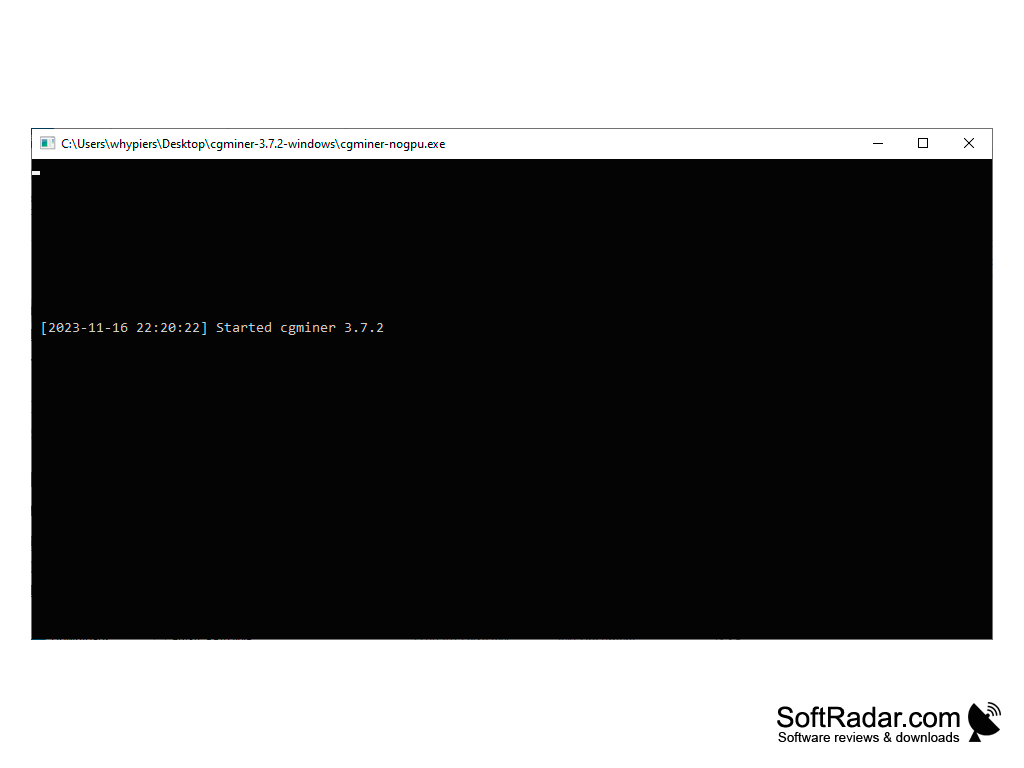
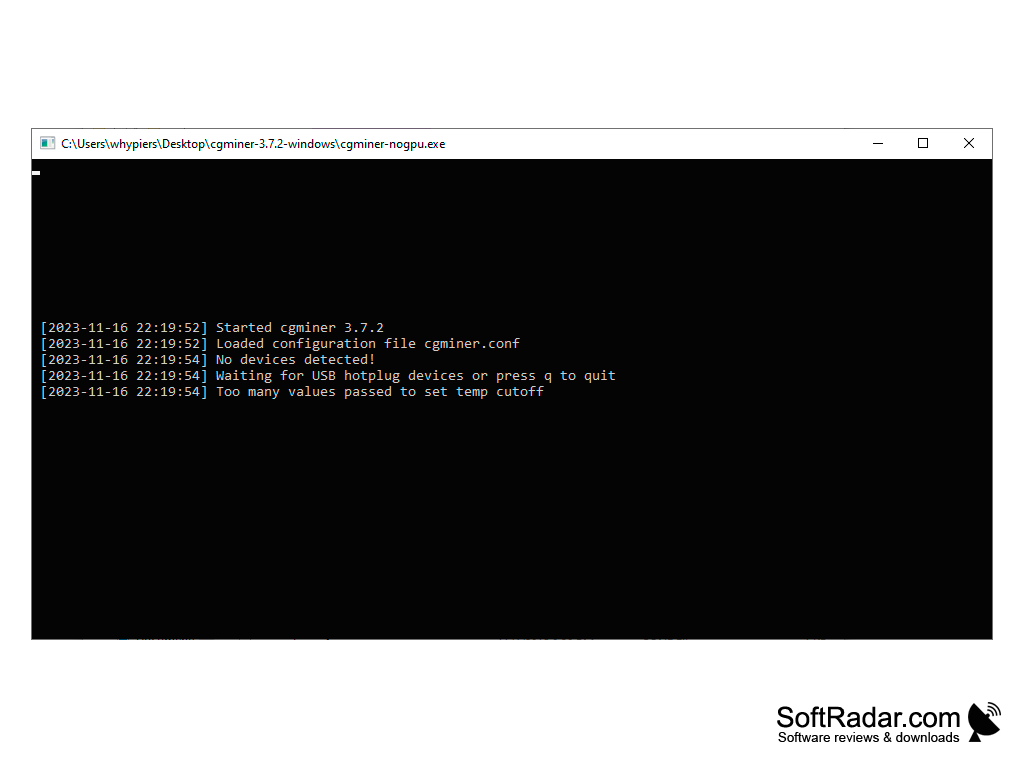
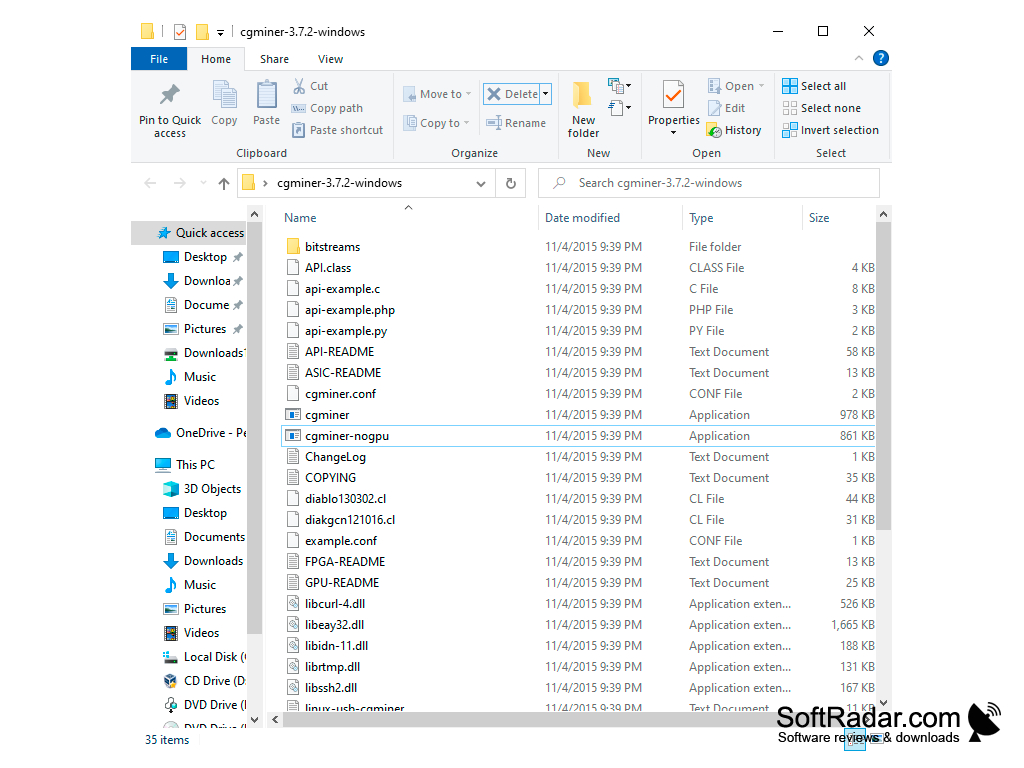
CGMiner is one of the most famous bitcoin mining programs. The utility does not have a graphic shell, and current versions do not support standard graphics cards from NVIDIA or AMD, because GPU mining was removed after version 3.7.2. In fact, modern releases are intended only for advanced users who are going to extract cryptocurrency with the help of special devices created on the basis of ASIC and FPGA chips.
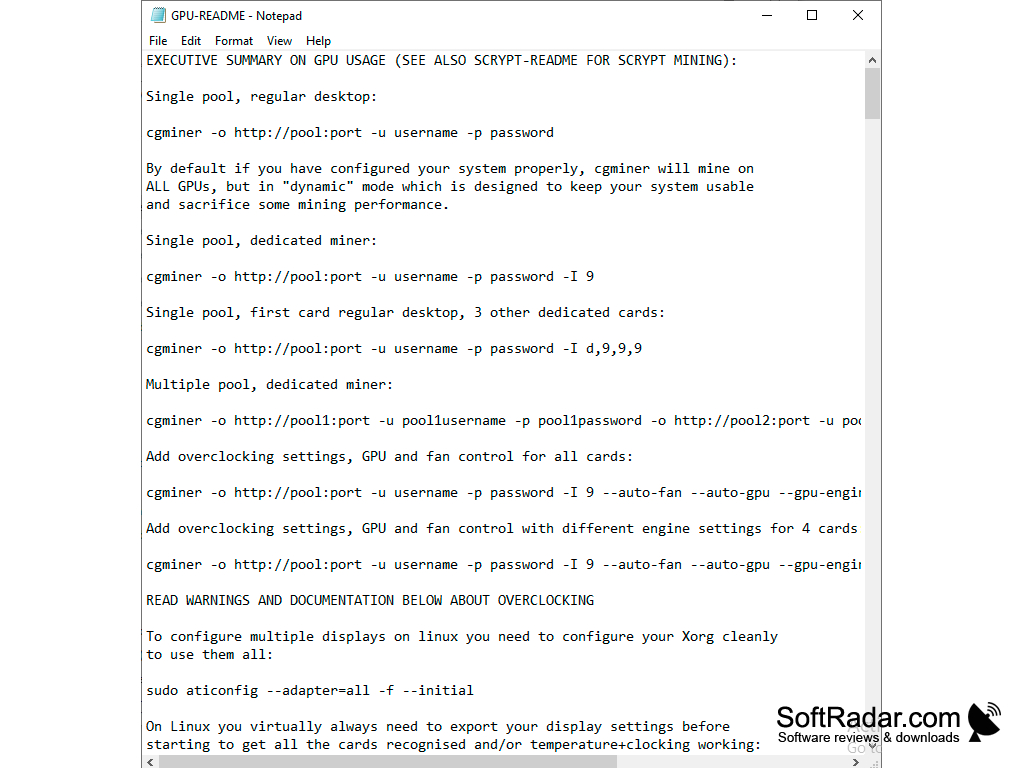
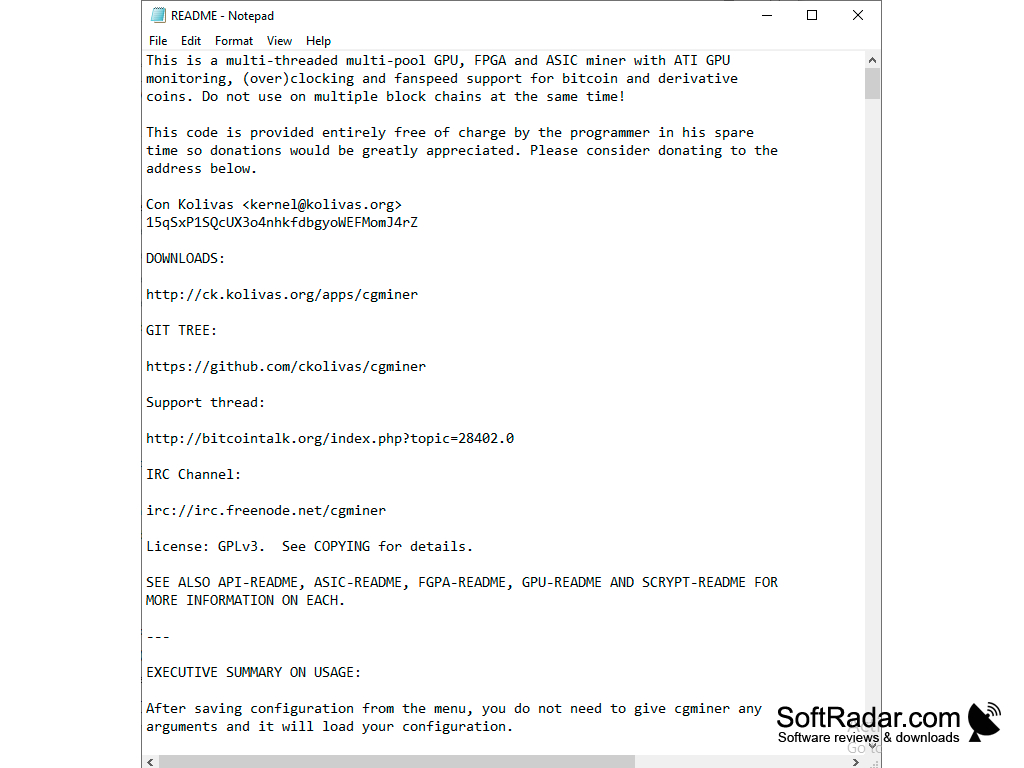
When you start CGMiner from a BAT file, a console window opens where you can observe the mining process. Client management is carried out with the help of special commands and a simple text menu. For example, you can view information about the current pool, add a new pool and save its settings in the configuration file. To change the key parameters of the program it is necessary to carefully read the README files in English from the author of the application.
Older builds of CGMiner, up to version 3.7.2, could also produce alternative scrypt-based cryptocurrencies such as Litecoin (LTC) on AMD graphics cards through OpenCL. Newer versions work only with the SHA-256 algorithm of Bitcoin, and the author decided not to support alternative coins that are better mined by other devices. CGMiner is open source under the GPLv3 licence and is no longer developed: its GitHub repository was archived in 2020.
CGMiner allows advanced users to effectively mine cryptocurrency using special ASIC and FPGA devices, with detailed command-based controls.
Despite the fact that CGMiner is one of the most popular clients for getting bitcoins, it is obviously not suitable for ordinary users who are not familiar with all the nuances of mining. It supports several pools with failover and load balancing, solo mining against a local bitcoind and an API for remote monitoring, but if you don't want to allow overheating of the device and want to keep the hash rate high, you will have to master all commands, settings and keys for this utility by yourself.
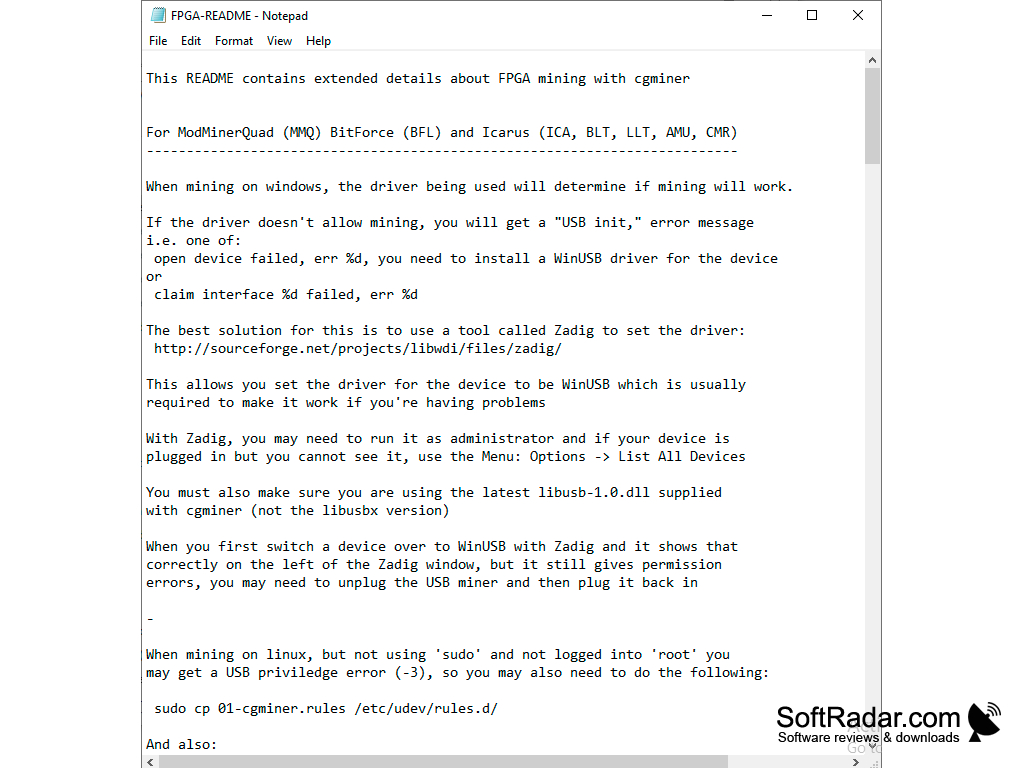
WinUSB driver for USB miners (installed with Zadig)
A mining pool account or a local bitcoind node
PROS
Offers advanced configuration options.
Provides detailed monitoring and troubleshooting features.
CONS
Can be too complicated for beginners.
Has no graphical user interface.