
HideVolumeOSD
HideVolumeOSD is a free utility for Windows that provides an easy way to hide the volume OSD (On-Screen Display).
Operating system: Windows
Publisher: Marcus Venturi
License: Open source (GPL-3.0)
Antivirus check: VirusTotal report
HideVolumeOSD is a small free tool designed to help users hide the volume control overlay on their computer screen. This overlay is displayed by Windows 8, 8.1, 10 and 11 when a user adjusts the volume using the media keys of the keyboard, and can be intrusive or distracting, for example in full-screen videos and games. With HideVolumeOSD, users can easily and quickly hide the volume control overlay and keep their screen free of clutter, while still being able to see the current volume in a small display if they want.
Features:
• Automatically hide volume control overlay: HideVolumeOSD hides the Windows volume overlay as soon as it starts and restores it when you exit the application, so users can continue to use their computer without being distracted.
One benefit of HideVolumeOSD is that it can hide the volume OSD from the screen and allow for a distraction-free computing experience.
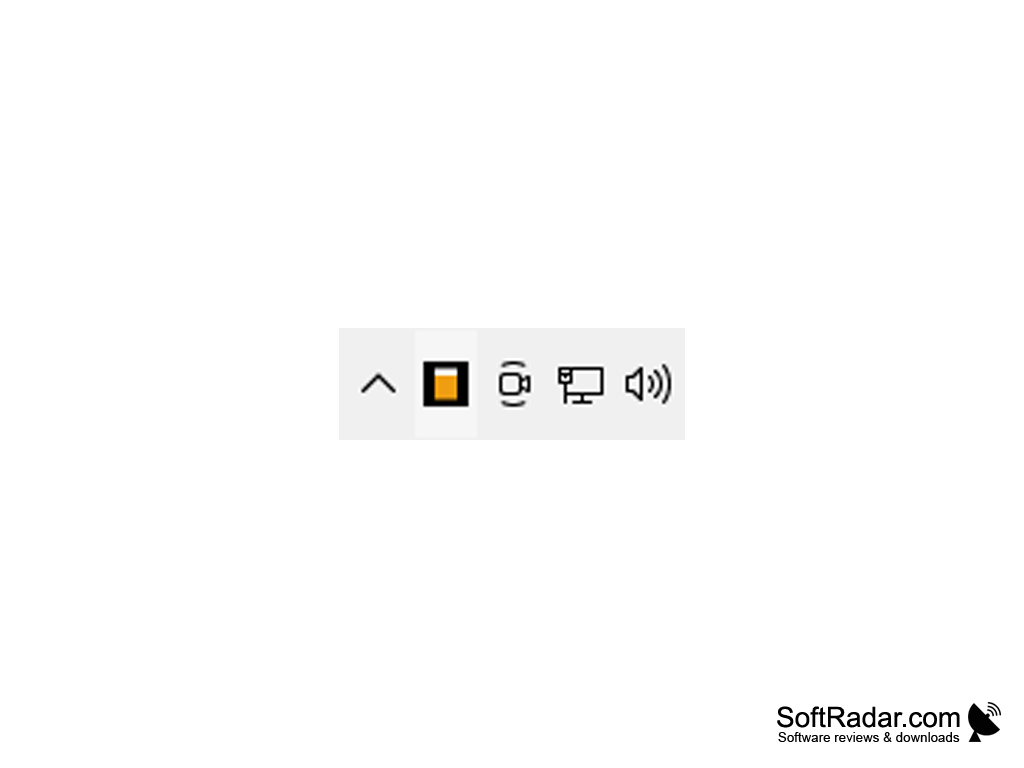
• Tray icon and silent versions: During installation you can choose between the tray icon version, which toggles the overlay with a click on its icon or through its context menu, and a silent version that hides the overlay at logon and then quits.
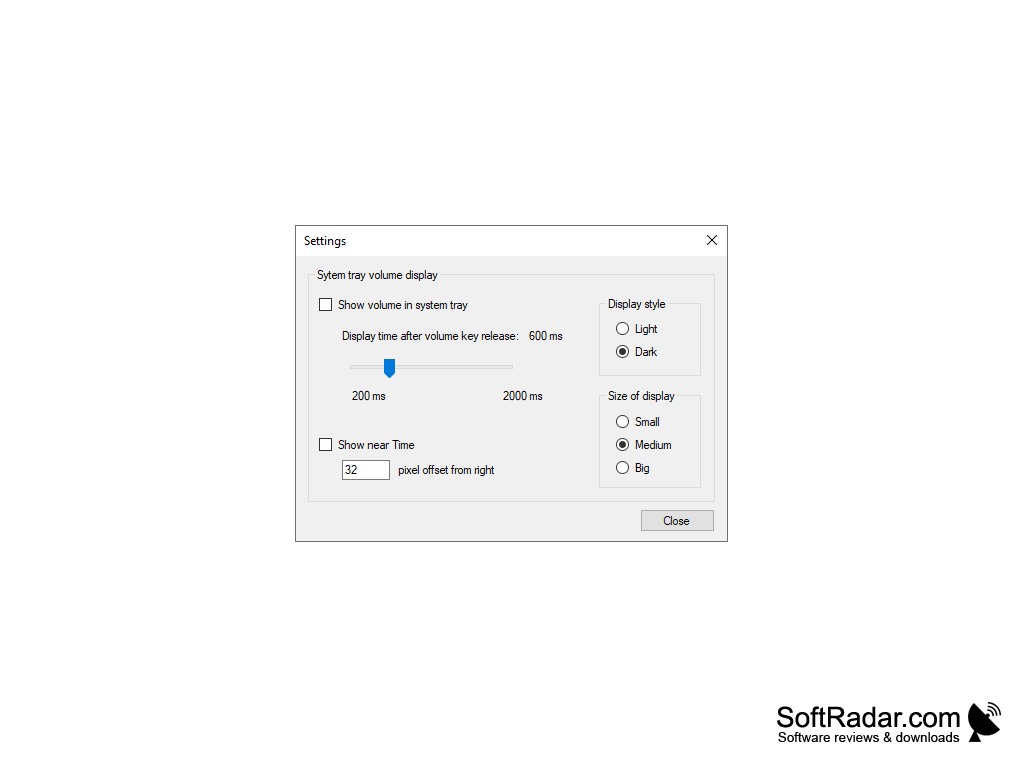
• Volume display options: Version 1.4 can show the current volume over its tray icon or near the clock, with a light or dark style, three display sizes and a display time from 200 to 2000 ms after the volume key is released.
• Start menu shortcuts: The HideVolumeOSD program group contains separate shortcuts to start the tray version, to hide the overlay silently and to show it again.
• Compatibility: HideVolumeOSD 1.4 runs on Windows 8, 8.1, 10 and 11 (version 22H2 of Windows 11 is recommended) in 32-bit and 64-bit editions.
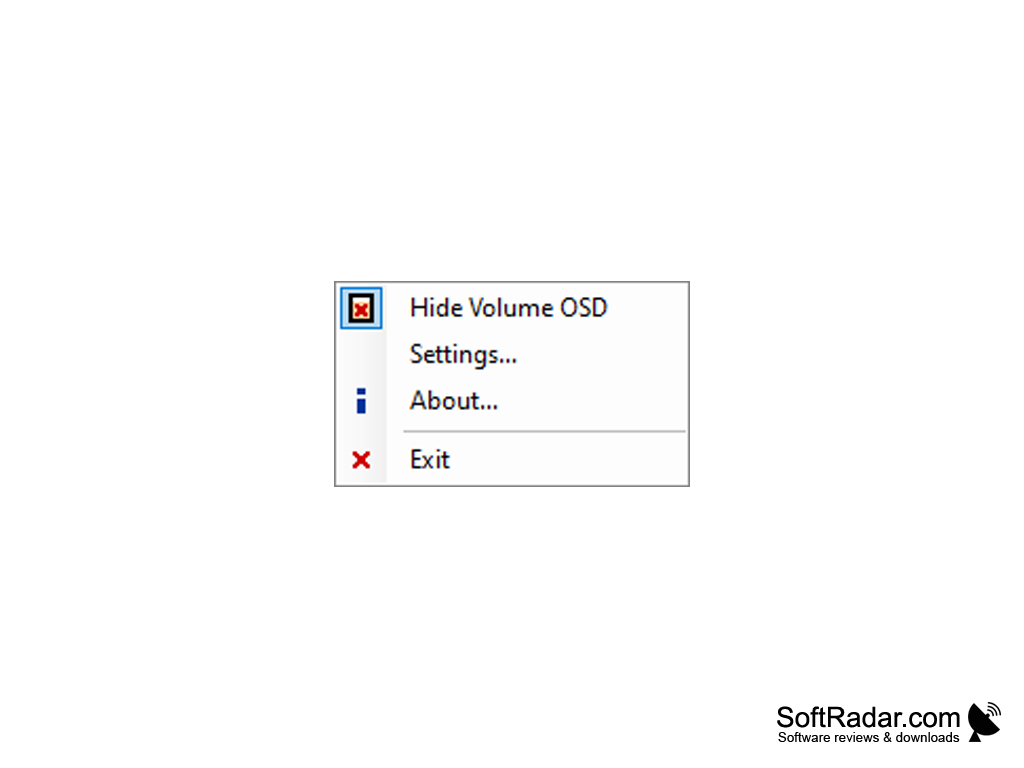
• Easy to use: HideVolumeOSD has a simple tray menu with Hide Volume OSD, Settings, About and Exit items that makes it easy to customize and configure the software.
• Low memory usage: HideVolumeOSD is a small C# application that runs quietly in the system tray and is designed to have a minimal impact on system resources.
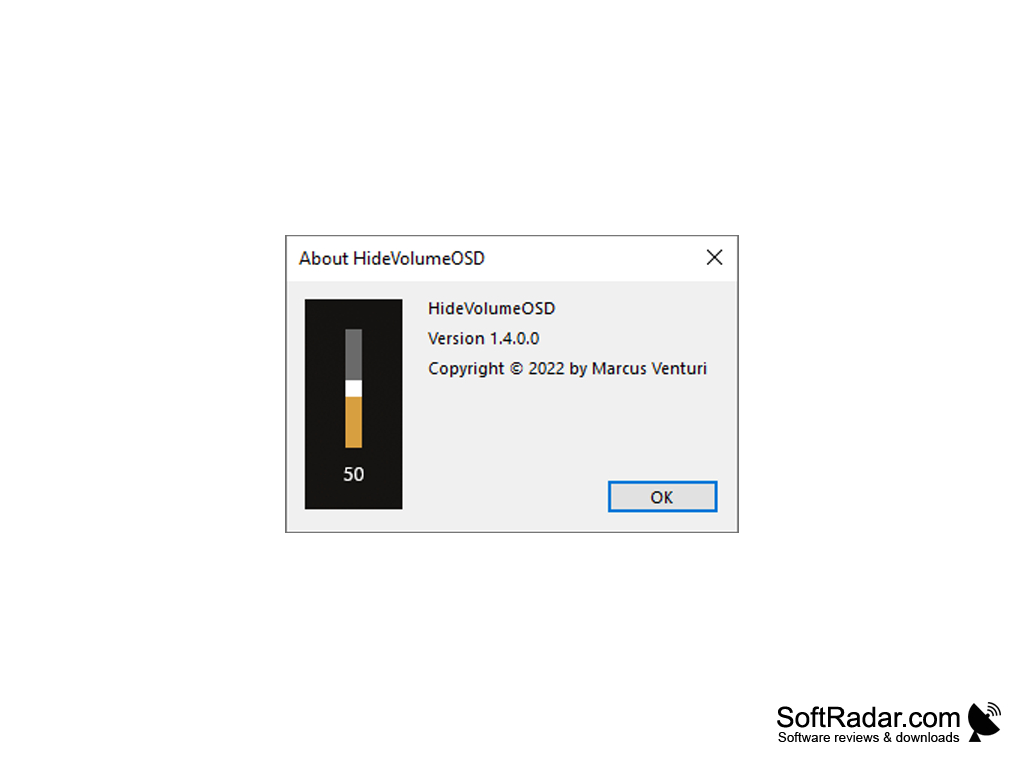
• Free and open source: HideVolumeOSD is free software written by Marcus Venturi, and its source code is published on GitHub under the GPL-3.0 licence.
32-bit or 64-bit
.NET Framework 4 or later
PROS
Can show the volume level near the tray icon or the clock.
Lightweight and easy-to-use interface.
CONS
Works only on Windows 8 and later versions.
Some users report problems with the silent mode version.