
OCCT
OCCT is a stability test, stress test, benchmark and monitoring tool that checks the stability of a PC's CPU, GPU, memory and power supply.
Operating system: Windows
Publisher: OCBASE
Release: OCCT 17.1.7.0
Antivirus check: VirusTotal report
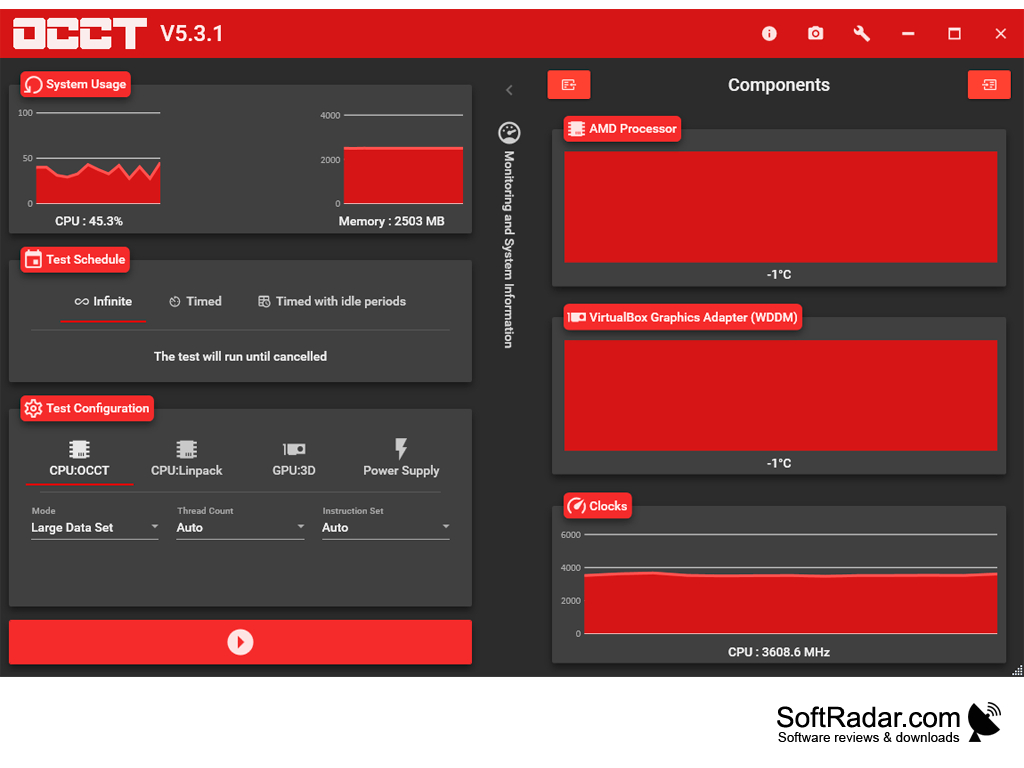
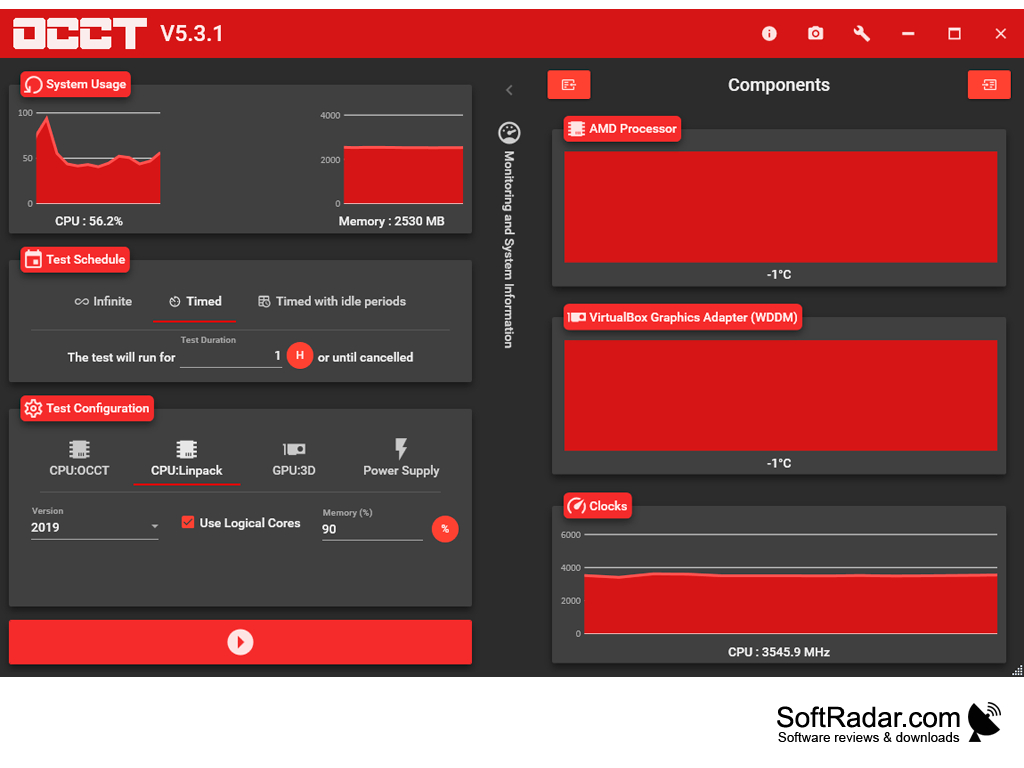
OCCT is a program designed to test the stability of system components, especially after overclocking. It does not "accelerate" the CPU and GPU itself, but it helps to estimate whether the hardware stays stable and within safe limits at the selected frequencies. This is one of the best-known stress testing and benchmarking tools, and it is free for personal use. Please note that attempts to overclock system components can lead to immediate and future damage! So we do not recommend overclocking for those who do not have practical skills in this field.
Thus, the OCCT displays information about the load, frequency, temperature and voltage of the CPU/GPU, as well as some of the power elements in real time. The program reports the current, minimum and maximum values of the sensors that have been detected since it was started. After changing the CPU or graphics card clock frequencies in the BIOS or a vendor utility, the user can immediately launch a test that creates an artificial load on the above components. During the testing process, the temperature and voltage sensor readings must not exceed the permissible values declared by the hardware manufacturer. Otherwise, reduce the frequency or upgrade the cooling/supply system.
OCCT builds graphs of load, voltage and temperature, and the results can be saved as a report. The 3D and VRAM tests check the graphics card, the Memory test checks the RAM, and the Power test loads the CPU and GPU together to check the power supply. To check the stability of the CPU, you can use the standard OCCT CPU test, as well as the Linpack test, which is able to "heat up" the CPU cores to their peak values. The free Personal edition limits the test duration, while the paid Patreon, Pro and Enterprise editions remove the limits and allow commercial use.
OCCT offers detailed, real-time monitoring of your system's performance, making it an ideal tool for overclocking and benchmark testing.
PROS
Detailed, comprehensive hardware monitoring.
Free for personal usage.
CONS
Limited support and documentation in non-English languages.
Free edition limits the duration of tests.