
Peek Through
Peek Through is a small free utility that makes the active window transparent with a hotkey, so you can see the windows beneath it.
Peek Through
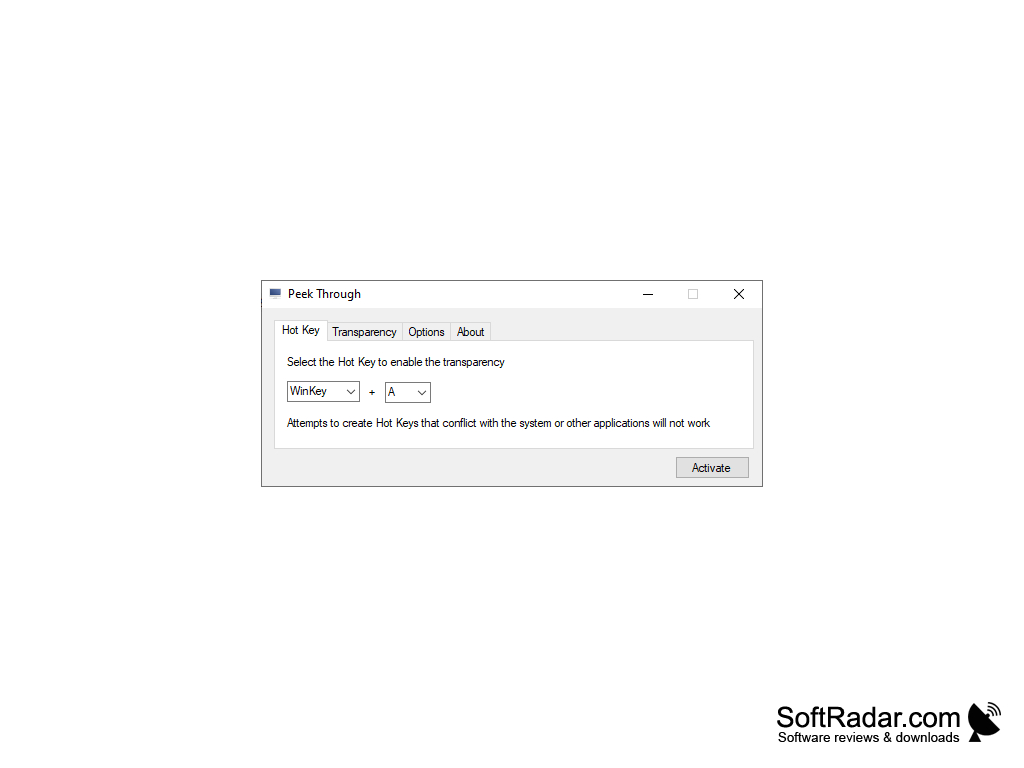
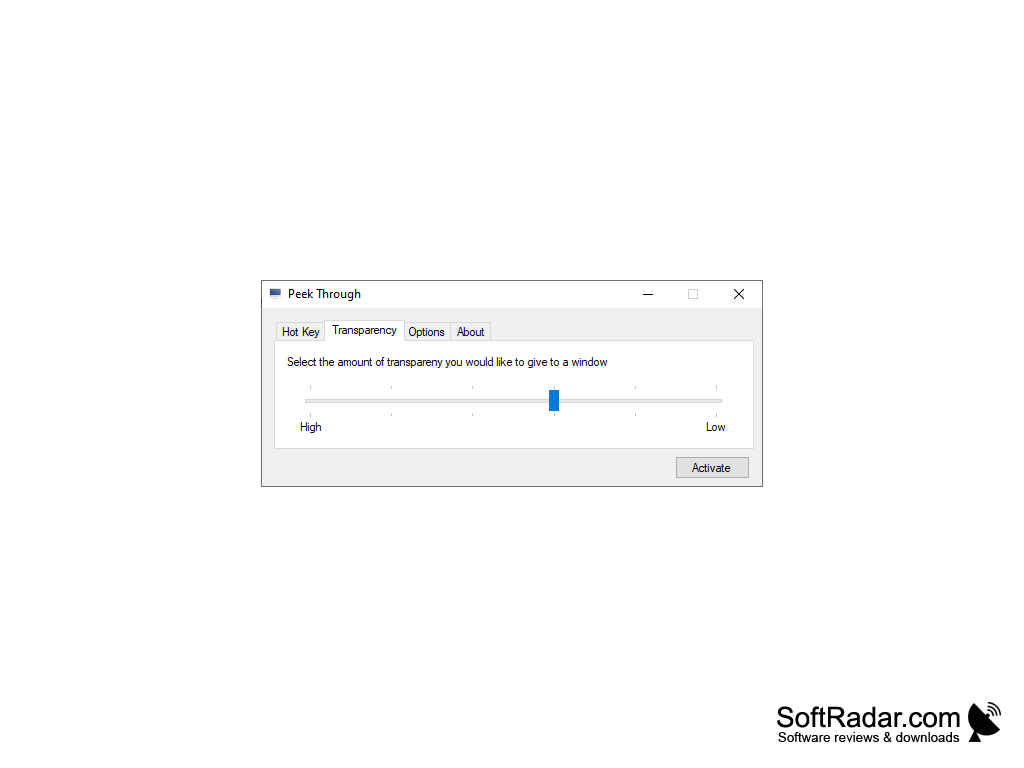
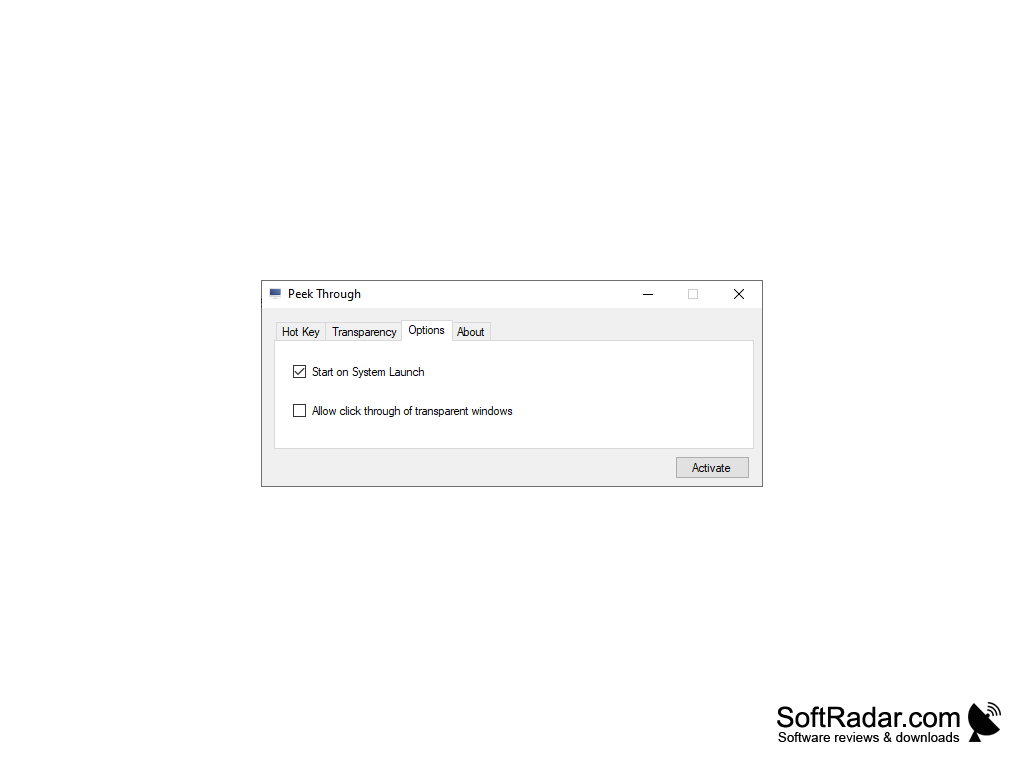
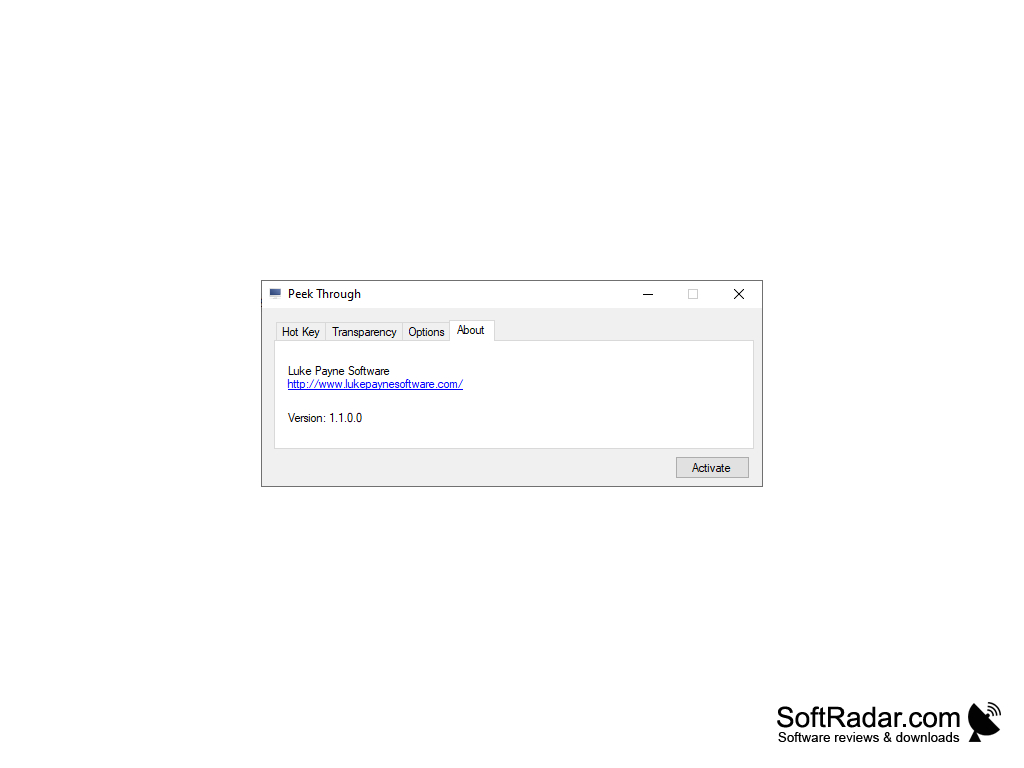
Peek Through is a small free utility from Luke Payne Software that makes the active window transparent with a press of a hotkey, so you can see what is behind it without minimizing or moving the window. It is handy when you type text from one document into another program, keep an eye on a download or a chat in the background, or compare two overlapping windows. The program was written for Windows XP, Vista and 7, where it works as an alternative to the Aero Peek feature: instead of hiding all windows, it lets you look through just the one in front. Peek Through runs in the system tray; a left-click on its icon opens the settings window with four tabs: Hot Key, Transparency, Options and About.
Peek Through lets you see and even click through to windows behind the active one without minimizing or moving it.
Features:
1. Hot Key: Choose the key combination that turns transparency on, for example the Windows key plus a letter. Pressing the hotkey again makes the window opaque.
2. Adjustable transparency: A slider sets how transparent the foreground window becomes, from a light tint to almost invisible.
3. Click-through: An option allows clicks to pass through the transparent window to the window beneath it, so you can work with the lower window without switching.
4. Any window: Transparency is applied to the current foreground window, whether it is an Explorer folder, a browser or a document.
5. Start with Windows: The program can start automatically when the system launches and wait in the tray.
6. Hotkey conflicts: The settings warn that hotkeys already used by the system or other applications will not work, so you can pick a free combination.
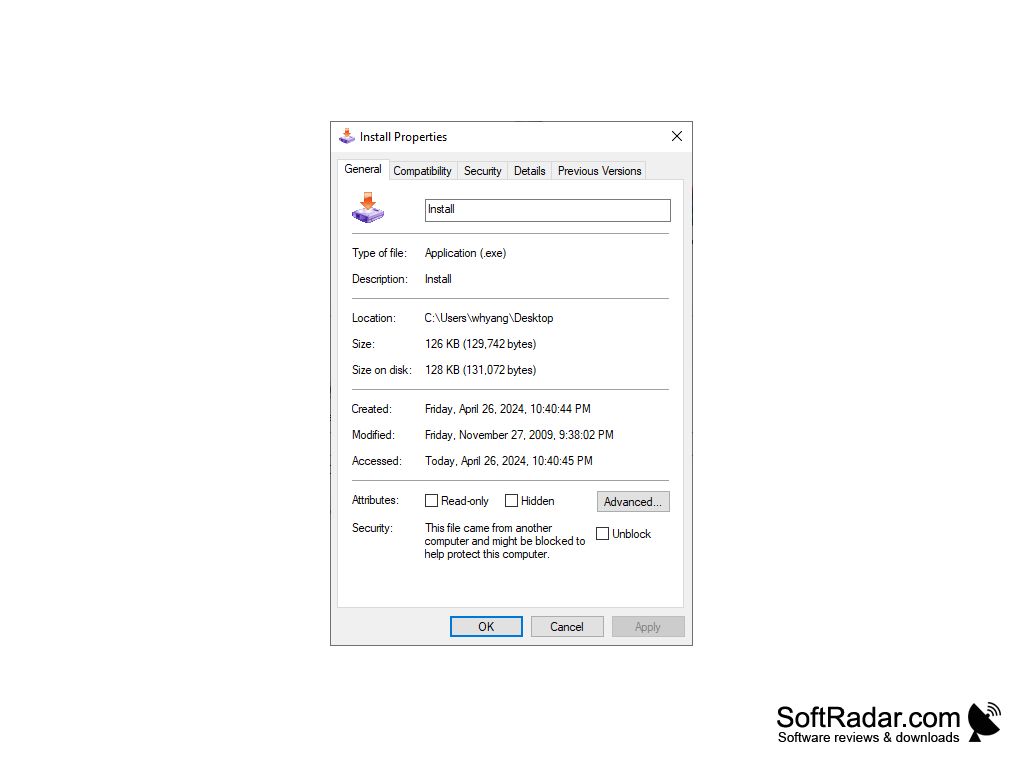
7. Lightweight: The installer is only about 126 KB, and the program needs very few system resources.
8. Freeware: Peek Through is free to use.
With Peek Through, you can look behind the active window in a second and continue working. The program is no longer developed and the developer's website is offline, so version 1.1 is the last release. It remains a simple tool for users who often work with overlapping windows.

PROS
Offers adjustable transparency level for easy functioning.
Lightweight and easy to use, requiring minimal system resources.
CONS
No longer developed; the website is offline.
Designed for Windows XP, Vista and 7 only.