
ffuf - Fuzz Faster U Fool
Ffuf is a fast web fuzzer used to discover hidden files, directories and parameters from web applications.
Operating system: Windows
Publisher: Joona Hoikkala
Release: ffuf - Fuzz Faster U Fool 2.3.0
License: Open source (MIT)
Antivirus check: VirusTotal report
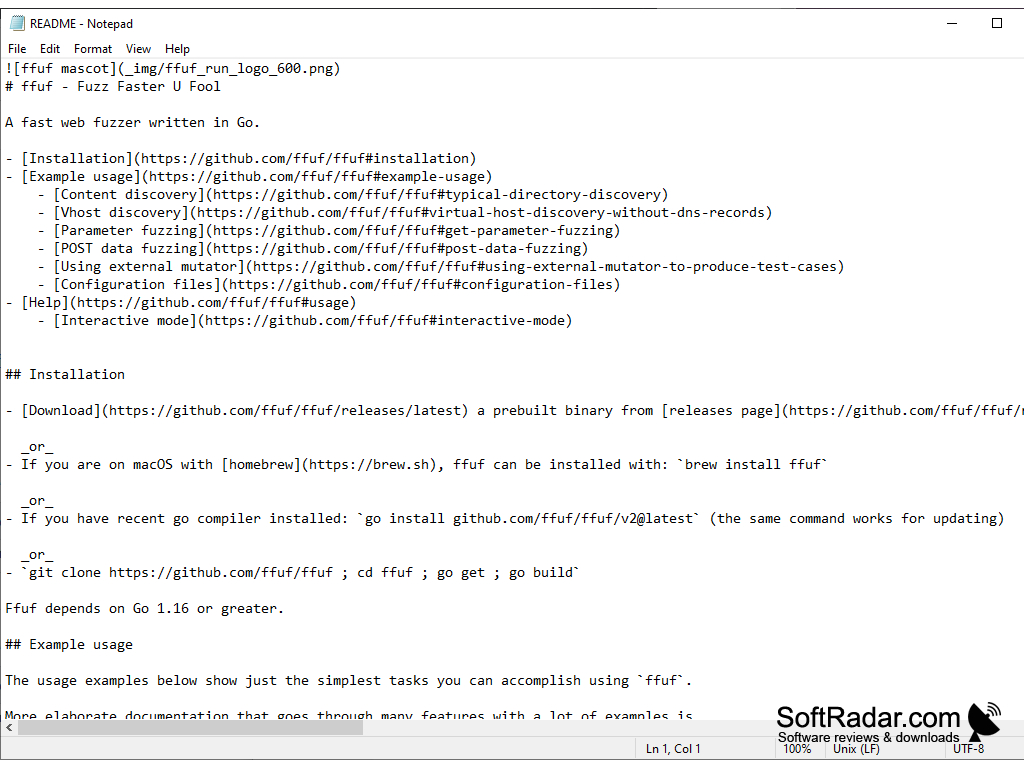
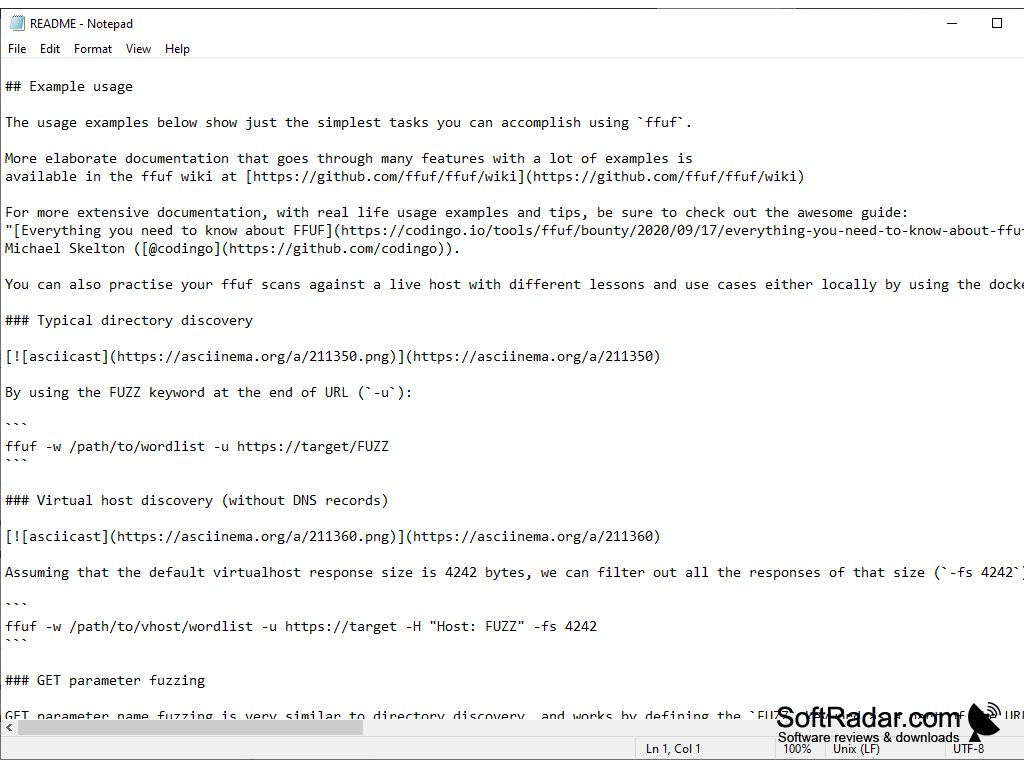
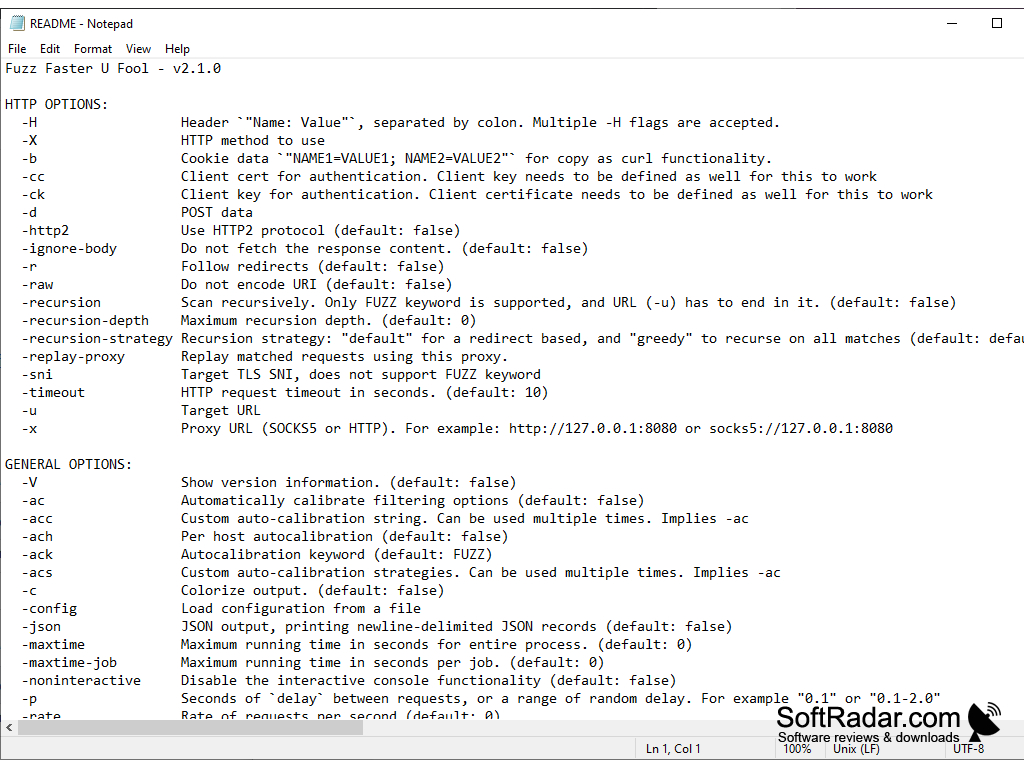
Fuzz Faster U Fool (FFuf) is a powerful open source web application fuzzing tool designed to discover hidden resources and vulnerabilities on web applications. It is written in Go and is a fast, reliable and easy to use tool.
Features:
- High Performance Fuzzing: FFuf is designed to be fast and efficient in order to discover vulnerabilities quickly. It supports multi-threaded and multi-core fuzzing.
FFuf facilitates faster web application fuzzing by providing an easy-to-use, highly configurable command-line interface.
- Custom Payloads: FFuf allows users to create their own custom payloads for greater flexibility and accuracy.
- Targetable Fuzzing: FFuf supports targetable fuzzing which allows users to specify a specific target such as a URL, IP address, or port.
- Flexible Output Formats: FFuf supports multiple output formats including JSON, XML, and HTML.
- Advanced Reporting: FFuf provides advanced reporting capabilities such as redirection tracking, response time tracking, and vulnerability detection.
- Automation: FFuf supports automation using powerful scripting languages such as Python and Bash.
- Open Source: FFuf is open source and available on GitHub for easy collaboration and modifications.
FFuf is a powerful tool that can be used to quickly and easily find hidden resources and vulnerabilities on web applications. It is fast, reliable, and easy to use with a wide range of features and capabilities. With its support for custom payloads, targetable fuzzing, advanced reporting, and automation, FFuf is a great choice for web application security testing.
FFUF requires a modern Linux-based operating system. It has been tested on Ubuntu 16.04 and 18.04.
2. Memory:
FFUF requires at least 2GB of RAM.
3. Storage:
FFUF requires at least 10GB of free disk space.
4. Network:
FFUF requires a reliable and fast internet connection with an unlimited data plan.
5. Compiler:
FFUF requires a modern C compiler, such as GCC 4.7 or higher.
6. Libraries:
FFUF requires the following libraries: libcurl, libpcap, libssl, libz, libjson-c and libzstd.
PROS
Offers thorough, customizable fuzzing options.
Open-source allows for functionality alterations and improvements.
CONS
Less user-friendly compared to some other fuzzing tools.
Occasional false positives can hamper results.