
FM8
A software synthesizer with sound architecture and innovative features designed to simplify FM synthesis
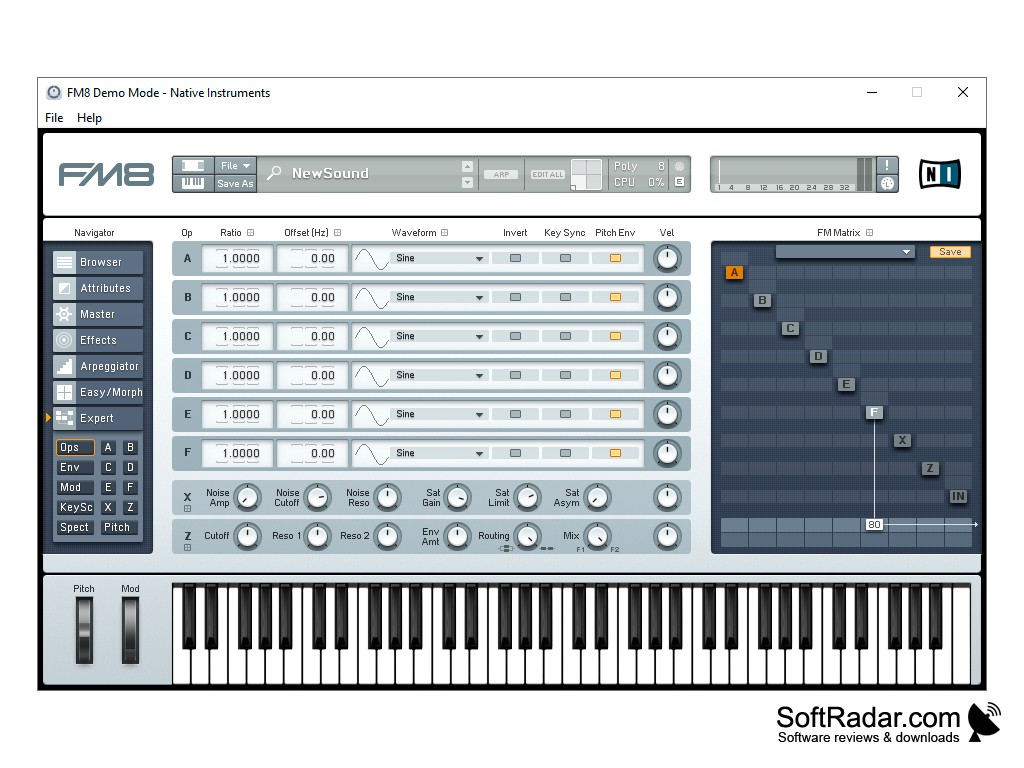
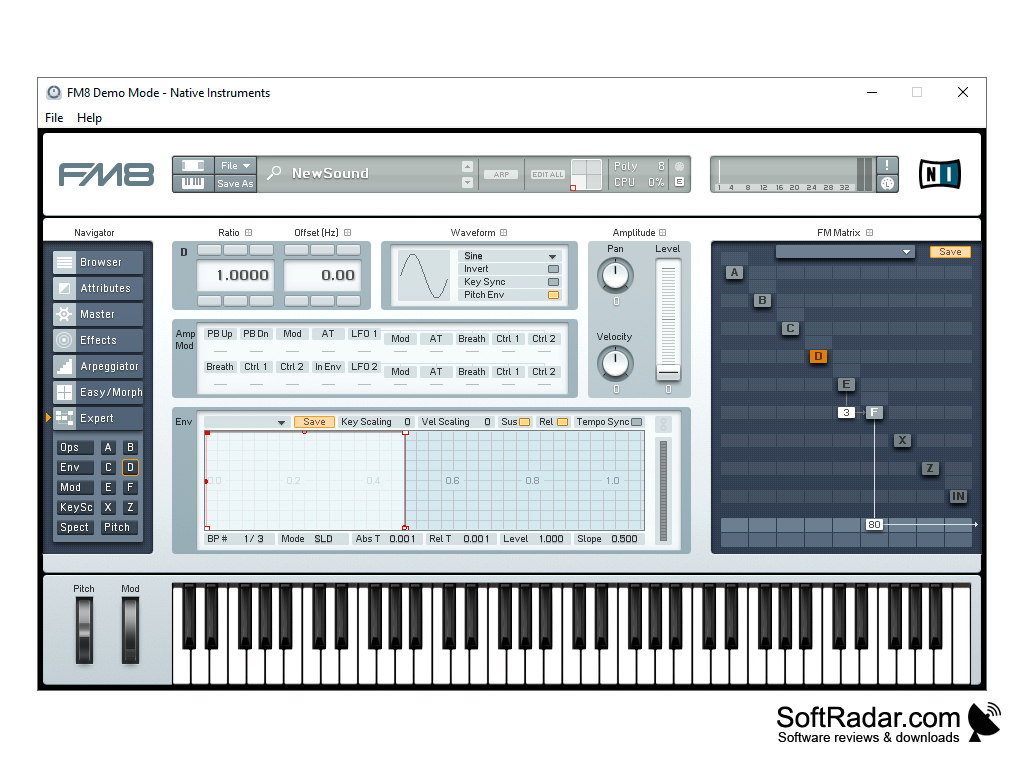
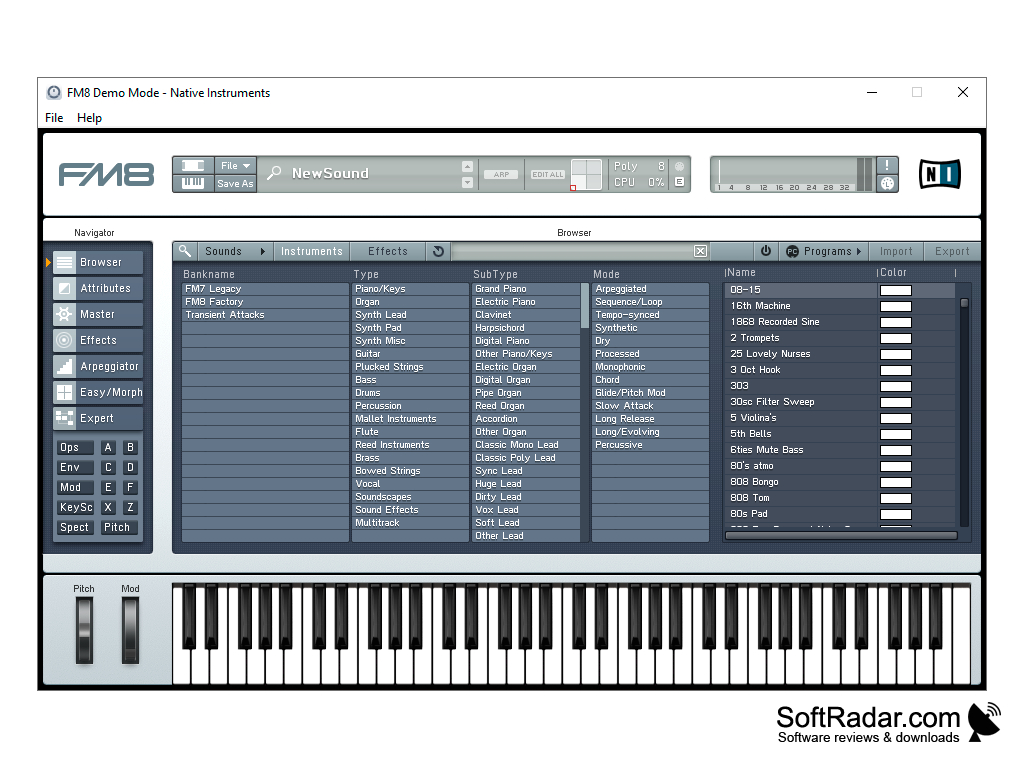
FM8 is a program that can emulate frequency modulation of a sound wave. Originally it was designed as a digital analogue of the Yamaha DX7 synthesizer, which was popular in the eighties and nineties of the last century and had a large set of instruments, as well as an unusual and memorable sound.
Like its iron colleague, the FM8 has piano-like keys, but only virtual ones. If a MIDI-keyboard is connected to the computer, the program will work with it, if not, then with a regular computer keyboard. You can press the keys and the program will synthesize the sounds of the selected instrument. The latest version of the built-in instruments has 1200: from dynamic electronic organs to the emulation of strings, wind instruments and various electronic instruments. In addition, the user will have at their disposal a virtual effect rack, where effects such as distortion, chorus, reverb, panning and many others can be combined in any order. There is also a preset editor in the program, where you can get your own unique sound by setting up modifiers.
When using a professional sound card as well as an ASIO driver, the latency may be around 2 milliseconds. This means that the FM8 can be used as an effect processor, for example in concert activities or studio recording. In addition to working as a standalone application, the synthesizer can work as a VST or AAX plugin for audio programs that support this technology (e.g., Cubase or FL Studio).
"FM8 provides a range of 1200 built-in instruments and effects, offering users immense sound customization possibilities."
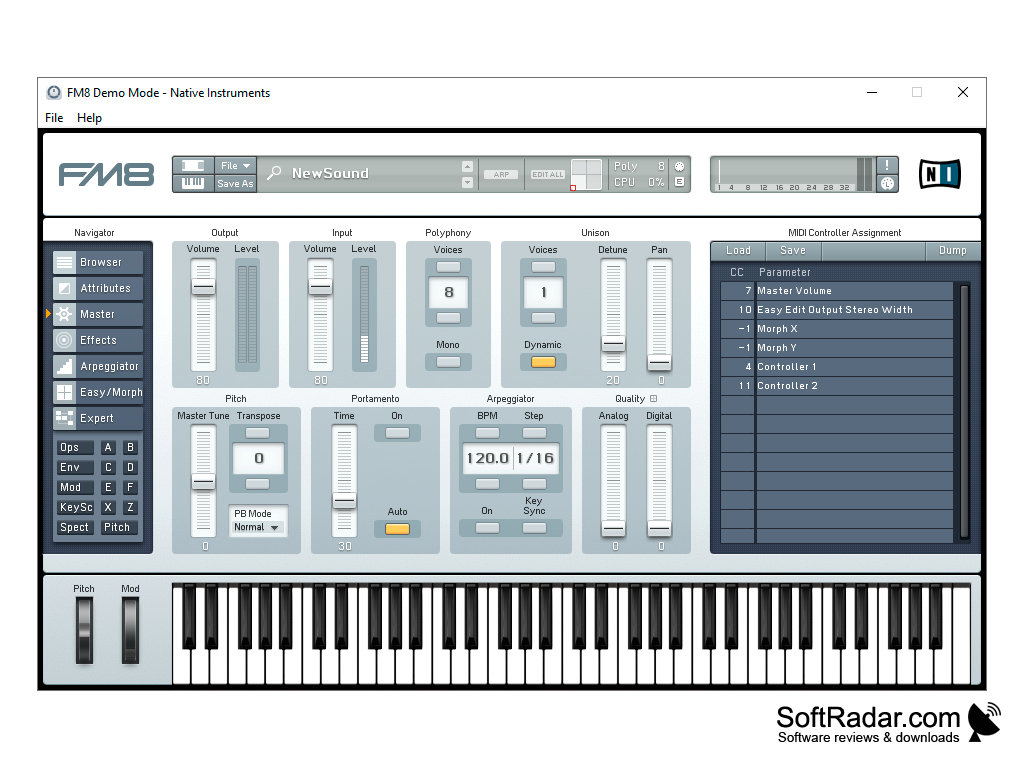
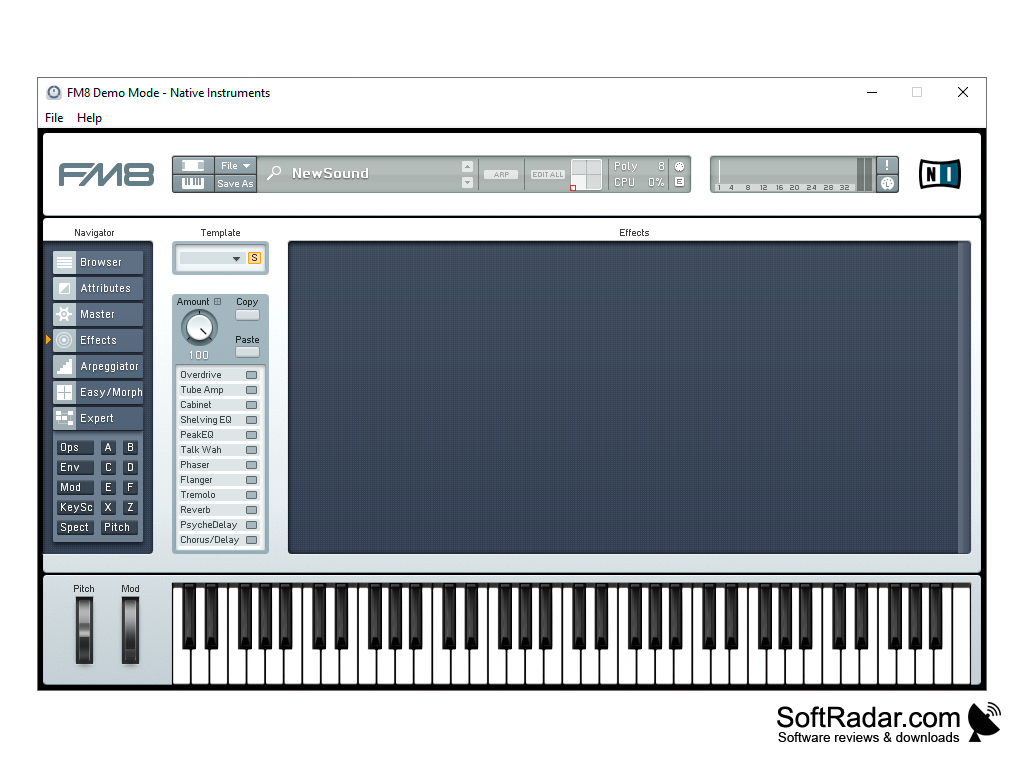
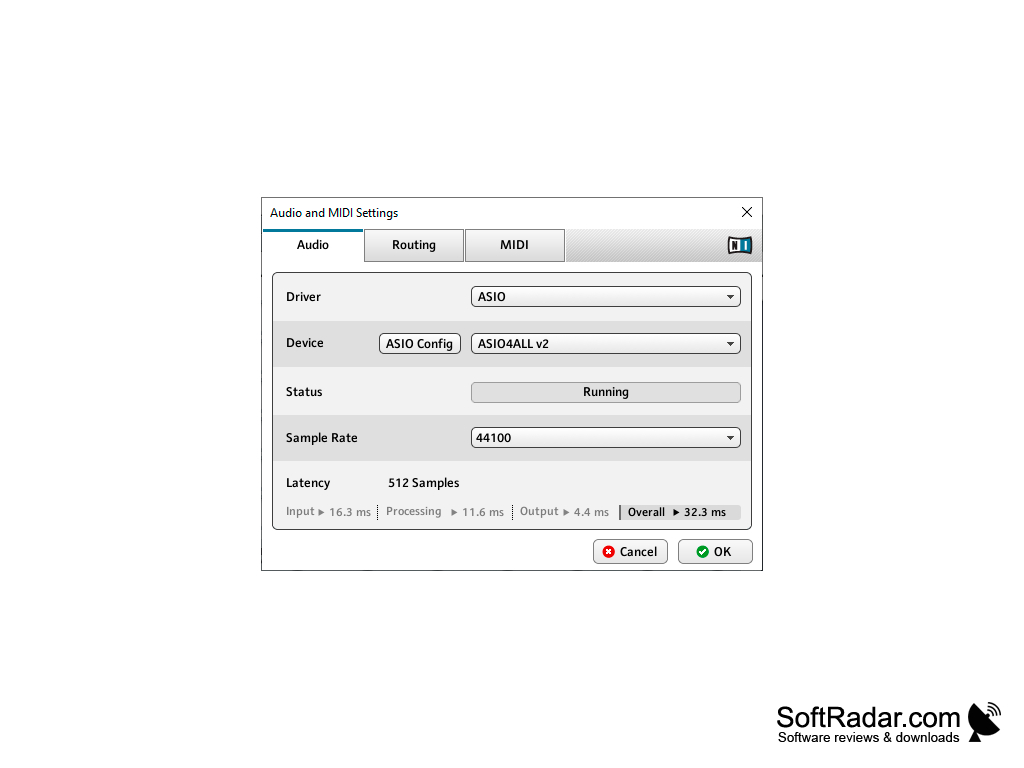
- several operating modes: standalone application, effect processor and VST plugin;
- 1200 presets: original Yamaha, all presets from FM7 version, and a large number of new tools;
- The ability to use ASIO to minimize delay and instantaneous response;
- A large number of different effects, the ability to use the virtual rack to create effect chains;
- the ability to use the Arpeggiator to create automatic arrangements when playing the Digital Keyboard;
- the possibility of using the microphone input for a vocoder effect.
PROS
Incorporates easy-to-use, intuitive interface for beginners.
Excellent quality sounds with refined presets.
CONS
Sound quality is not as warm as analog synthesizers.
Lacks comprehensive tutorials for beginners.


