
Heaven Benchmark
Heaven Benchmark is a GPU stress test and performance benchmark for PC hardware built on the UNIGINE 3D engine.
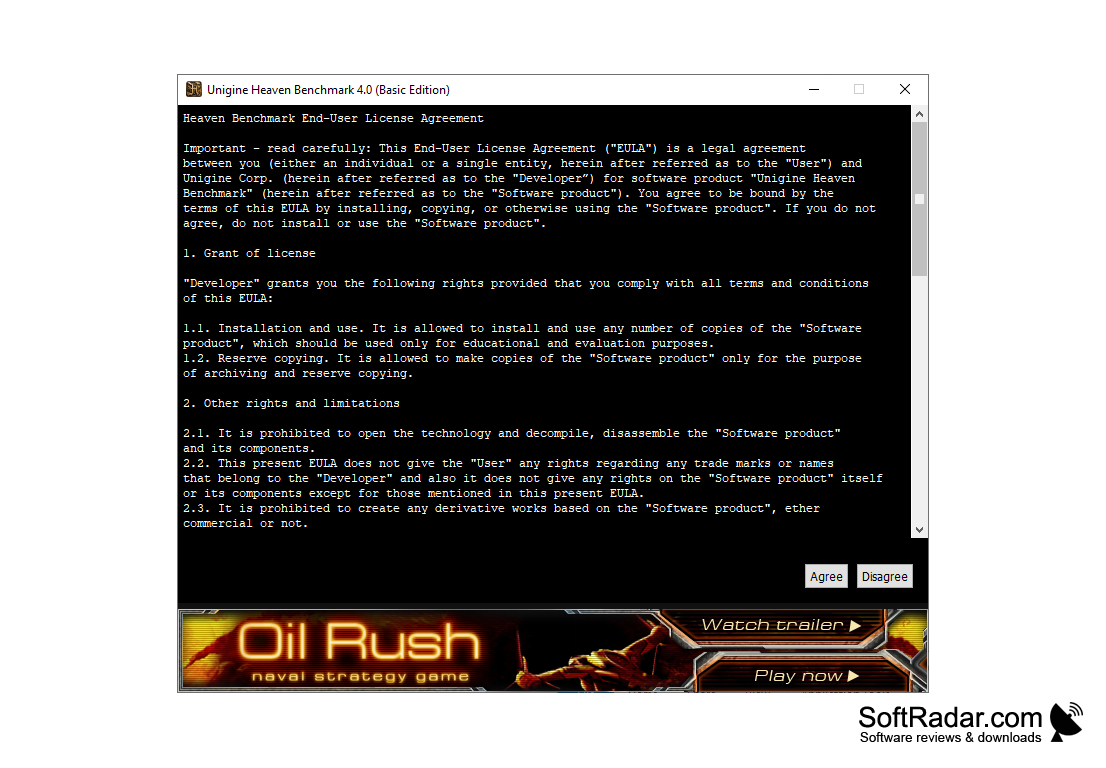
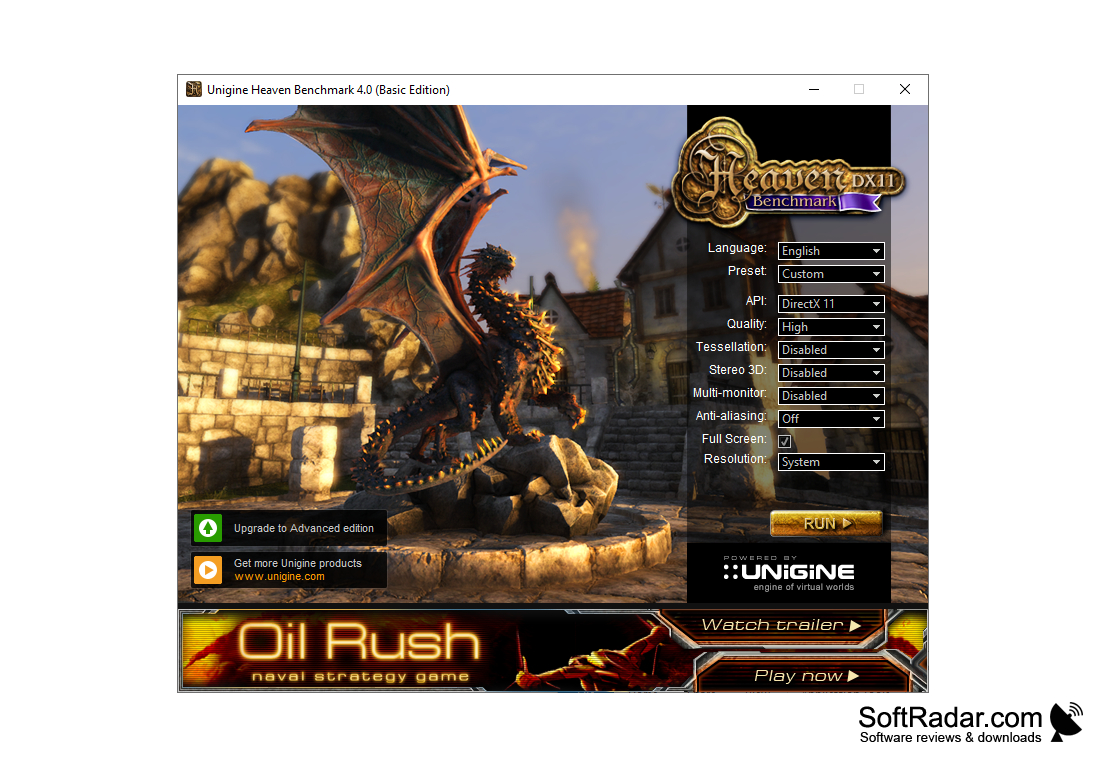
Heaven Benchmark is a GPU benchmark with support for DirectX 11, DirectX 9 and OpenGL 4.0, built on the UNIGINE engine. This is one of the most popular programs used to test the performance and stability of graphics adapters.
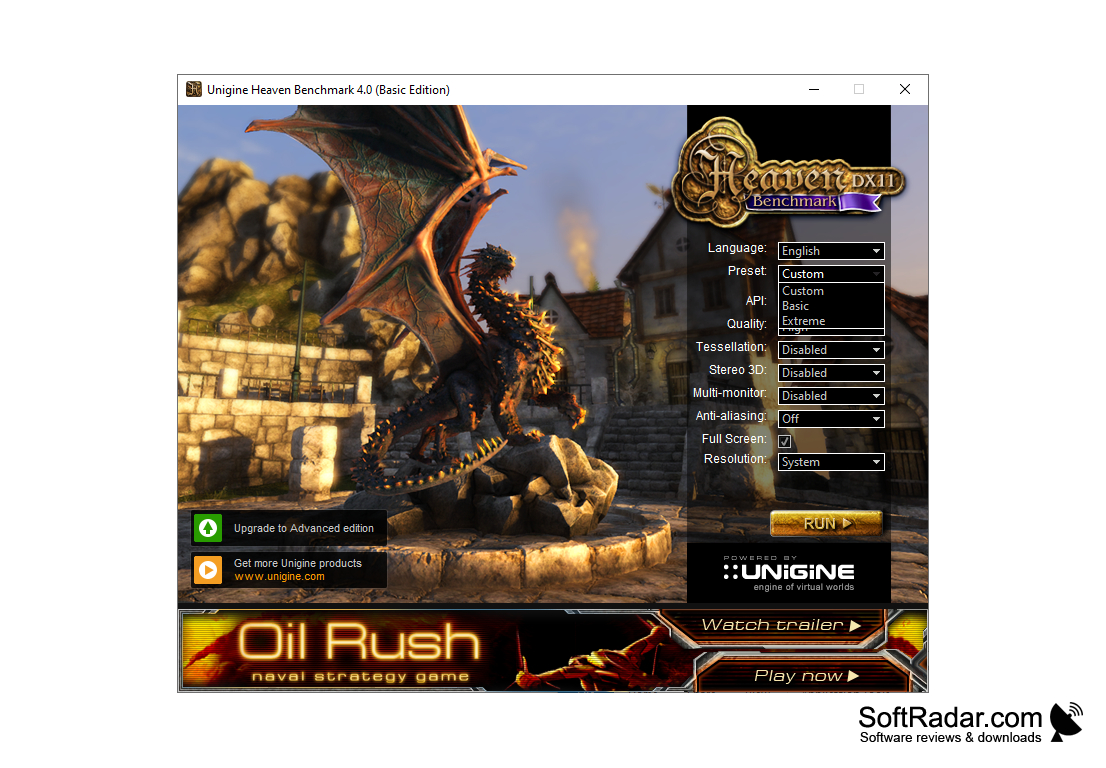
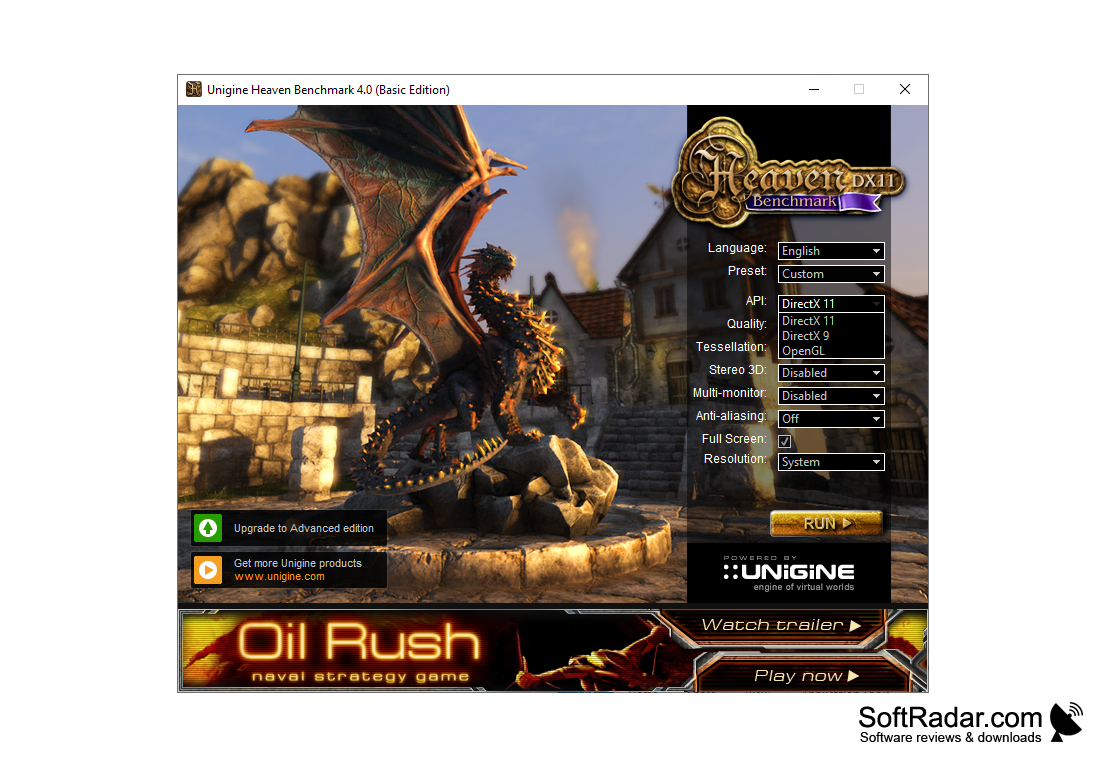
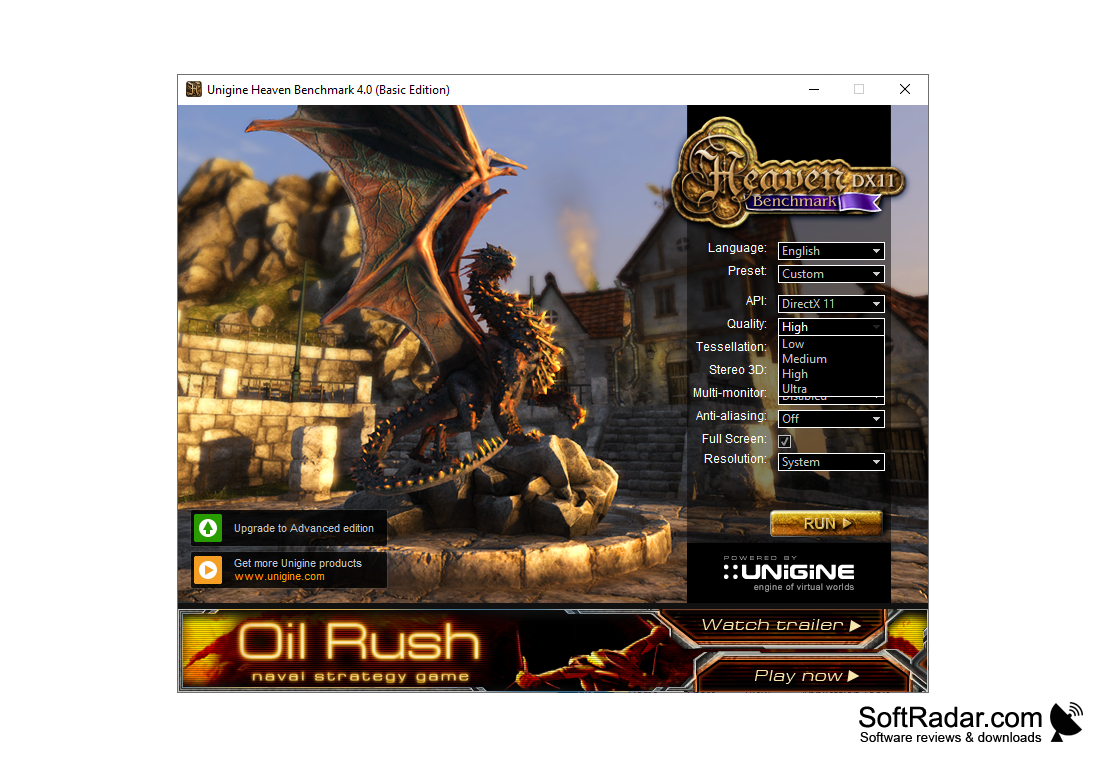
To create the maximum load on the graphics card, the benchmark uses advanced and resource-intensive graphics technologies, such as heavy hardware tessellation, screen-space ambient occlusion, a dynamic sky with volumetric clouds and a stereo 3D effect. The main test parameters are selected before the benchmark itself is launched. In addition to the above mentioned technologies, you can choose the image resolution in the start menu, the quality preset, the API (DirectX 9, DirectX 11 or OpenGL), anti-aliasing and multi-monitor mode. Part of the parameters of the program can be changed directly during the testing process.
Heaven Benchmark shows the frame rate, GPU temperature and GPU clock frequencies. This information changes in real time as the benchmark scenes change. At the end of a run, the program shows a score together with the average, minimum and maximum FPS. The Advanced edition adds benchmark looping and saves CSV reports with the minimum and maximum values of FPS, duration of testing, total number of rendered frames and other important information. Unfortunately, these reports are only available in paid versions of Heaven Benchmark. Also, only the Professional edition offers the software rendering mode, command-line automation and the tool of frame-by-frame analysis.
Heaven Benchmark lets users stress-test their graphics card with tessellation-heavy 3D scenes and shows frame rate and GPU temperature in real time.
This benchmark is designed primarily as a solution for powerful systems focused on heavy-duty three-dimensional graphics. The Heaven Benchmark is extremely popular with overclockers because it allows them to evaluate the overclocking results of the GPU, as well as to maximize the load on the adapter for the sake of monitoring peak temperatures. The Basic edition is free for personal use and runs on Windows, macOS and Linux.
Radeon HD 4xxx, GeForce 8xxx, Intel HD 3000 or newer
512 MB of video memory
DirectX 9, DirectX 11 or OpenGL 4.0
1 GB of free disk space
PROS
Straightforward interface, easy for beginners.
Runs on Windows, macOS and Linux.
CONS
Scenes are dated compared to newer UNIGINE benchmarks.
Free Basic edition is for personal use only.


