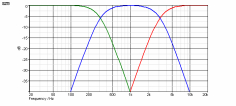
Linkwitz-Riley Crossover Calculator
The Linkwitz-Riley Crossover Calculator is a free software tool designed to help accurately determine crossover frequencies and filter types for two-way and three-way audio systems.
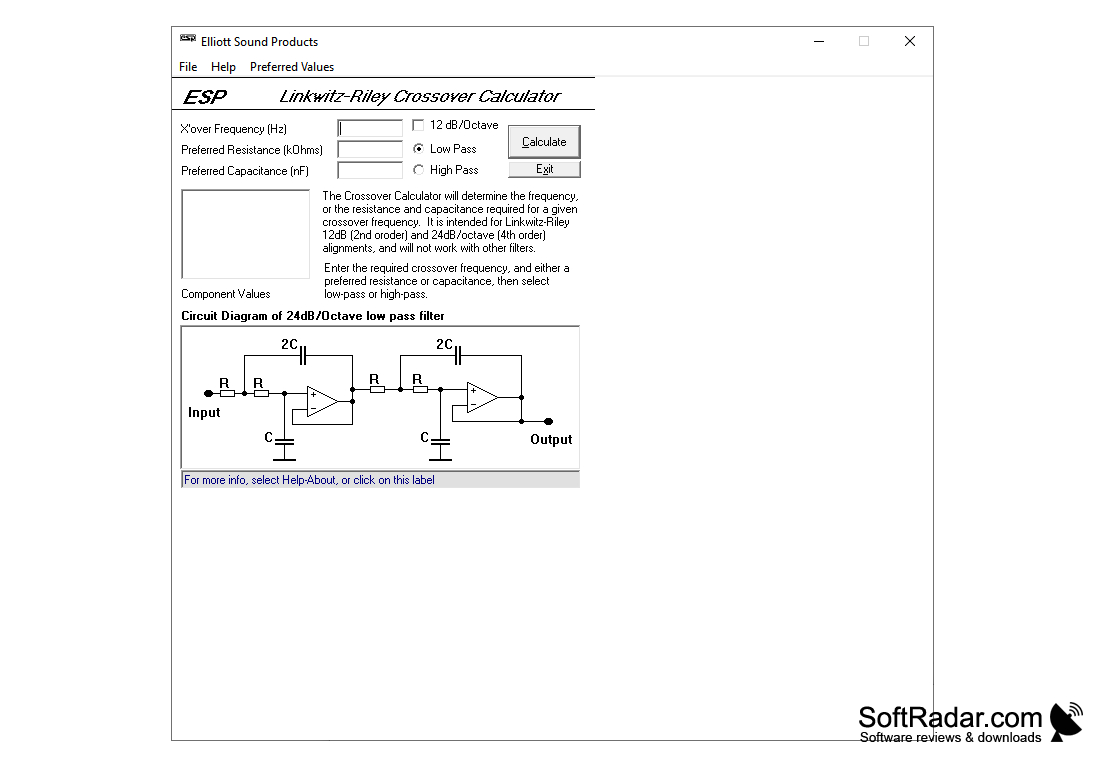
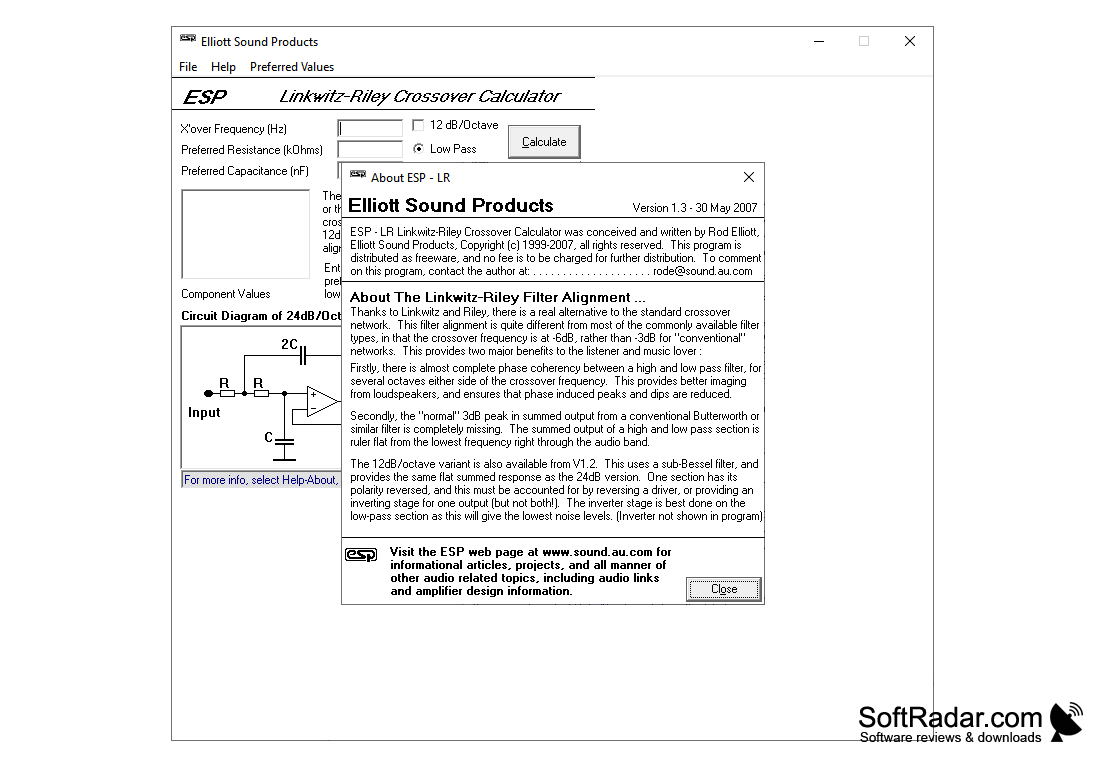
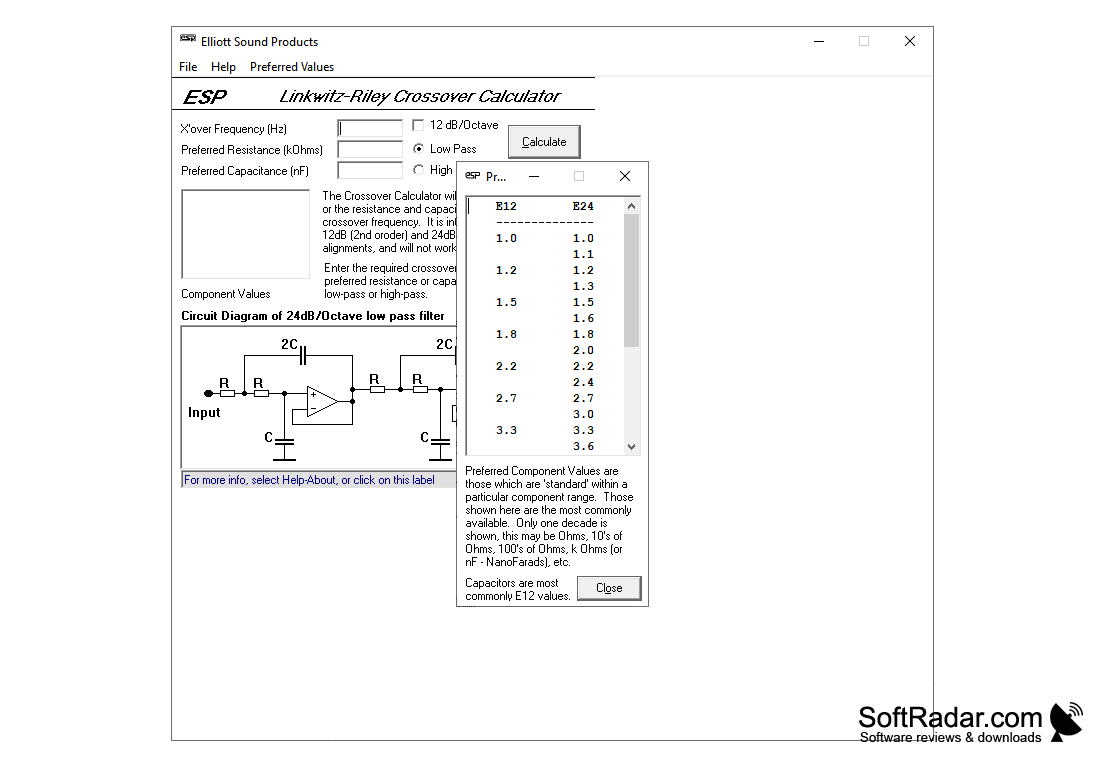
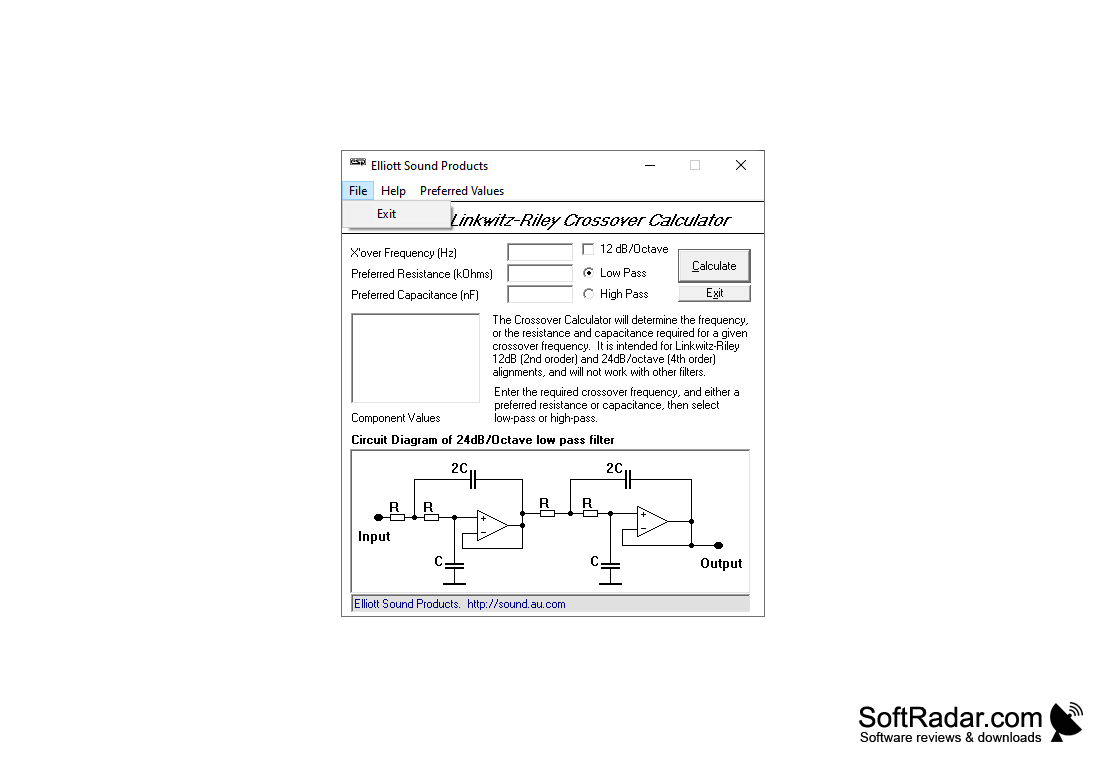
Welcome to the Linkwitz-Riley Crossover Calculator software! This program allows you to easily calculate the frequency of a Linkwitz-Riley crossover and the components of the crossover circuit.
Features
- Automatically generates the crossover frequency for a 2-way or 3-way system
- Calculates the components for the crossover circuit
- Includes a comprehensive database of components
- Includes an assortment of filter types
- Allows for manual entry of crossover frequency
- Easily switch between low and high pass filter types
- Easily customize the crossover frequency
- Generates a detailed report of the crossover circuit
- Stores multiple crossover configurations
The Linkwitz-Riley Crossover Calculator provides an easy-to-use interface for calculating and optimizing crossover frequencies for use in speaker systems.
The Linkwitz-Riley Crossover Calculator software is the perfect tool for audio engineers and DIY enthusiasts looking to quickly design a Linkwitz-Riley crossover circuit. The program is easy to use and includes a comprehensive database of components so you can easily customize your crossover circuit.
The program allows you to automatically generate the crossover frequency for a 2-way or 3-way system. You can also calculate the components for the crossover circuit and easily switch between low-pass and high-pass filter types. Additionally, the program allows you to manually enter the crossover frequency if needed.
The program also makes it easy to customize the crossover frequency. With the Linkwitz-Riley Crossover Calculator software, you can generate a detailed report of the crossover circuit and store multiple crossover configurations.
The Linkwitz-Riley Crossover Calculator software is the perfect tool for anyone looking to design a Linkwitz-Riley crossover circuit quickly and easily. With its easy-to-use interface and comprehensive database of components, the program is sure to make designing your crossover circuit a breeze.
• Responsive design for use on all devices
• Easy-to-use user interface
• Ability to input crossover frequencies and calculate crossover slopes
• Ability to compare different configurations
• Ability to save and share configurations
• Ability to export configurations to other software
• Ability to generate diagrams or graphs to visualize the results
• Ability to print or export diagrams or graphs
• Ability to store and access past configurations
• Ability to access and update user settings
• Security to protect user data
• Ability to access help or tutorials
• Ability to access customer support
• Ability to integrate with other software
• Ability to integrate with social media
• Accessibility options for visually impaired users
• Multi-language support
• Ability to access online updates
PROS
Calculates crossover frequencies with high accuracy.
Provides in-depth information about your sound system's performance.
CONS
No built-in help or tutorial feature.
Limited functionality beyond crossover calculations.