
SWI-Prolog
A free, open-source Prolog implementation with a compiler, debugger and libraries for logic programming, AI and computational linguistics.
Operating system: Windows
Publisher: Jan Wielemaker
Release: SWI-Prolog 10.0.2
License: Open source (BSD-2-Clause)
Antivirus check: VirusTotal report
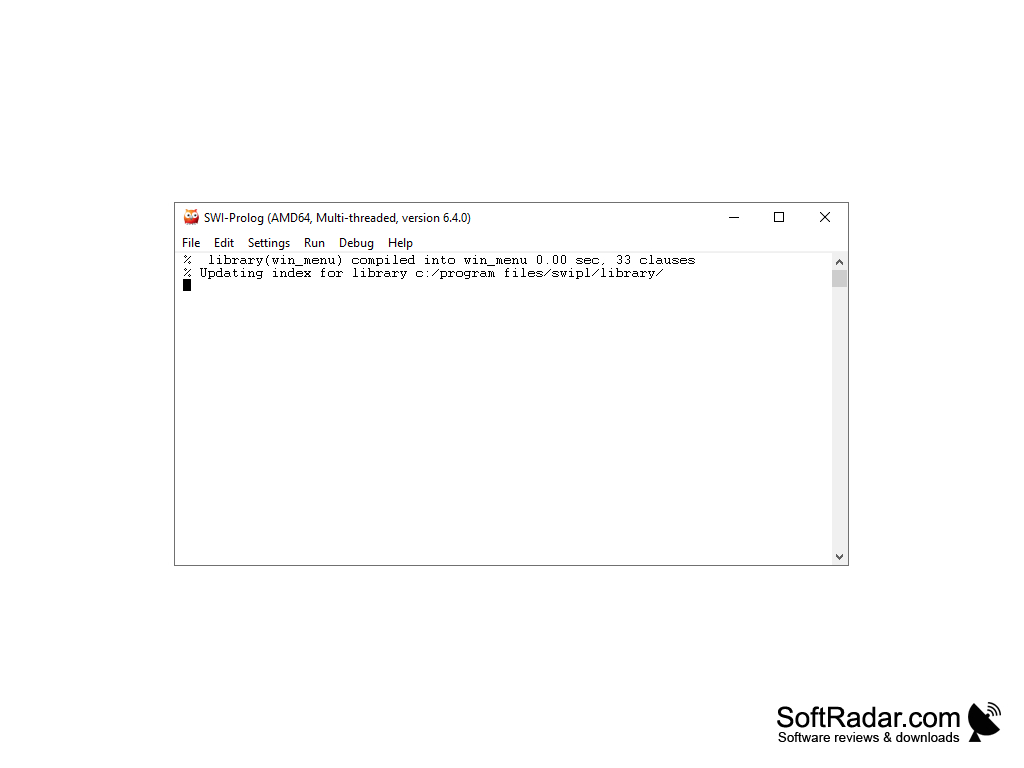
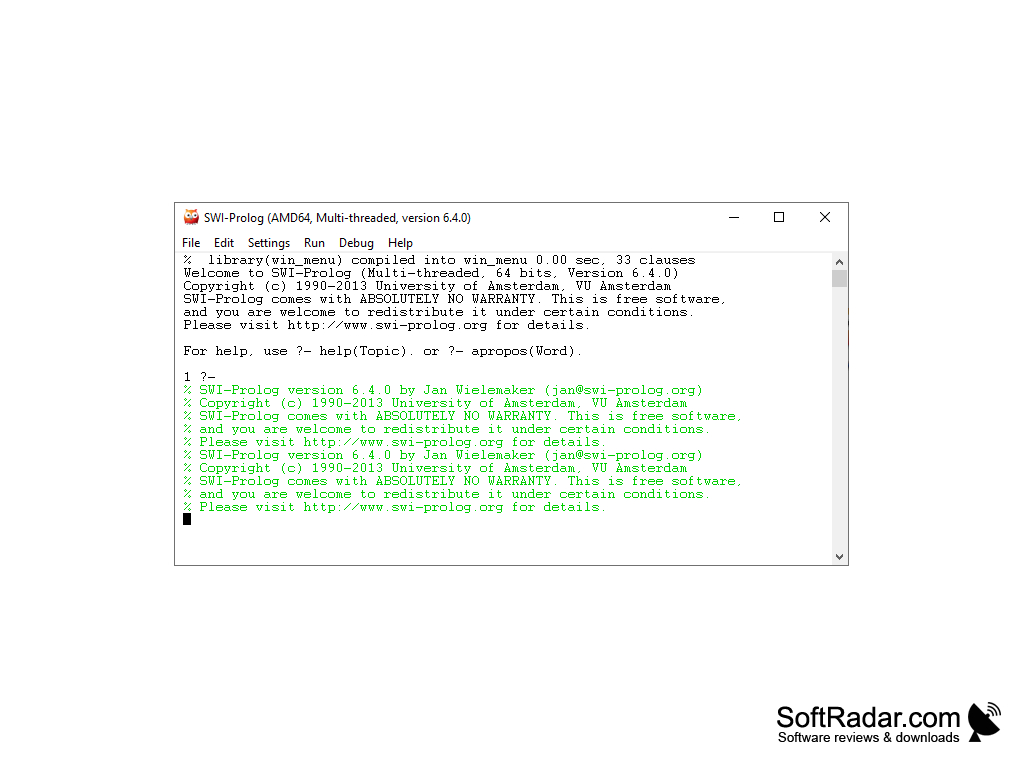
SWI-Prolog is an open environment for Prolog programming language development. Prolog is a logic programming language used in artificial intelligence, computational linguistics, education, knowledge-based systems and Semantic Web applications. The program is equipped with advanced debugging tools, including a graphical tracer, and a set of specialized instructions. To fulfill these instructions, the program uses its own virtual machine, which keeps compilation fast and the load on the system low.
One of the most important advantages of SWI-Prolog is the ability to work with C / C++ code through its foreign language interface. Thanks to it, the environment can be embedded in other applications or extended with native libraries. Static and dynamic code can be analyzed with the cross-referencer and the profiler. SWI-Prolog includes: a cross-referencer, a profiler, a package manager for add-on libraries, HTTP server libraries, HTML, RDF and XML parsers, and the PceEmacs text editor. The latter is an Emacs-like editor written in Prolog.
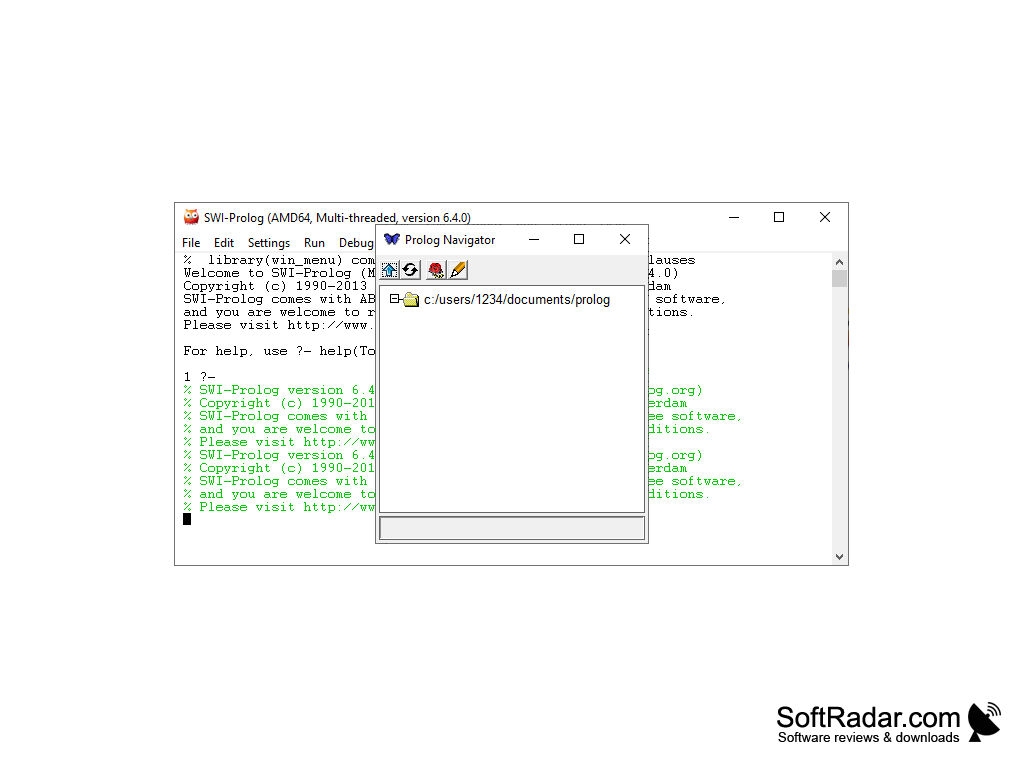
Although SWI-Prolog works well from its console window, it is often used together with the platform-independent GUI toolkit XPCE, which is bundled with it. This framework offers sliders, menus, tabs and other GUI widgets and powers the graphical debugger, the PceEmacs editor and the Prolog Navigator. In general, XPCE greatly simplifies work in the SWI-Prolog environment and makes it much more comfortable.
SWI-Prolog offers advanced debugging tools, rapid compilation, and the ability to work with C/C++ code, making it versatile and efficient for Prolog programming.
The system is absolutely free, has open source code under the Simplified BSD license and is actively developed by Jan Wielemaker and the community.
PROS
Supports multi-threading and Unicode.
Powerful debugging and development tools.
CONS
Steep learning curve for beginners.
Console interface feels basic next to modern IDEs.


