
Yagi Calculator
Yagi Calculator is a free Windows program by John Drew VK5DJ that calculates the dimensions of DL6WU-style long Yagi antennas for VHF and UHF.
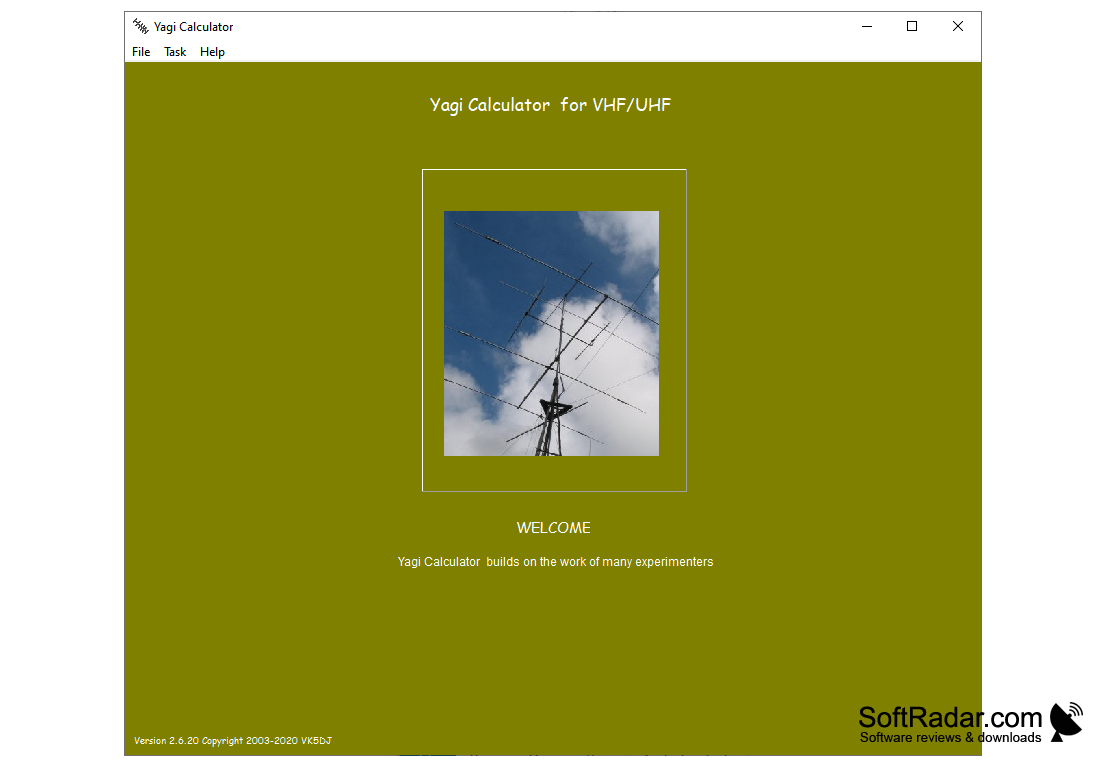
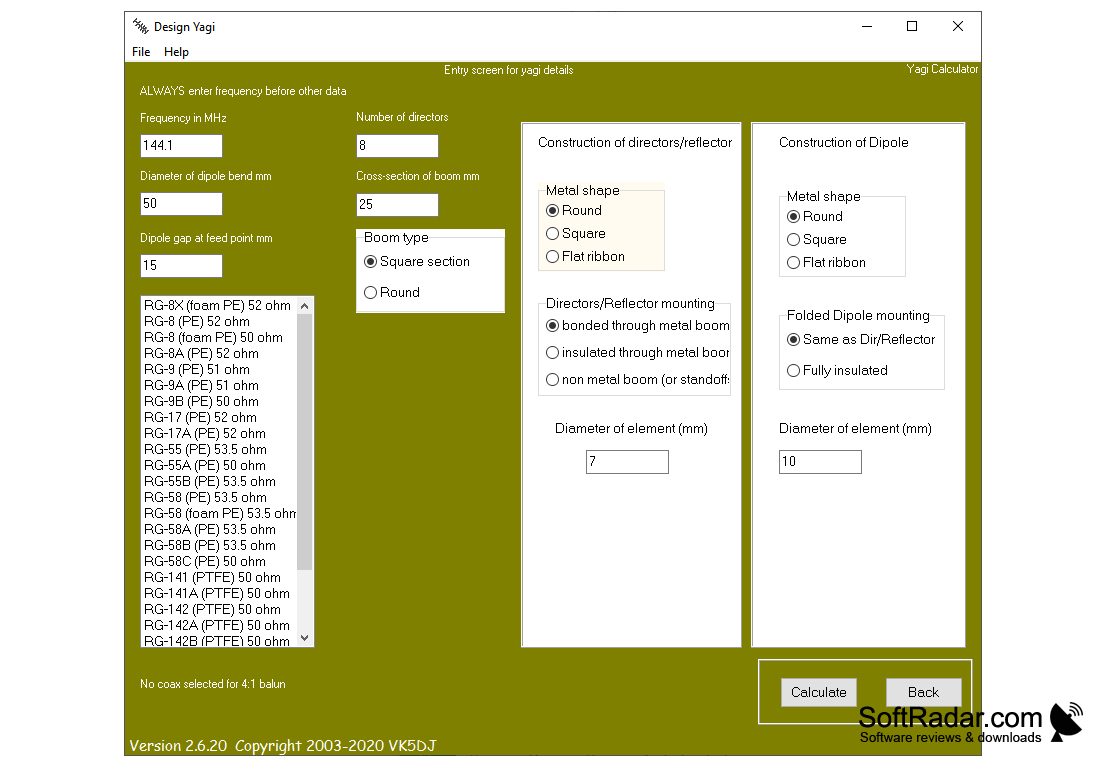
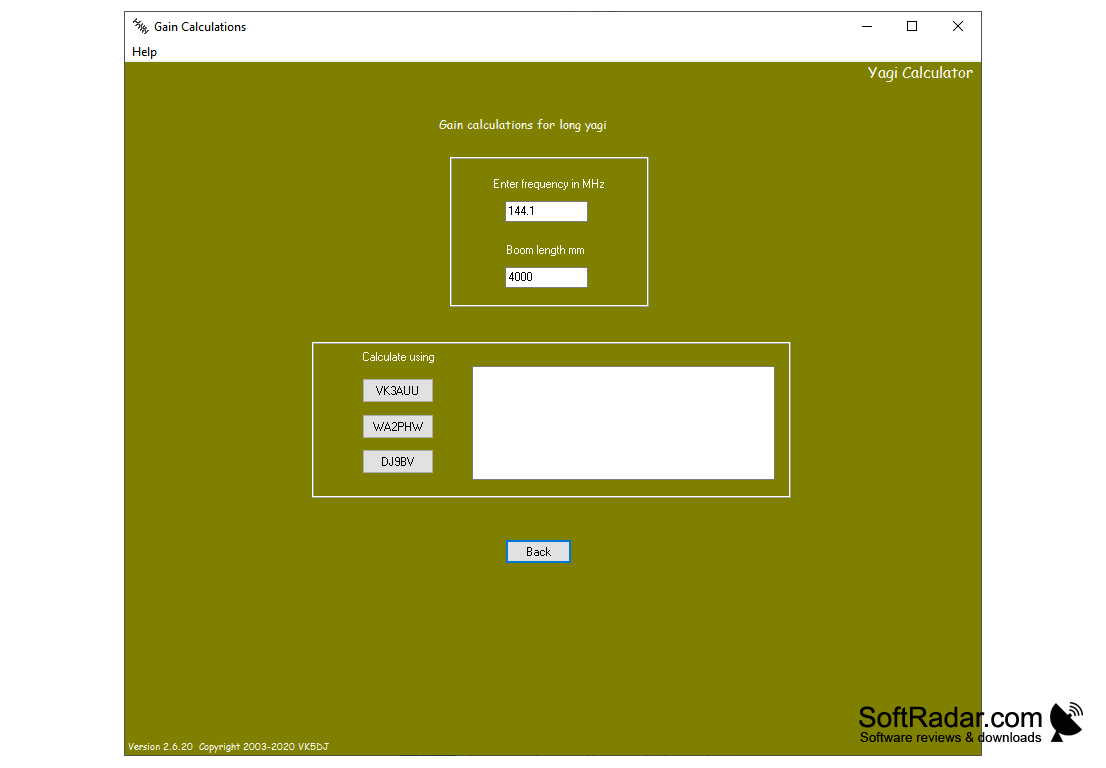
Yagi Calculator is a free antenna design program for the radio amateur, written by John Drew (VK5DJ). It produces the dimensions of DL6WU-style long Yagi antennas for the VHF, UHF and microwave bands, typically from the 144 MHz amateur band up to 2.4 GHz. The calculations are based on the graphs and principles published by DL6WU in the VHF Communications magazine in 1982 in an article about extremely long Yagi antennas.
Features:
-Calculates element lengths and spacings of a DL6WU Yagi for the frequency you enter.
Yagi Calculator lets radio amateurs quickly get element lengths, spacings and balun dimensions for building their own long Yagi antennas.
-Takes the element material into account: round, square or flat ribbon elements.
-Supports different mounting methods: elements bonded through a metal boom, insulated through the boom or mounted on a non-metal boom.
-Supports square and round booms of a given cross-section.
-Calculates the folded dipole and its mounting.
-Calculates balun dimensions from a list of common coaxial cables.
-Optimizes an existing DL6WU antenna design.
-Estimates the gain of a long Yagi from the frequency and boom length.
-Compares gain estimates made by the VK3AUU, WA2PHW and DJ9BV methods.
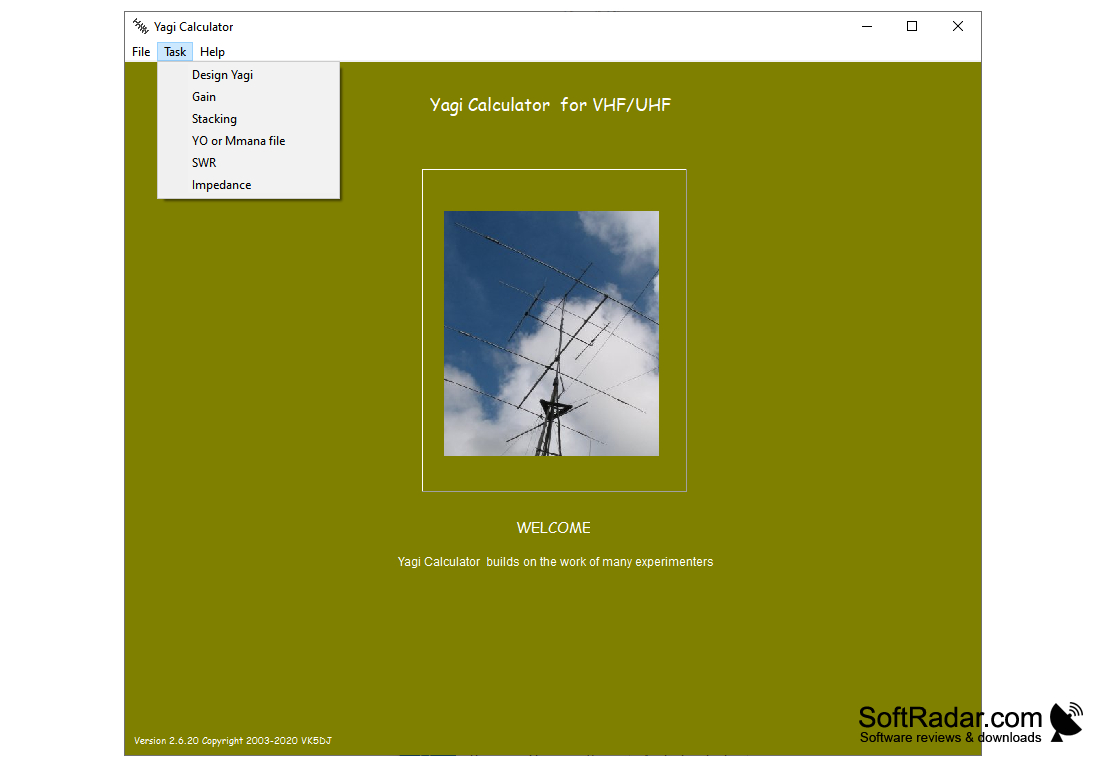
-Gives stacking information for antenna arrays.
-Includes an SWR calculator.
-Includes a feedline loss calculator.
-Includes an impedance calculation tool.
-Exports designs as YO or MMANA-GAL files for further modeling.
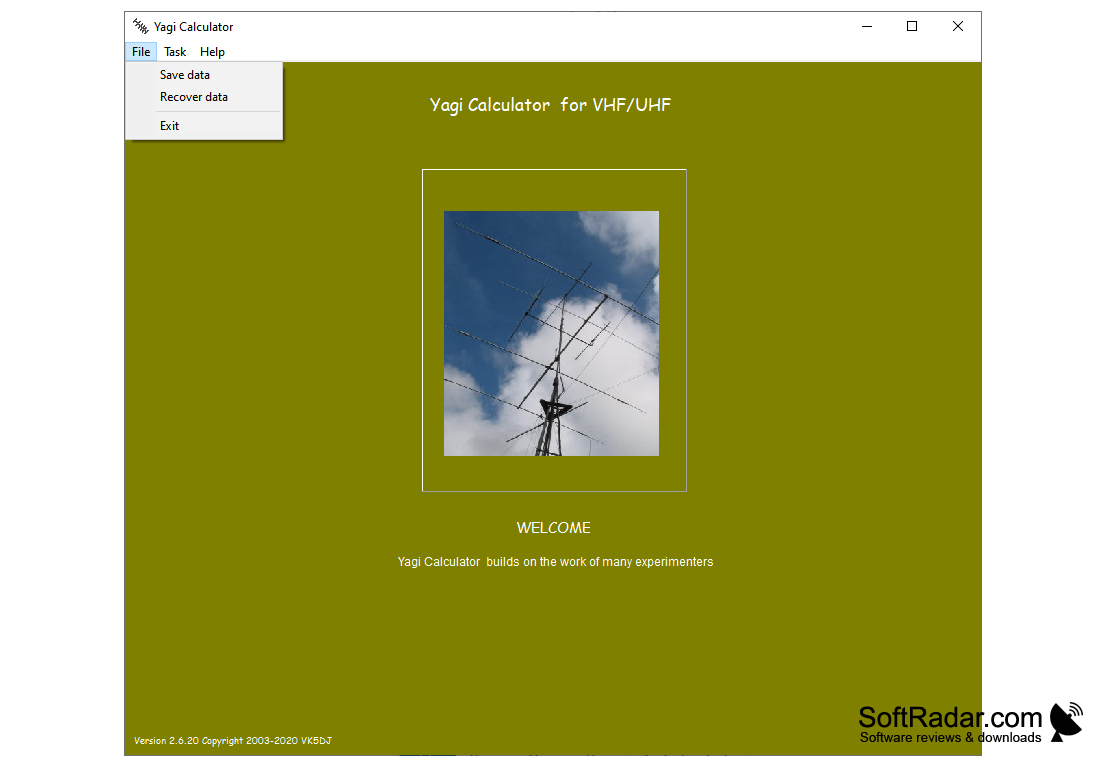
-Saves and recovers design data.
-Adjusts the decimal separator to the Windows region settings.
-Comes with a comprehensive help file on Yagi design.
Yagi Calculator is designed to be easy to use, yet useful for the experienced radio amateur who builds antennas. You always enter the frequency first, then the boom and element details, and the program shows the resulting dimensions. It is free but copyrighted software for Windows; it also runs on Linux under Wine, and a short-form Linux version with source code is available separately. The program is still maintained, and version 3.0.1 was released in 2023. For radiation patterns and further analysis, the exported YO or MMANA-GAL files can be opened in those antenna modeling programs.
PROS
Allows precise calculation of Yagi antenna elements.
Free, with SWR, gain and stacking tools included.
CONS
Does not simulate radiation patterns itself.
Native version is for Windows only.


