
Ardour
Ardour is an open-source digital audio workstation for recording, editing and mixing audio and MIDI on Windows, macOS and Linux.
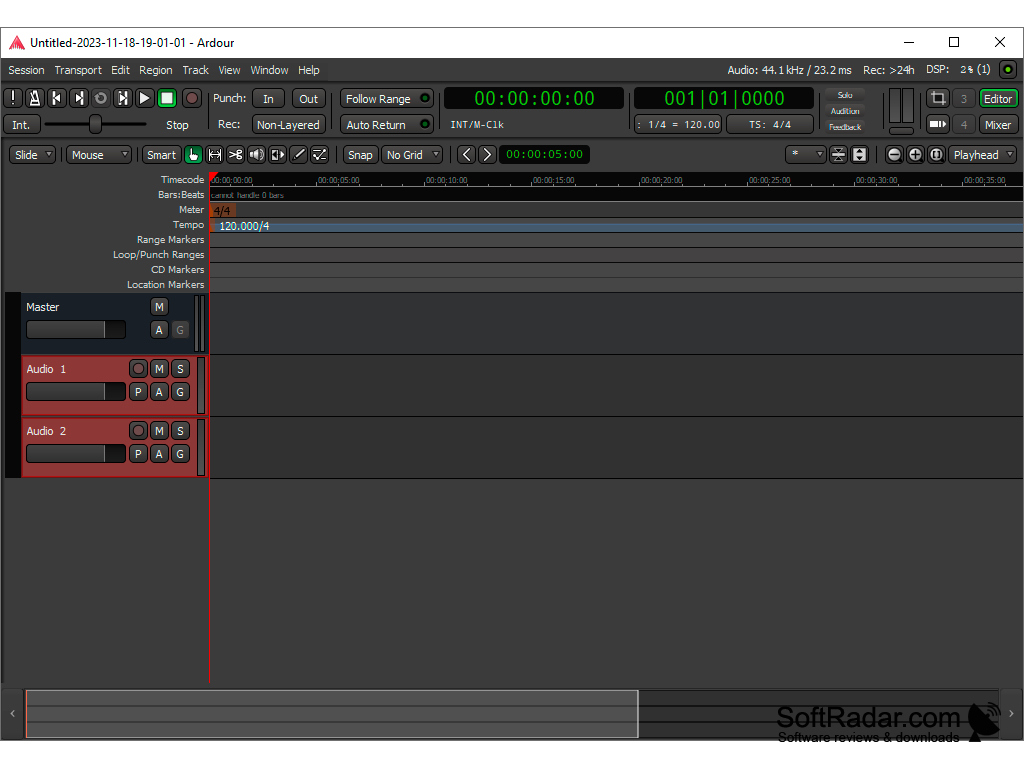
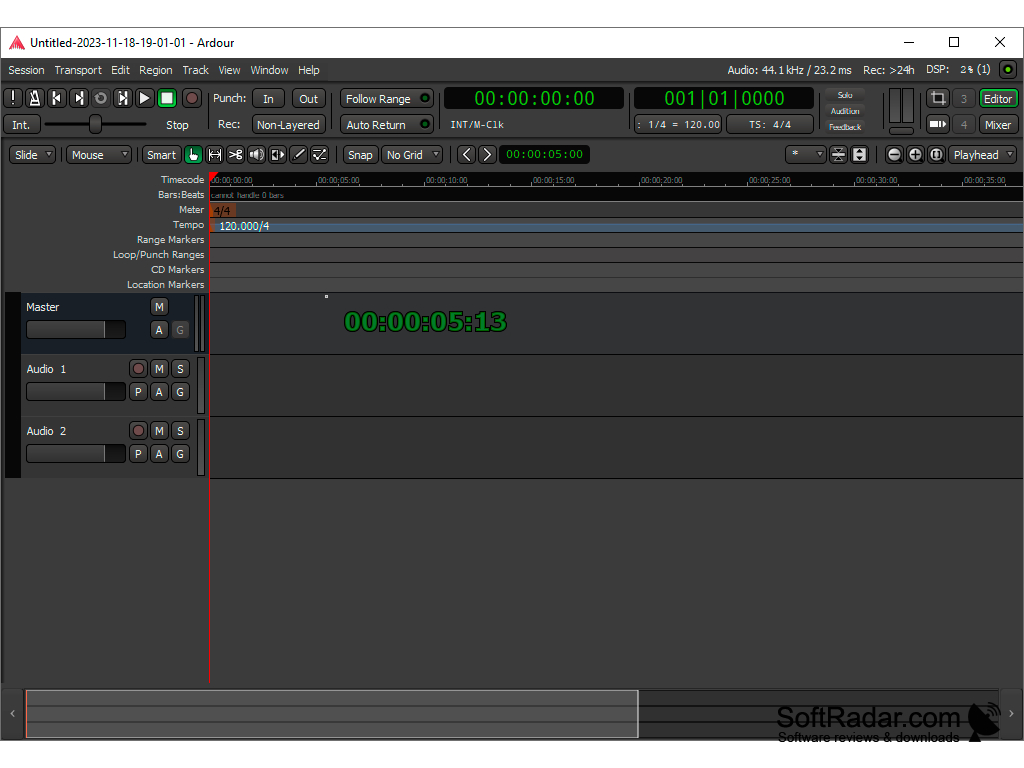
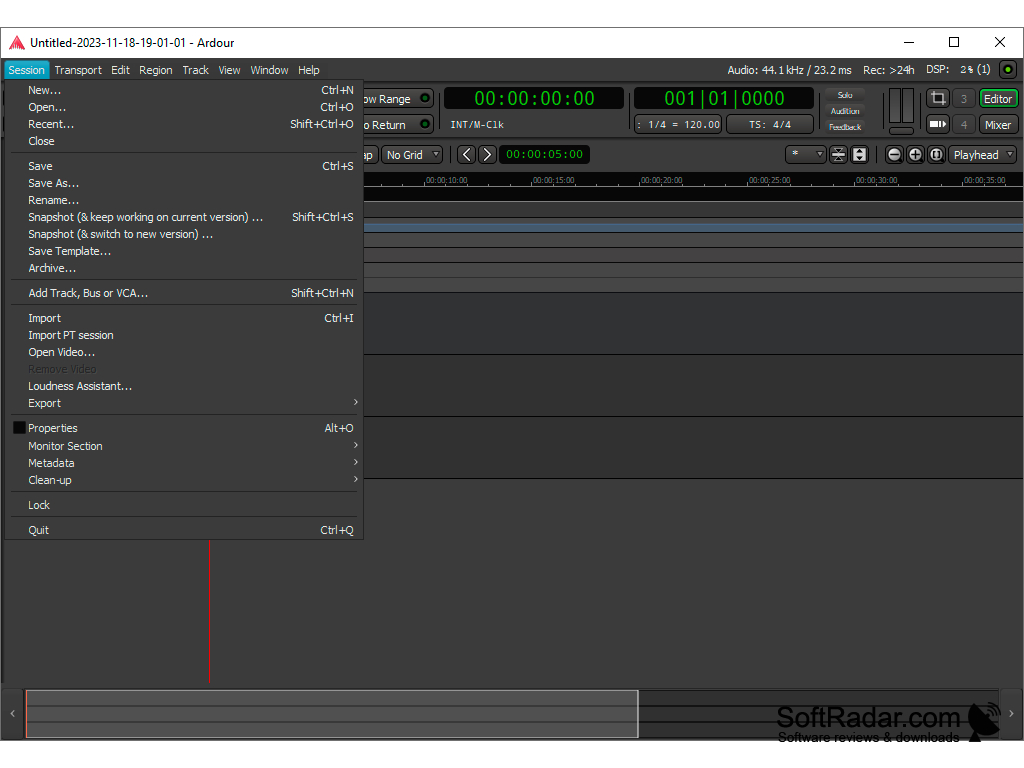
Ardour is a digital audio workstation that has open source code. Initially it was released for Linux, but due to its growing popularity it also received versions for macOS and Windows.
This digital audio editor can be used to bring together tracks, mix, create electronic sets and other sound operations of any complexity. The program supports multichannel recording with automatic latency compensation and faster-than-real-time export. You can add as many buses, tracks and effects as you like to one project at a time. Their number is limited only by the "power" of the computer on which Ardour is running. For convenient content management, the editor supports keyboard shortcuts, which can be customized in a dedicated shortcut editor. Ardour also records and edits MIDI, so tracks can drive virtual instruments.
Ardour allows you to flexibly configure the routing of audio tracks. The editor also allows you to lock regions of sound in place or glue them to bars and beats on the timeline. Splitting recordings into separate regions is quick and precise. Ardour ships with a small set of its own ACE plugins (compressor, delay, EQ, reverb and a basic synth), and you can add third-party VST2, VST3, LV2 or LADSPA plugins yourself.
Ardour offers a diverse range of sound operations, including track assembly, mixing, and multi-channel recording, all in an open-source software package.
Supported export formats include FLAC, WAV, AIFF, Ogg Vorbis, CAF and BWF, and many more formats can be imported. Also, Ardour is integrated with the Freesound.org library, so users with a Freesound account can search, preview and import sound clips for their projects. Mixes can also be exported as stems.
As a result, the editor is really multifunctional and free, open-source software under the GNU GPL v2. Ready-to-run Windows builds are sold for a pay-what-you-want price starting at $1, while the free demo build periodically goes silent.
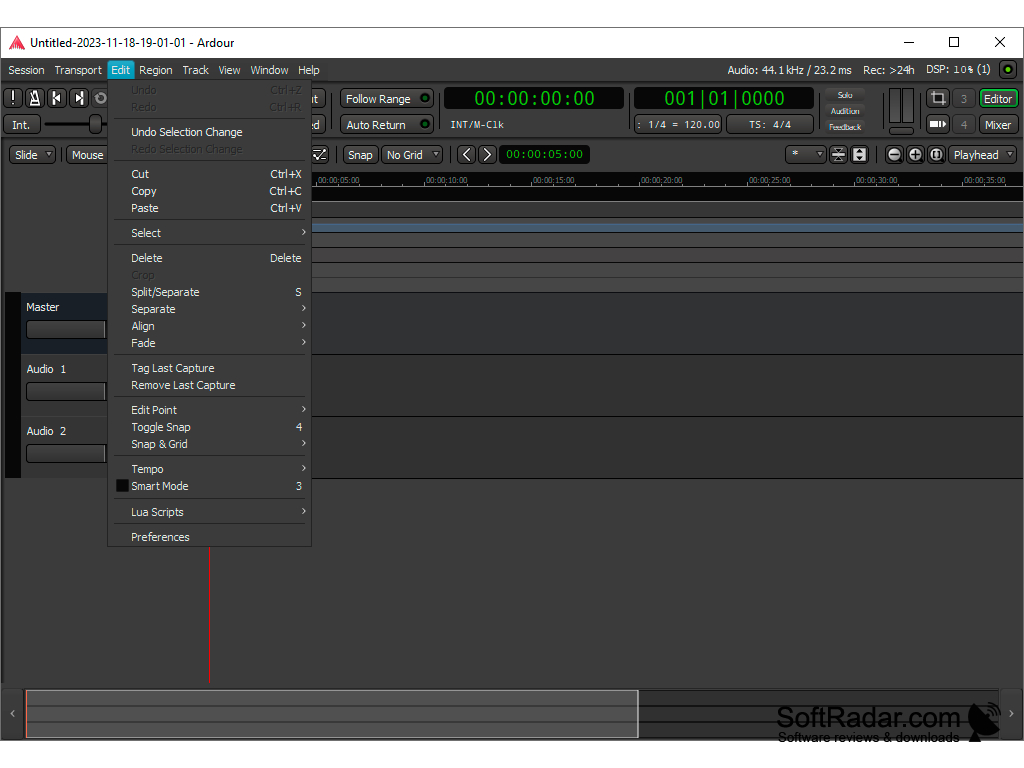

2 GB RAM recommended
600 MB of free disk space for installation
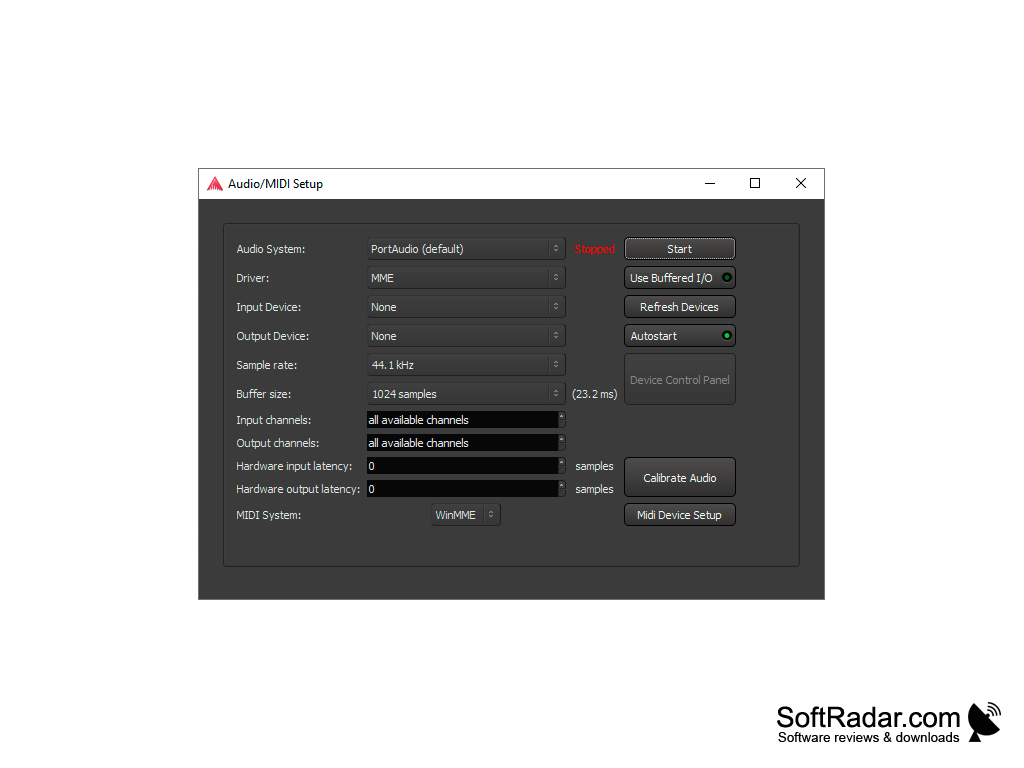
Audio interface supported by ASIO, ASIO4all or MME
PROS
Runs on multiple operating systems.
Open-source and customizable for user needs.
CONS
Offers only a few built-in instruments and no sound library.
The free demo build periodically goes silent.


