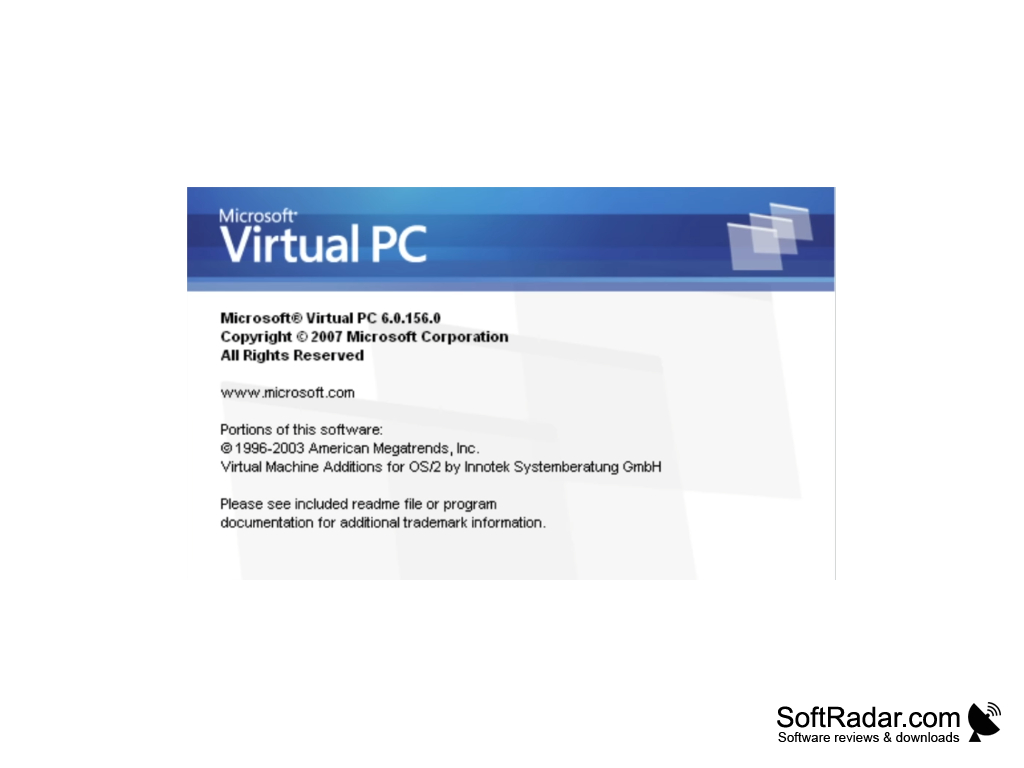
Microsoft Virtual PC
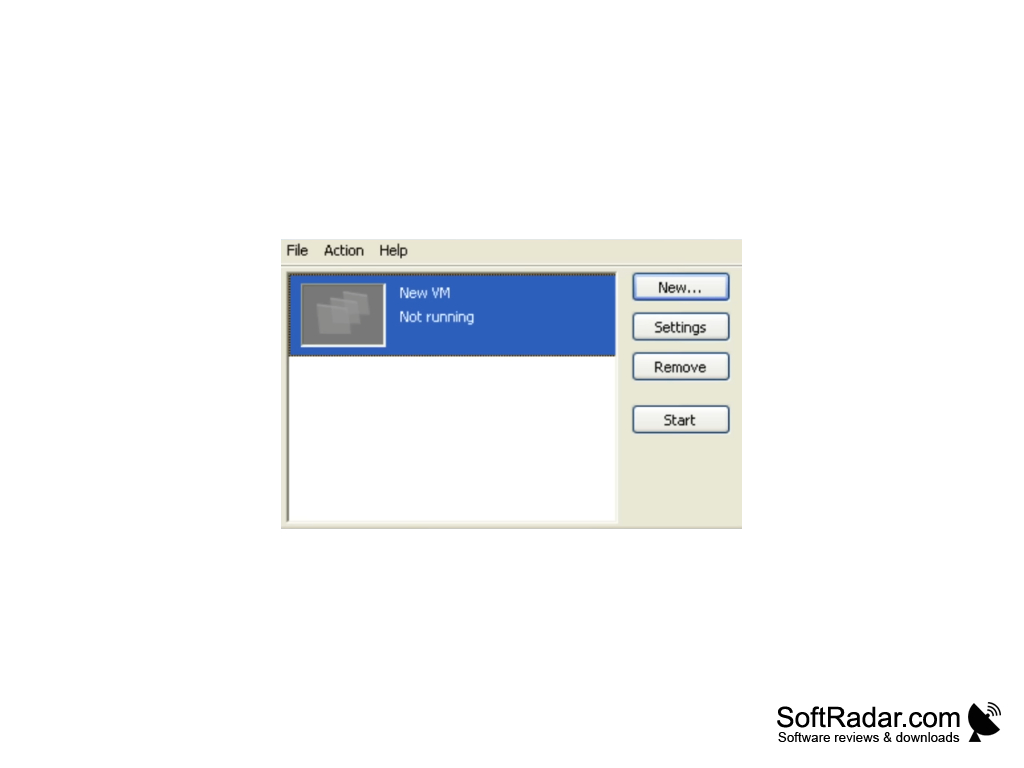
Microsoft Virtual PC is a free, discontinued Microsoft program that runs older Windows, OS/2 and DOS systems in virtual machines on a Windows PC.
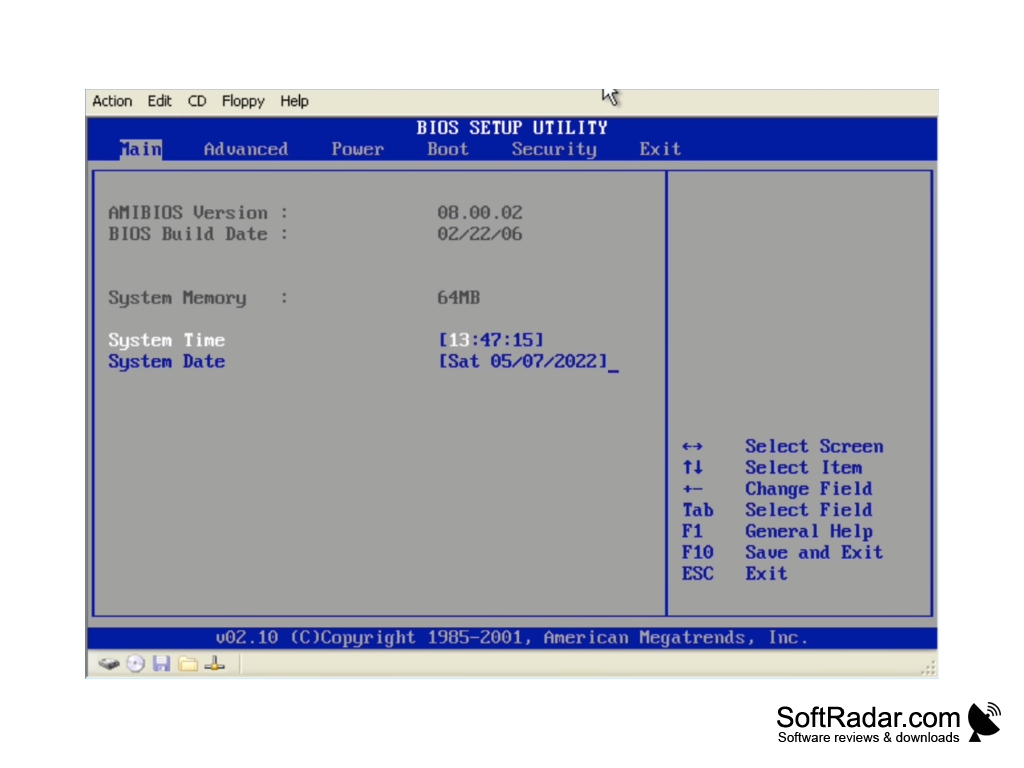
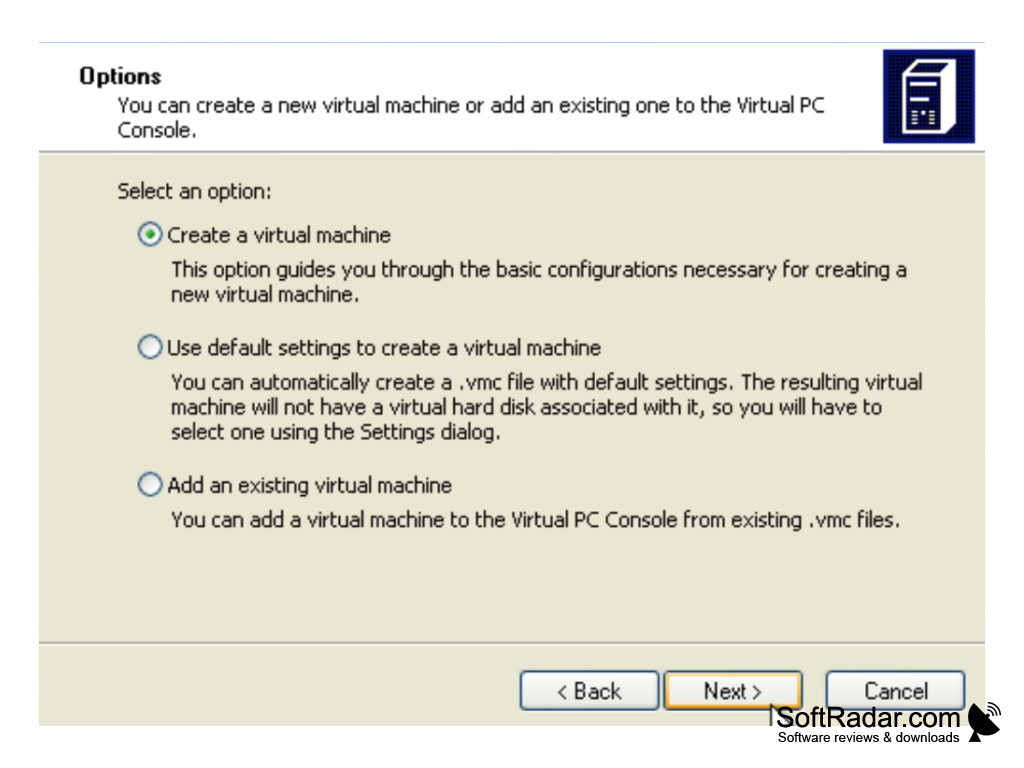
Virtualization is a widely used technology that lets one physical PC run several operating systems at the same time. There are definitely advantages to that. So, for example, you can work with several virtual systems, while physically there is only one OS installed on your computer. Also, each virtual machine keeps its hard disk in a single .vhd file, which is easy to copy, back up or move to another PC. It often happens that the user needs several different operating systems to work. Of course, it is possible to install them on different hard drives, but it is financially expensive and quite inconvenient. A way out of this situation is to install Microsoft Virtual PC.
By downloading this software product, you will, in fact, get a second computer inside a window. By creating a PC analogue, Microsoft Virtual PC emulates a complete set of hardware: an Intel 440BX chipset, an S3 Trio64 graphics card, a Sound Blaster 16 sound card and a DEC 21041 network card, plus CD/DVD and floppy drives, COM and LPT ports. The program officially supports Windows guests from Windows 95 to Windows Vista as well as OS/2, and older systems such as MS-DOS can also be run. If you are interested in this program for gaming purposes, it is worth mentioning that Microsoft Virtual PC is not suitable for you. At least because it doesn't have the 3D accelerator needed for modern games. At most, what you can play on a virtual machine created using Microsoft Virtual PC is old games for DOS/Win 3.x/9x.
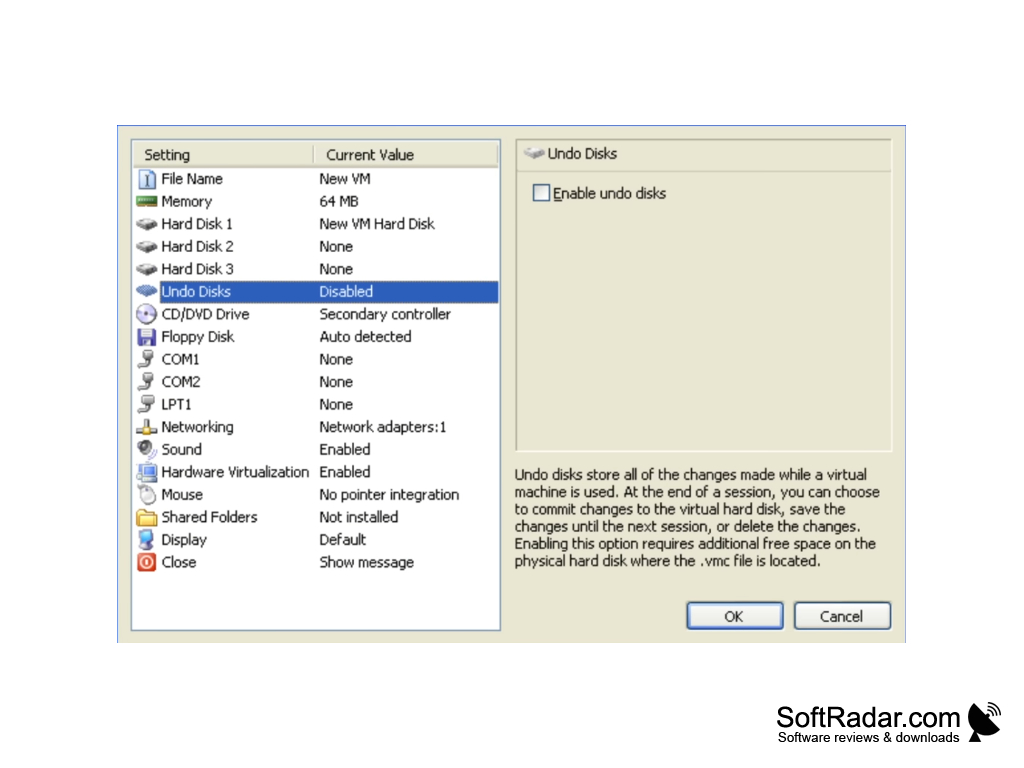
The app is ideal for those who simply want to try on a new operating system or test it. Microsoft Virtual PC will be of particular interest to developers and testers who need older versions of Windows. Undo disks let you discard all changes made during a session, and Virtual PC 2007 can use Intel VT and AMD-V hardware virtualization, although only 32-bit guest systems are supported. The program is free but no longer developed: Windows 7 received Windows Virtual PC instead, and Windows 8 and later versions use Hyper-V.
Microsoft Virtual PC allows users to operate multiple operating systems on one computer, providing a cost-effective and efficient way to test new systems.
Windows Vista Business, Enterprise or Ultimate
32-bit or 64-bit host system
Intel VT or AMD-V support is optional
PROS
Easy to install and configure.
Free for Windows users.
CONS
No 3D graphics acceleration for guest systems.
No longer developed or updated by Microsoft.