
USBlyzer
USBlyzer is a software USB protocol analyzer and traffic sniffer for Windows that captures and decodes USB device activity.
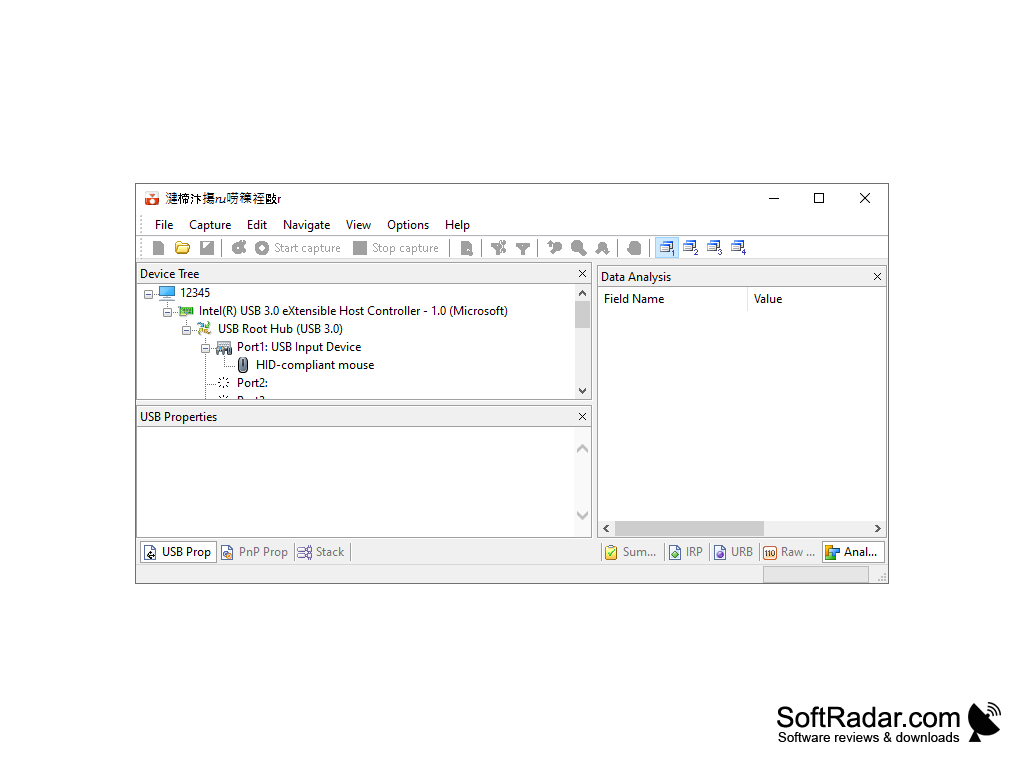
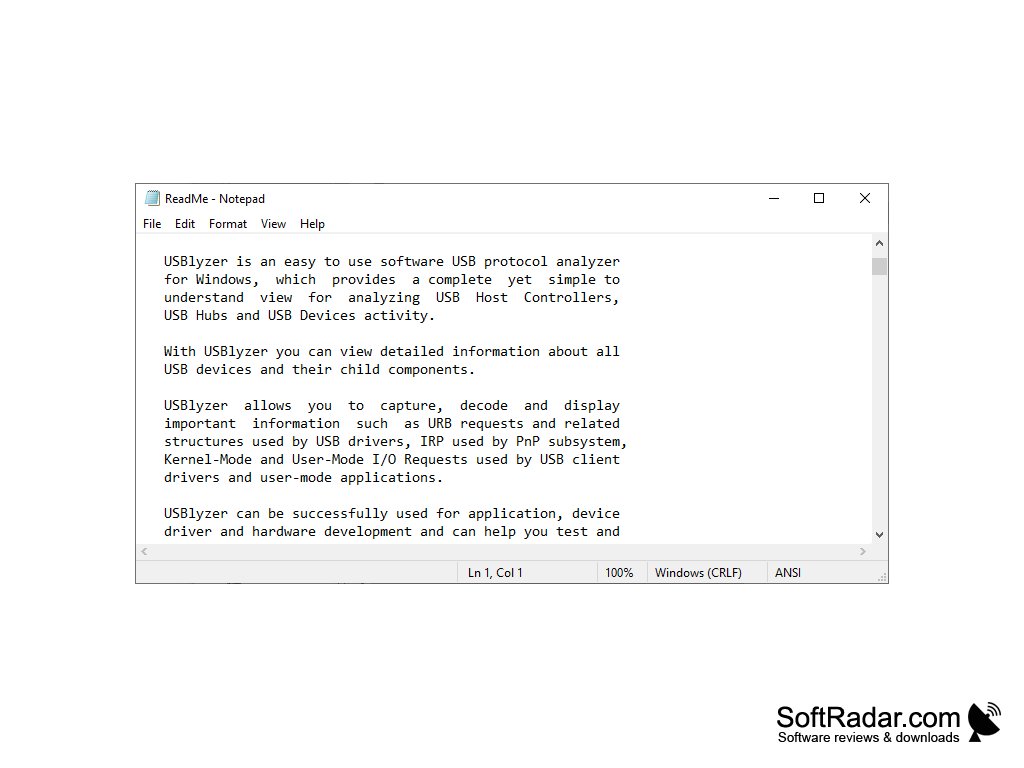
USBlyzer is a software USB protocol analyzer designed to monitor the activity of devices connected to a computer via USB interface. The program captures, decodes and displays the requests exchanged between USB devices, their drivers and Windows applications, which shows how a device actually communicates with the system. USBlyzer displays information about all host controllers, hubs and ports and accurately identifies connected devices, whether they are drives, smartphones/tablets, peripherals, etc., together with their descriptors, configurations, interfaces and endpoints. USB 3.0 host controllers are shown in the device tree as well.
The program interface is divided into a panel with an activity ribbon and a list of ports. There is also a section with collected technical information about the connected devices. Ports are displayed in a tree-like list, which allows you to see the interfaces "belonging" to one hub more clearly. To start collecting information about the device, use the "Capture" item and select the appropriate parameters of activity analysis. Monitoring is performed in real time, and all collected statistics are displayed in a single summary table. URB, IOCTL and IRP requests can be captured and decoded.
In addition to protocol analysis, USBlyzer also serves to debug device drivers and the device enumeration process and to reverse-engineer USB protocols. The utility is particularly good at detecting problems that occur during data transfer, and captured data can be exported for offline analysis.
USBlyzer lets developers capture and decode USB requests in real time, making it easier to debug USB devices, drivers and data transfer problems.
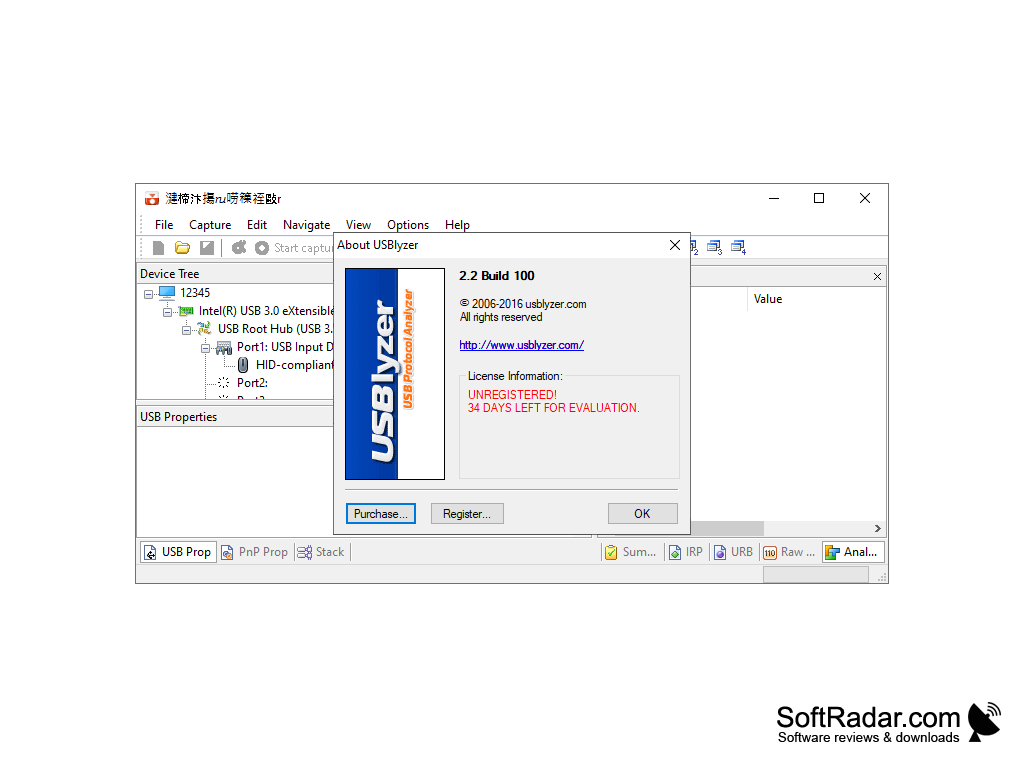
In general, we have a rather useful program for USB developers. It is commercial software that can be evaluated for free for a limited period; the last version, 2.2, was released in 2016, and the official website is no longer online.
PROS
Shows detailed USB descriptors in a clear device tree.
Ability to perform comprehensive USB traffic analysis.
CONS
Difficult to use for beginners.
No longer developed and the website is offline.


