4nec2
4nec2 is a free NEC2/NEC4 based antenna modeler, analyzer and optimizer for Windows with 3D geometry editing and radiation pattern display.
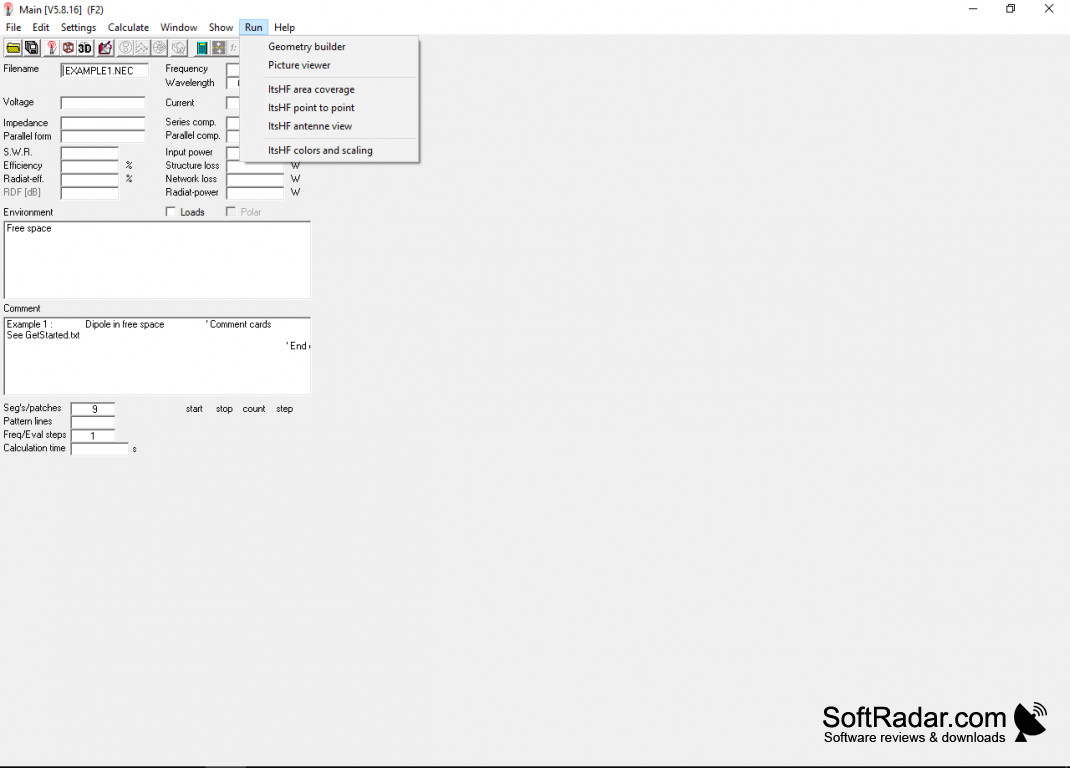
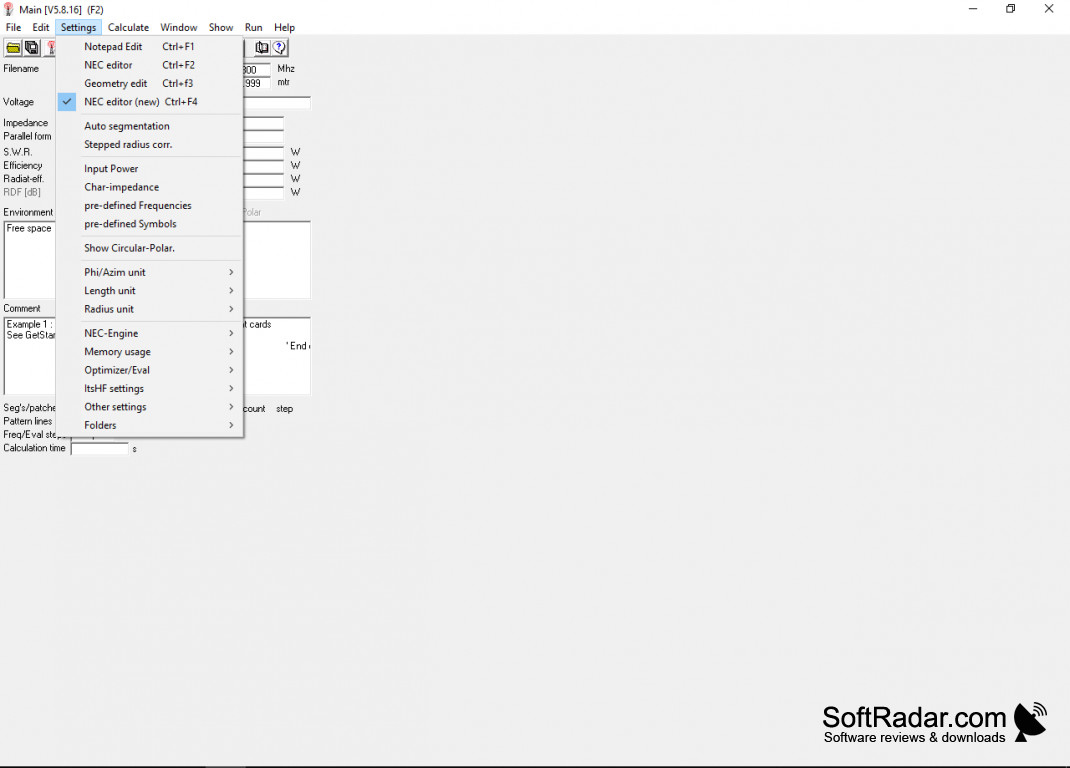
4nec2 is a completely free antenna modeling program for users that run Windows, written by Arie Voors. It is a NEC2 and NEC4 based tool that lets you create, view, edit and optimize 2D and 3D style antenna geometry structures, and generate, display and compare near-field and far-field radiation patterns. It is aimed at both starting and experienced antenna modelers.
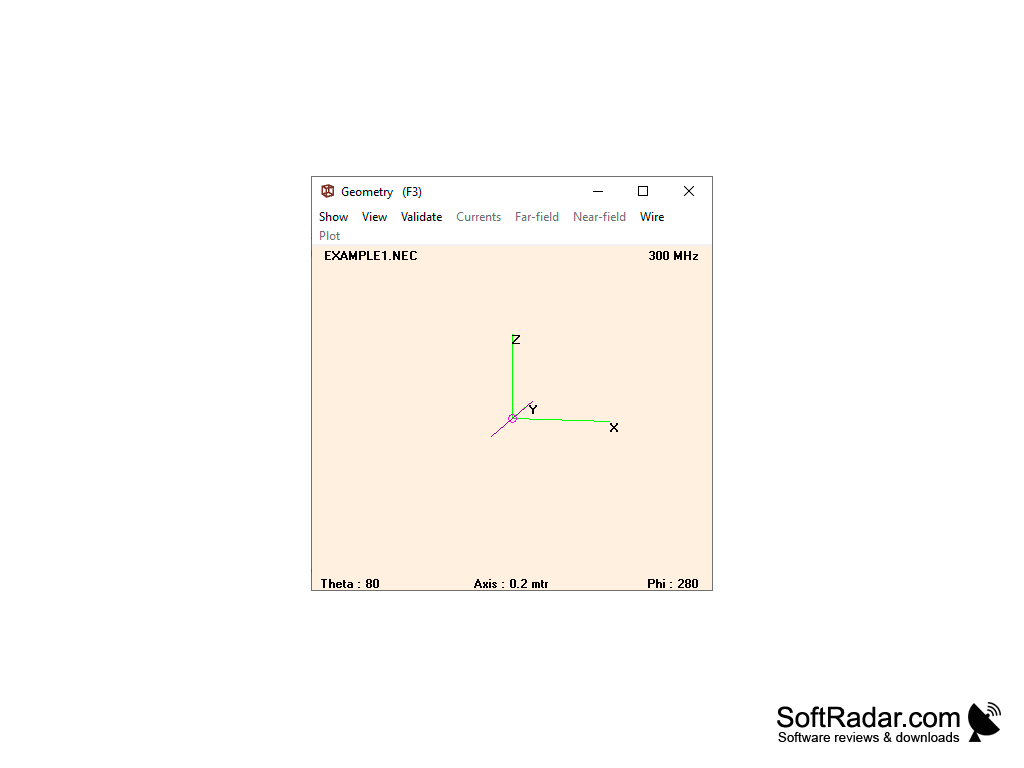
You can use the 2D view to display polar plots of the radiation pattern, while the real-time 3D viewer shows the geometry with real wire radius, the current distribution and the full far-field pattern. When running frequency sweeps, 4nec2 produces SWR, gain, F/B ratio and impedance line charts, and an interactive Smith chart is available too. 4nec2 also allows users to describe the antenna in a variable or symbolic format.
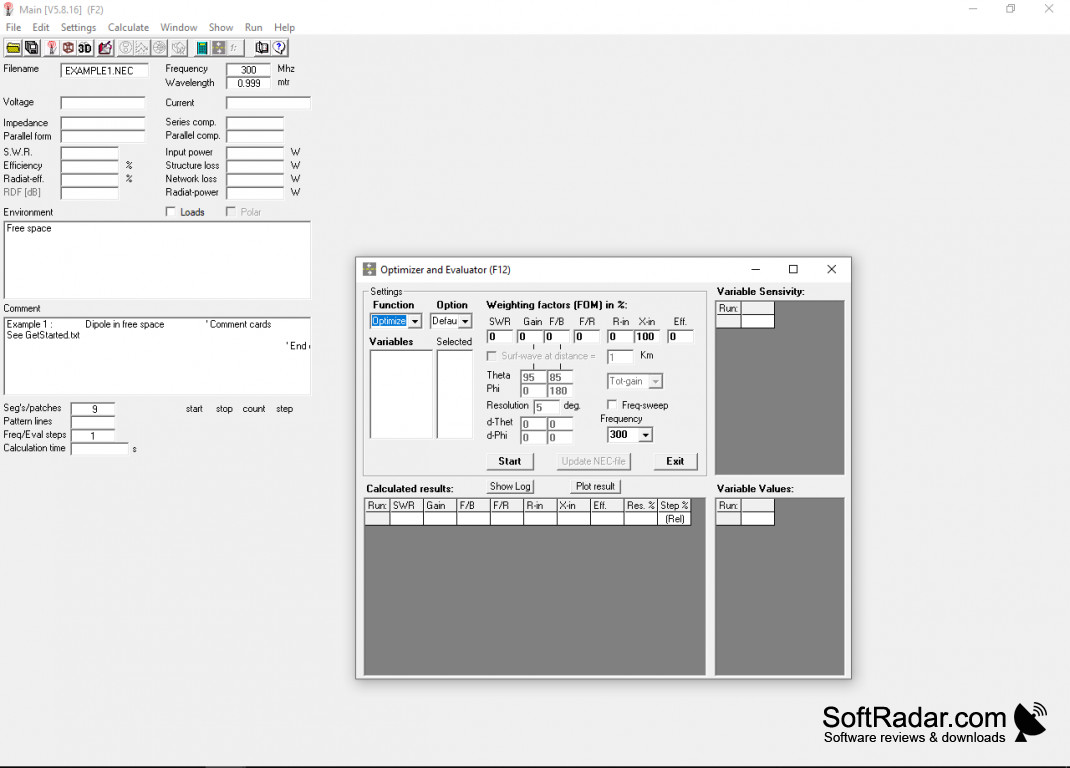
These variables can be used for more complex models, and the same variable name can be reused in different places of the model. If a value needs to be changed, you change the variable once instead of editing every line manually, because variable substitution works for the complete NEC2/NEC4 command set. The biggest pro of 4nec2 is that it is completely free for its capabilities, and the built-in optimizers make it easy to tune designs with multiple elements that would otherwise be overwhelming and very time-consuming. Both a gradient (hill-climbing) optimizer and a genetic algorithm based optimizer are included, together with a variable sweeper.
With variables and built-in optimizers it lets users change and tune antenna designs without editing every value manually.
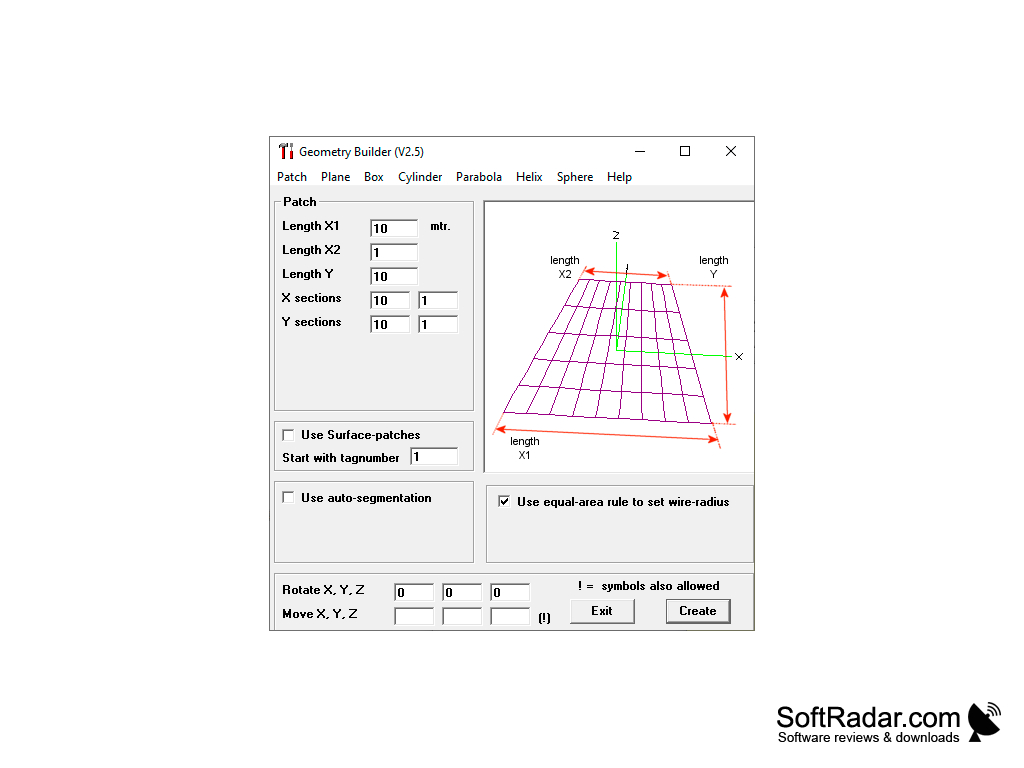
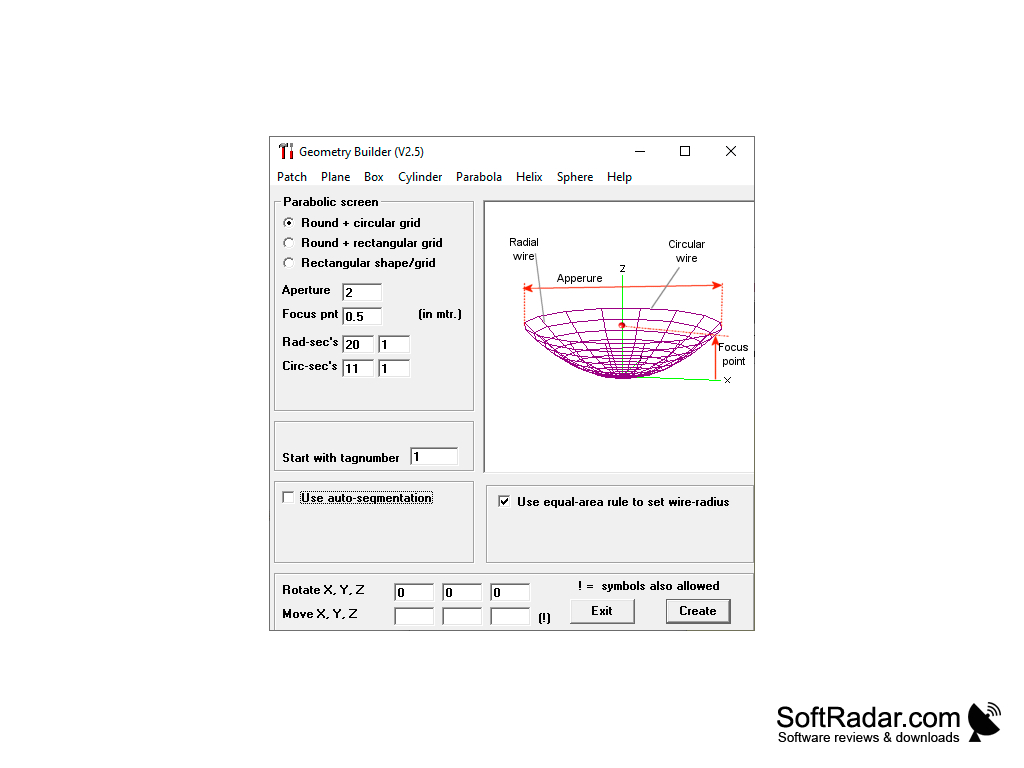
Another pro of 4nec2 is the graphical entry of antenna models. The drag and drop geometry editor and the Geometry Builder create patches, planes, boxes, cylinders, helixes and parabolas without writing NEC cards by hand, and AO and EZNEC input files can be converted.
By default 4nec2 runs models with up to 1500 segments. If needed, you can download the Nec2dXS engine files from the 4nec2 website, put them in the program folder and run models with up to 11,000 segments, although larger models take much longer to calculate.
Nec2dXS engine files for models over 1500 segments
PROS
Comes with a user-friendly, graphical interface.
Offers impressive, high-resolution 3D radiation pattern displays.
CONS
The NEC4 engine requires a separate paid license.
Limited customer support availability and resources.


