
IBM Lotus Symphony
IBM Lotus Symphony is a discontinued free office suite from IBM with a word processor, a spreadsheet and a presentation program, similar to Microsoft Office.
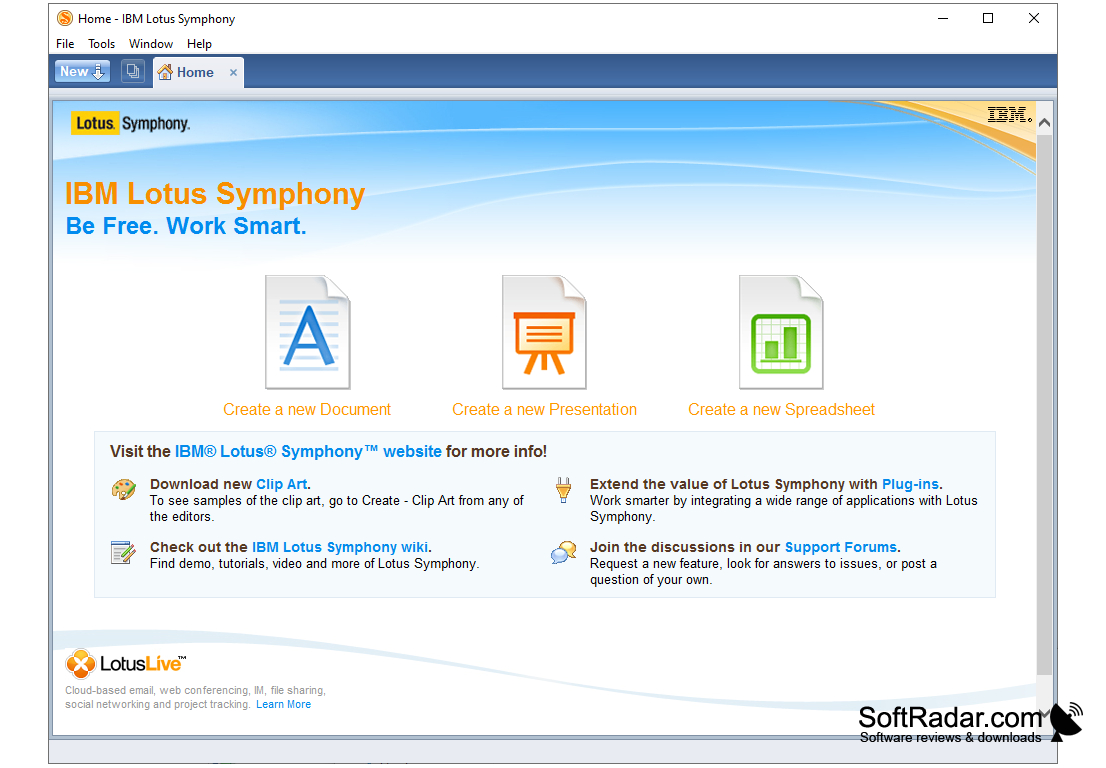
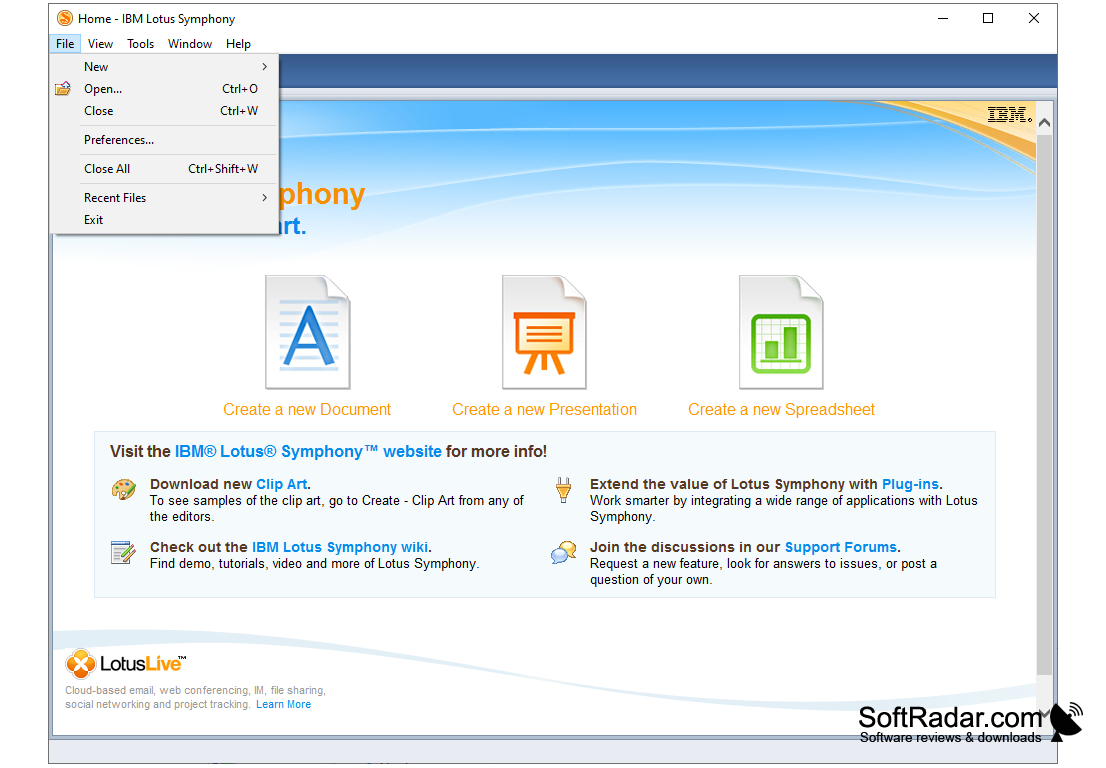
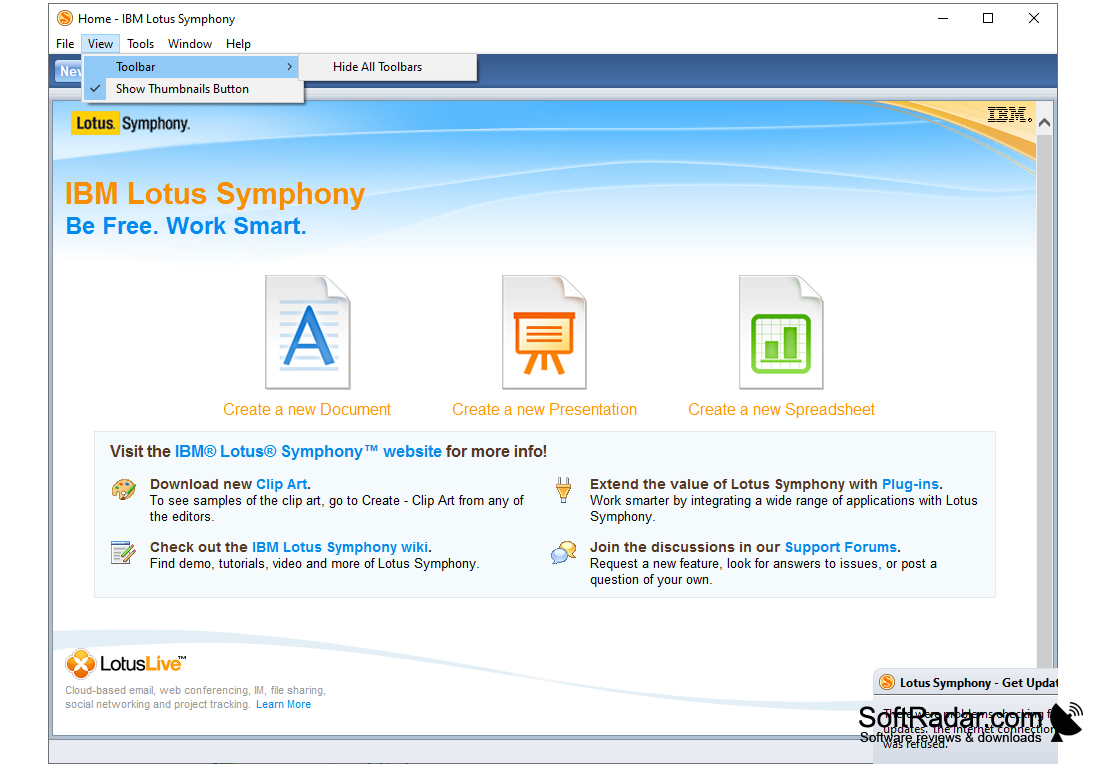
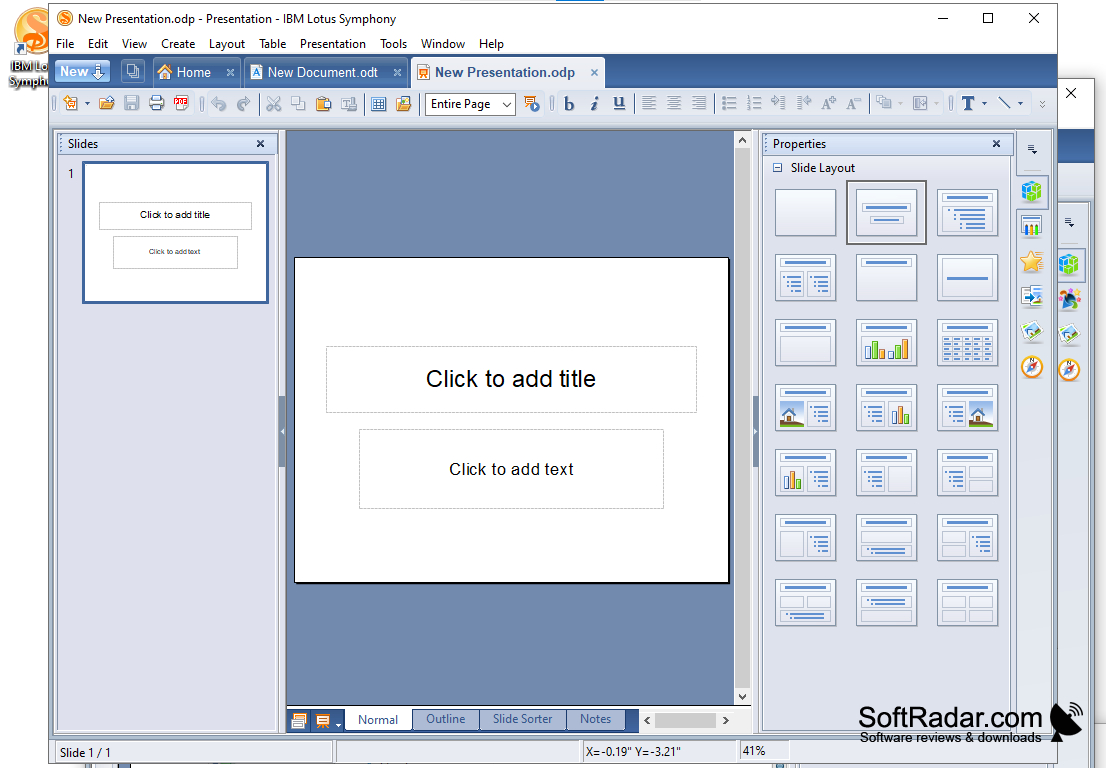
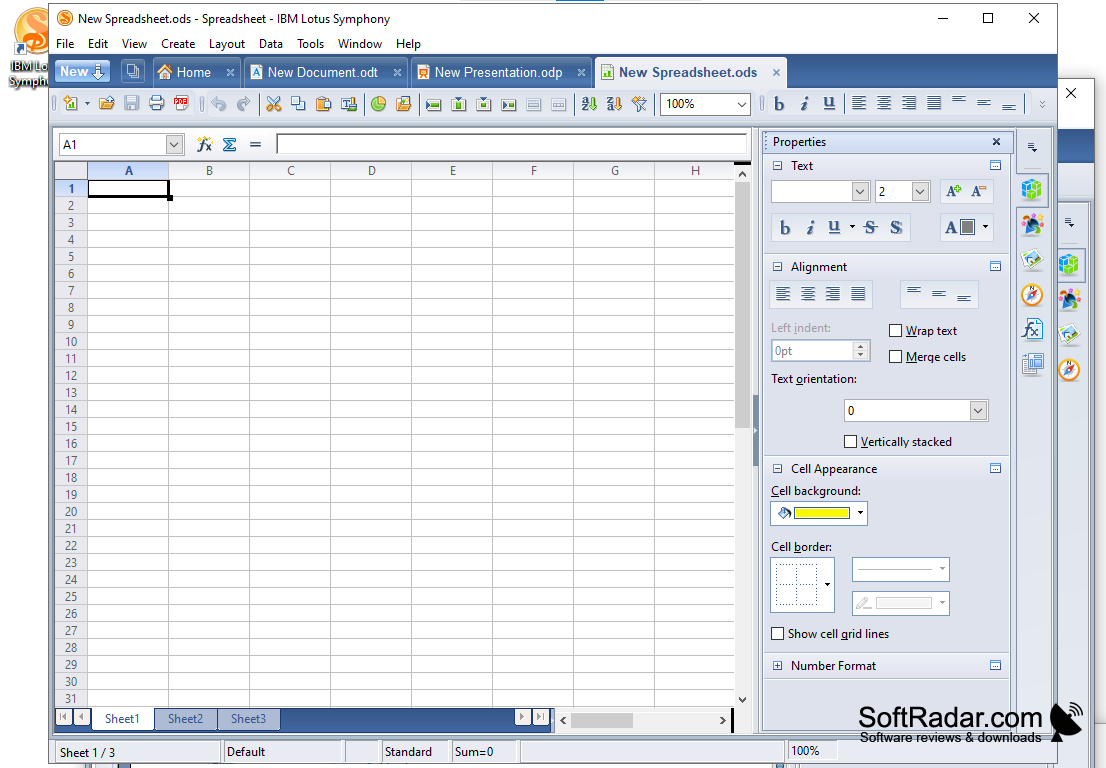
IBM created the office application package known as Lotus Symphony, which was originally made available in May 2008. Similar to Microsoft Office, Lotus Symphony allows users to create, share, and modify documents, including spreadsheets, presentations, and text documents. The IBM suite allows users to open a text, presentation, and spreadsheet application from the same window, unlike its Microsoft counterpart. In reality, one can simultaneously work on a document, a spreadsheet, and a presentation in separate tabs of the same window, and the Home page offers one-click buttons for creating each type of file. Lotus Symphony was distributed as freeware for Windows, Mac OS X, and Linux systems. IBM Lotus Symphony Documents, IBM Lotus Symphony Presentations, and IBM Lotus Symphony Spreadsheets make up the office suite, and a built-in web browser based on Firefox 3 is included as well. It's crucial to understand that OpenOffice.org 3 is largely responsible for IBM Lotus Symphony's foundation. Therefore, Lotus Symphony and OpenOffice share a lot of similarities in terms of their features and functionalities. The user interface shell comes from the Eclipse Rich Client Platform of IBM Lotus Expeditor, which also allows the suite to be extended with plug-ins. Symphony uses the OpenDocument format by default, but it also opens and saves Microsoft Office binary and Office Open XML files and can export documents to PDF. Support for the old Lotus SmartSuite formats was removed in version 3. Version 3.0 was released in October 2010, and IBM ended development in January 2012 with the final release 3.0.1. The product is no longer developed or supported, and IBM contributed its source code to the Apache Software Foundation for Apache OpenOffice, which is regarded as its successor. Although IBM Lotus Symphony essentially performs the same tasks as the other suites, there are significant changes in the way it is designed and some of the capabilities that come with each component.
Features:
- IBM Lotus Symphony Documents, a word processor that can open and save Microsoft Word files.
- Program for spreadsheets called IBM Lotus Symphony Spreadsheets.
- Presentation tool IBM Lotus Symphony Presentations
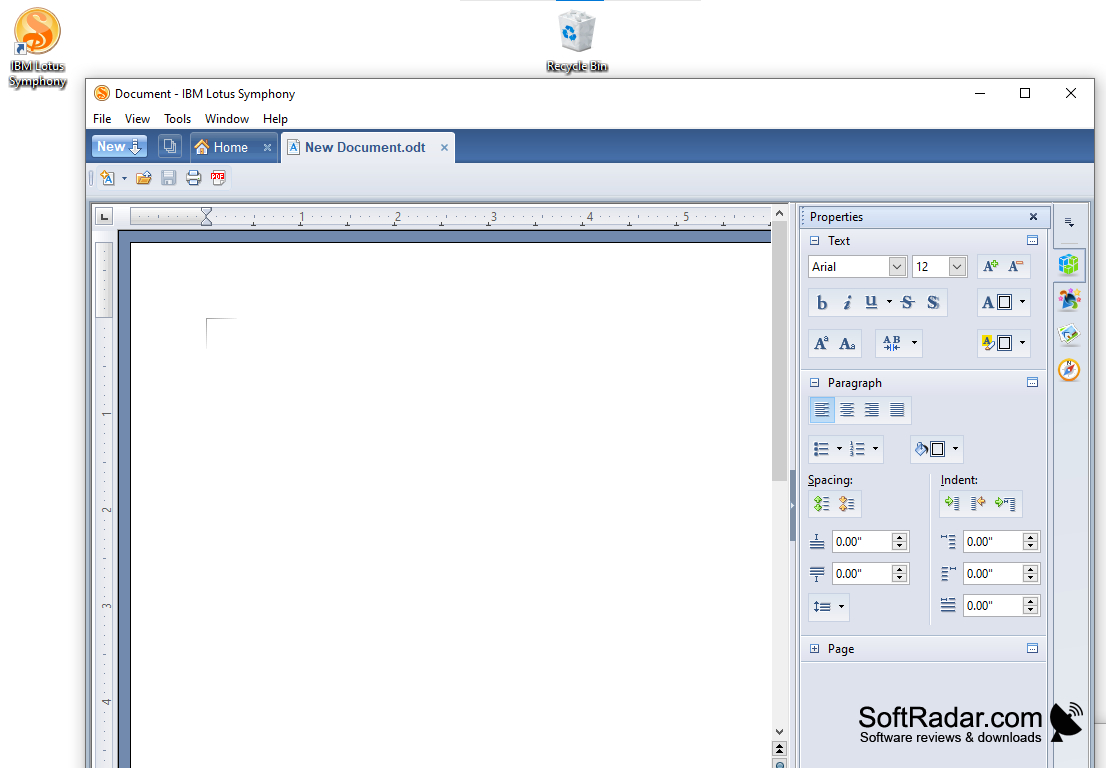
Symphony combines documents, spreadsheets and presentations in one tabbed window and reads and writes both OpenDocument and Microsoft Office files.
512 MB RAM or more
About 540 MB of free disk space
PROS
Includes word processor, spreadsheet, and presentation programs.
Opens and saves Microsoft Office file formats.
CONS
The interface can be confusing and lacks modern appeal.
Official downloads are no longer offered by IBM.


