
vDos
vDos is a DOS emulator for running text-mode DOS business applications in a window on 32-bit and 64-bit Windows.
Introduction
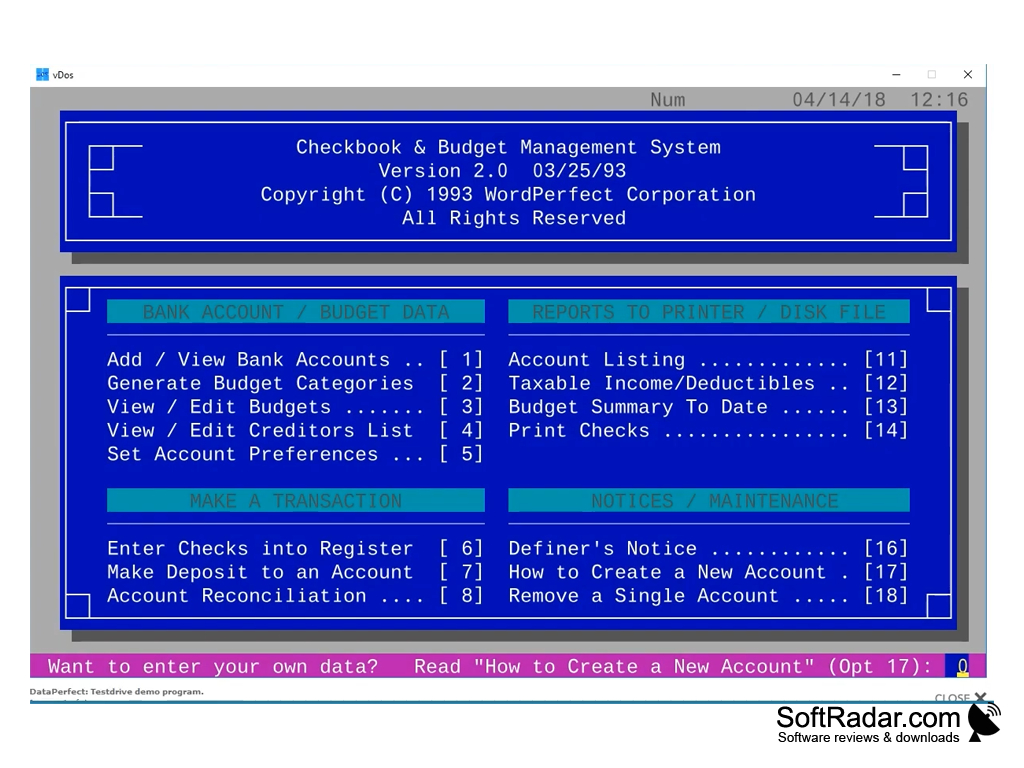
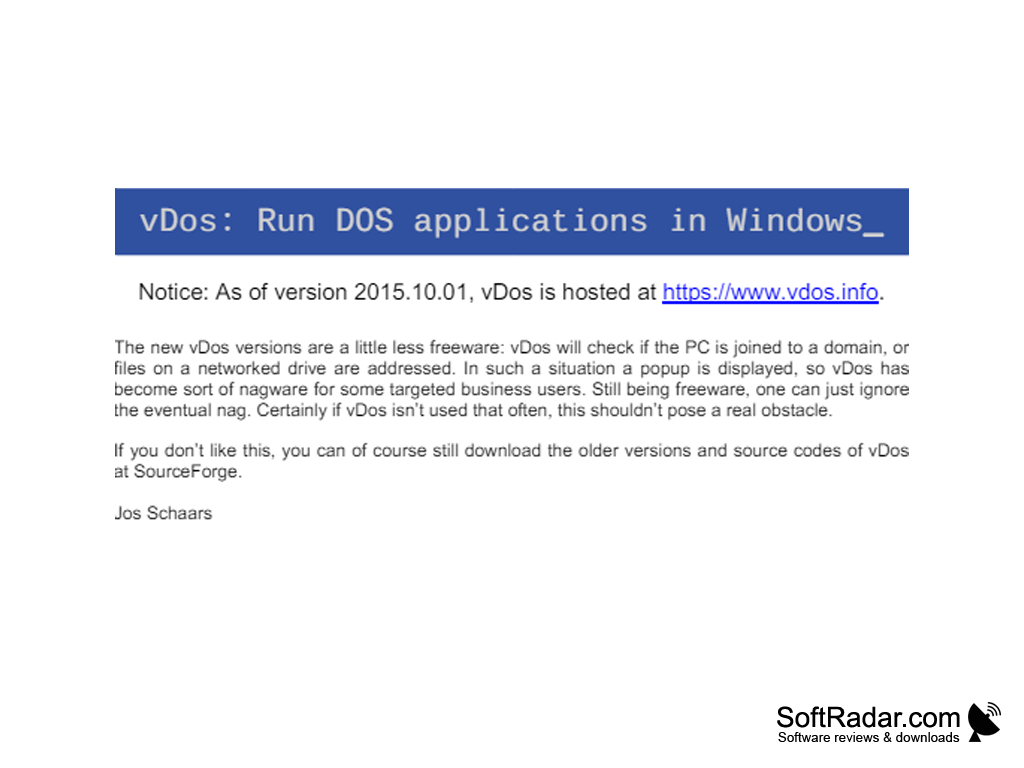
vDos is a DOS emulator written by Jos Schaars that runs DOS applications in a window on modern Windows systems. It works on Windows 7 and later, in both 32-bit and 64-bit editions, and was created because 64-bit Windows no longer includes NTVDM, the component that older Windows versions used to run DOS programs. vDos is not a nostalgia tool and is not meant for games; for DOS games a DOS emulator such as DOSBox is the better choice. Instead, vDos focuses on serious, mainly text-mode applications such as accounting, database and word processing programs, for example WordPerfect and DataPerfect for DOS. Since version 2015.10.01 vDos has been hosted on its own website, vdos.info, where new releases named after their release date are published, while older versions and their source code remain available on SourceForge.
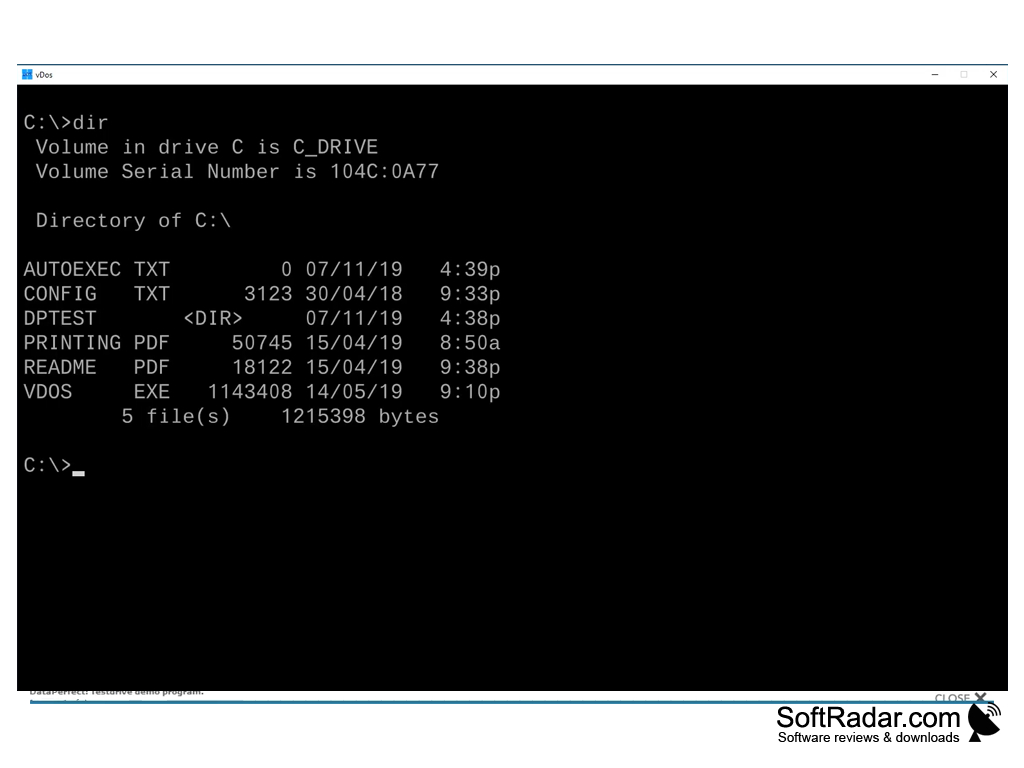
vDos needs no complex configuration to load drivers, set file handles, keyboard layout or the language character set. Unlike FreeDOS, which is a complete DOS-compatible operating system that has to be installed on a PC or a virtual machine, vDos runs as a normal Windows program, so there is no need to prepare a bootable DOS USB stick with a tool like Rufus. The vDos folder acts as drive C: by default, you start programs by typing their names at the prompt, and start-up commands are kept in the autoexec.txt file. Settings such as memory, window size, font and printer ports are set in a plain config.txt file, and each DOS application can have its own vDos directory with its own configuration.
vDos lets you keep using old DOS business programs on modern 64-bit Windows, which can no longer run them natively.
Features
• Scalable window with a crisp TrueType font in text mode; a custom TTF font can be set in config.txt
• Text screen size from 24 to 60 lines and from 80 to 160 columns, set with the LINS and COLS options
• Initial window size set as a percentage of the screen, with an optional frame and title bar, a custom title and icon
• Graphics mode programs can be scaled from 100% to 900% with the SCALE option
• Custom 16-color palette defined with RGB or hexadecimal values
• Extra conventional memory with the LOW option, 127 KB of upper memory blocks (UMB) and optional EMS memory
• Mouse support in text mode, which can be switched on or off
• Printing to any Windows (GDI) printer, including printers that only work under Windows
• PDF output through a virtual PDF printer
• LPT1 to LPT9 and COM1 to COM9 can be redirected to printers, documents or other programs
• Print output also saved as ASCII and Unicode text files in the working directory
• Copy and paste between Windows and DOS with transparent conversion between Windows Unicode and DOS ASCII text
• Network support with file and record locking for multi-user DOS applications
• Several DOS applications can run at the same time, each in its own window with its own settings
• DOS programs are confined to the directories assigned to them
• LPT and COM ports can also be set to DUMMY, so that only the print files are created and can be passed to other printing utilities
• The window title can show the name of the running DOS application, and the HIDE option delays the display of the vDos window
• Portable, with a small resource footprint, so it can be copied to another folder or computer together with the DOS application
• Available as a setup program or as a zipped vDos folder that you extract to a directory such as C:\vDos
• Source files and previous versions are offered on the download page
• Documentation, FAQs and a user forum on the official website
• Free for personal use; business use requires a paid username or network licence
• Without registration, an About popup appears at start-up on domain-joined PCs or when network drives are used
• Registered users get all future versions, priority support and a 64-bit version of vDos
32-bit or 64-bit Windows
PROS
Prints DOS output to any Windows printer or to PDF.
Portable and needs no virtual machine or DOS installation.
CONS
Business use requires a paid licence.
Configuration is done by editing text files.