
Virtual Audio Cable
Virtual Audio Cable creates virtual audio devices that transfer sound from one application to another inside the computer.
Operating system: Windows
Publisher: Eugene Muzychenko
Release: Virtual Audio Cable 4.7.1
Antivirus check: VirusTotal report
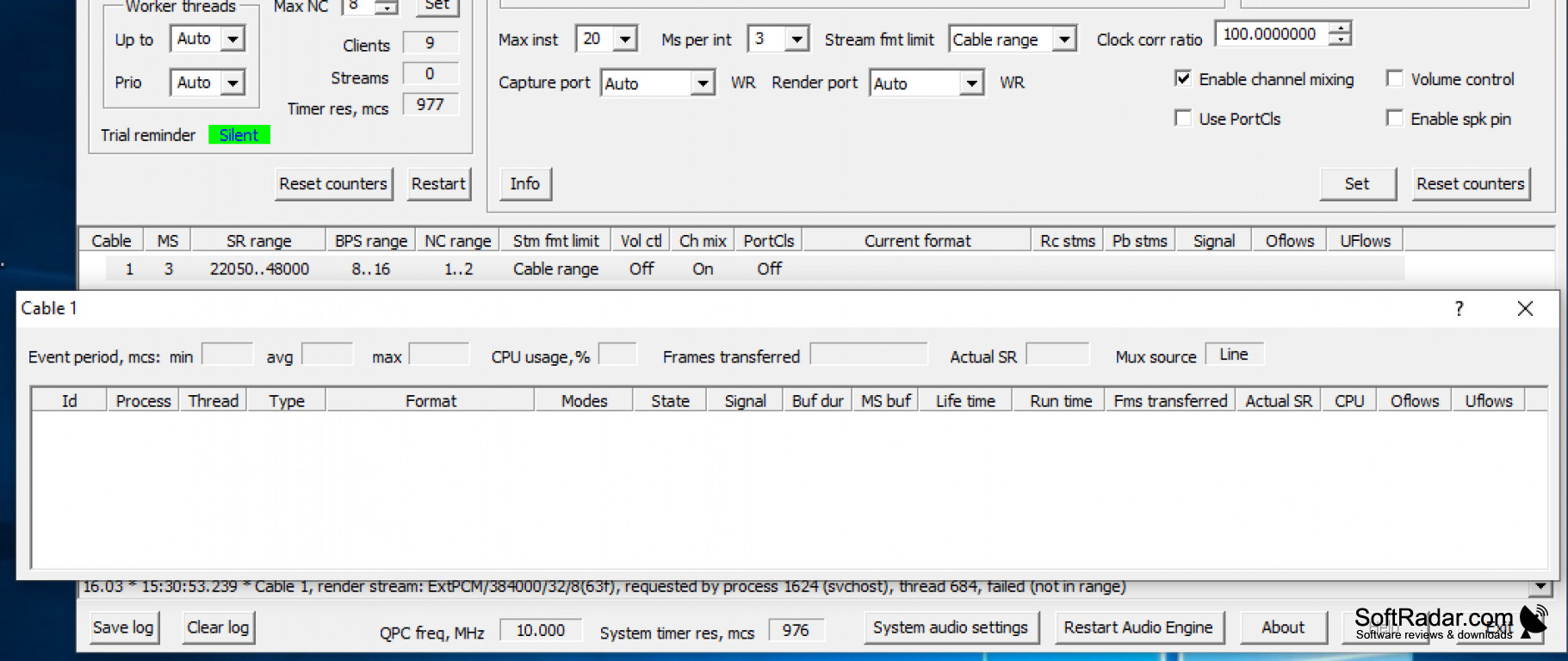
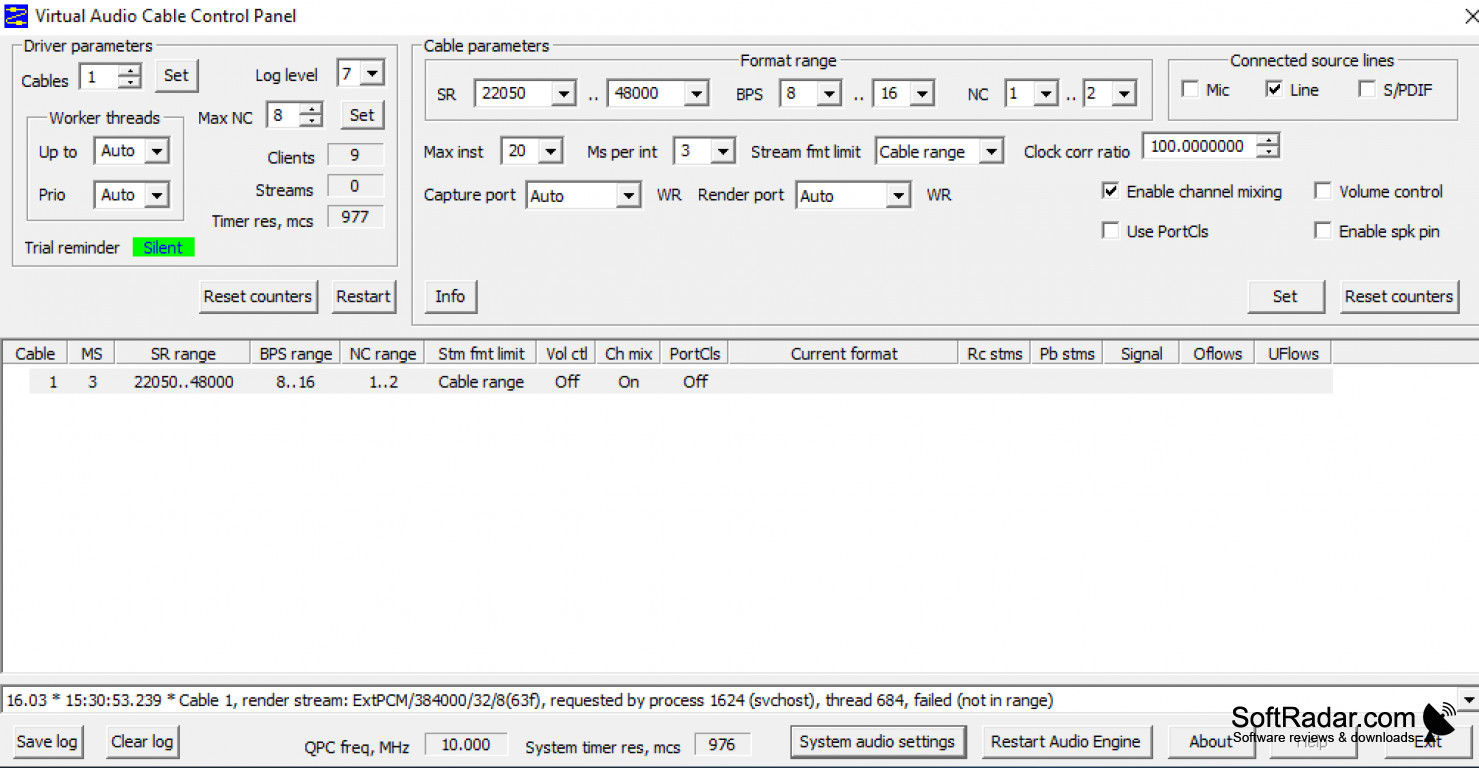
Virtual Audio Cable is a well-known audio routing driver for Windows. The program is designed to take sound coming from one application and turn it into audio input for another. The most useful aspect of the program is that it doesn't require any additional equipment like a microphone or a sound card. Without the software you would need speakers, a microphone and physical cables, and the sound quality would suffer. Virtual Audio Cable transfers the sound digitally inside the PC instead.
Features:
- Easy application to application audio transfer.
- No additional equipment needed.
- Free Lite and trial versions.
- Control Panel and Audio Repeater included.
Transfer audio between applications with no added equipment and no quality loss, directly inside the computer.
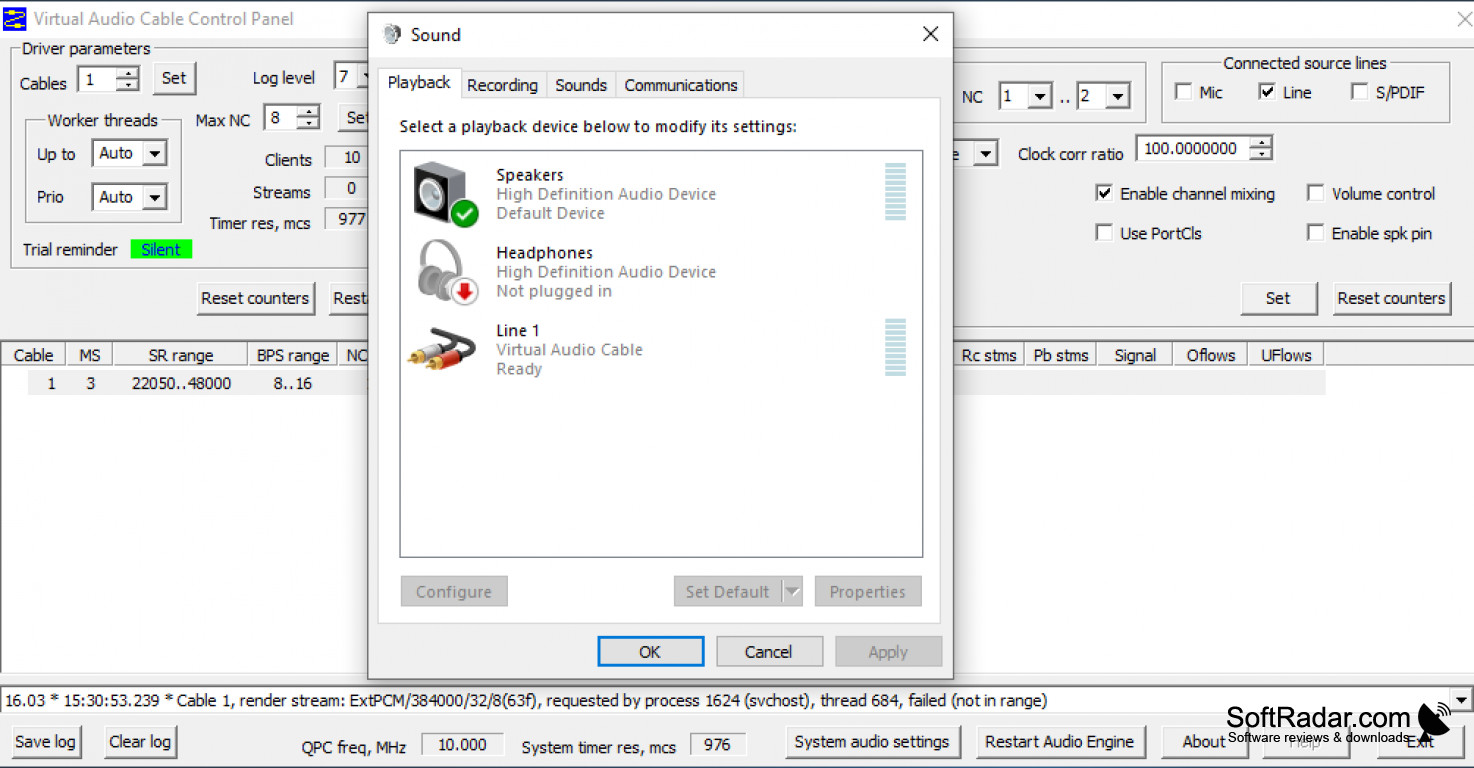
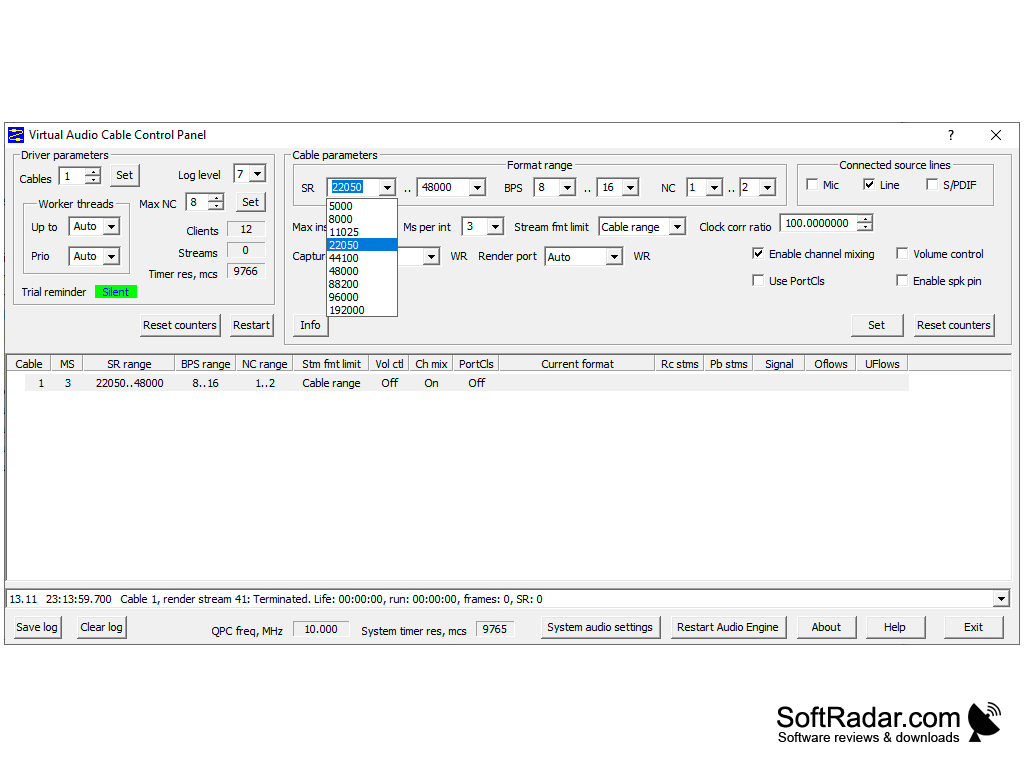
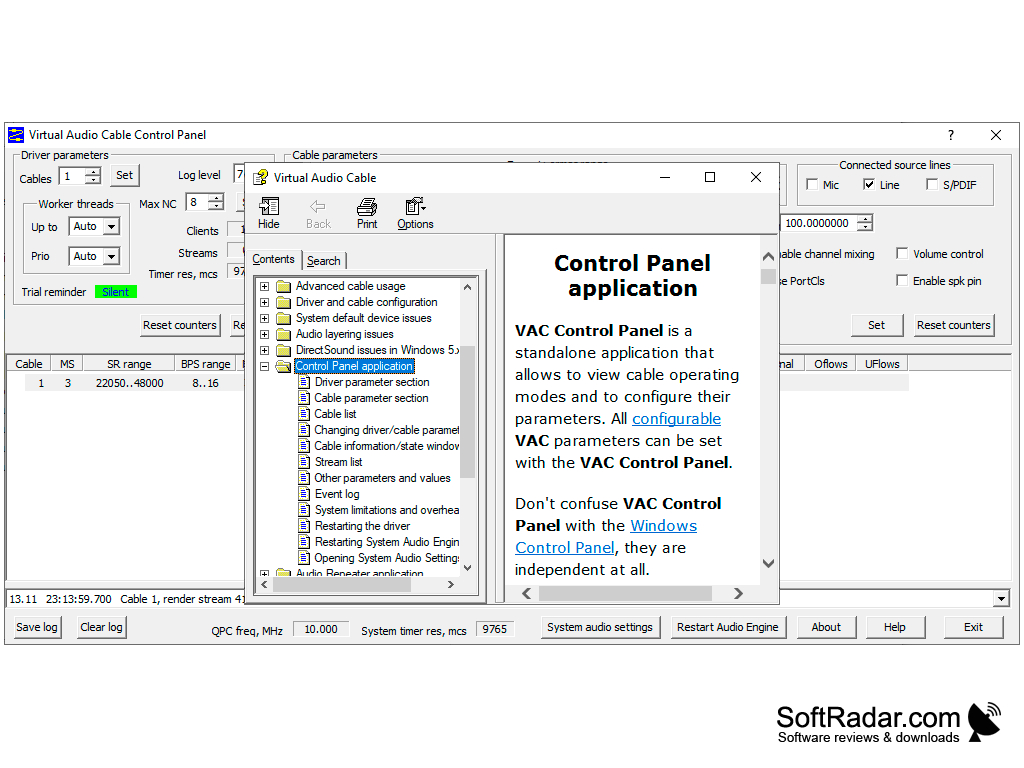
Virtual Audio Cable integrates with Windows in a way that might catch users off guard. After installation, each virtual cable appears in the system and in your applications as an ordinary playback and recording device, named for example "Line 1". That might seem confusing at first, but once you realize that it is just the program working you'll get used to it. If several applications play to the same cable, their sounds are mixed, and several applications can record from it at the same time. Virtual Audio Cable does have a learning curve, mainly because its Control Panel shows many technical parameters such as sample rates, bits per sample and buffer settings. A detailed user manual is included and can be opened with the Help button. Also, keep in mind that not all applications are compatible with Virtual Audio Cable: anything that doesn't allow choosing custom audio input or output devices won't work with it directly. The trial version is fully functional but a voice reminder starts after 30 minutes, and the free Lite version is limited to one cable and 48 kHz stereo. The full version supports up to 256 cables and 32 channels.
32-bit or 64-bit
PROS
Supports multi-channel and high-definition audio streams.
Mixes sound from several applications on one cable.
CONS
Lacks a user-friendly interface.
Free Lite version has limited functionality.


