
Wireshark
Free, open-source network protocol analyzer used for network troubleshooting and traffic analysis.
Operating system: Windows
Publisher: Wireshark Foundation
Release: Wireshark 4.6.9
License: Open source (GPL-2.0)
Antivirus check: VirusTotal report
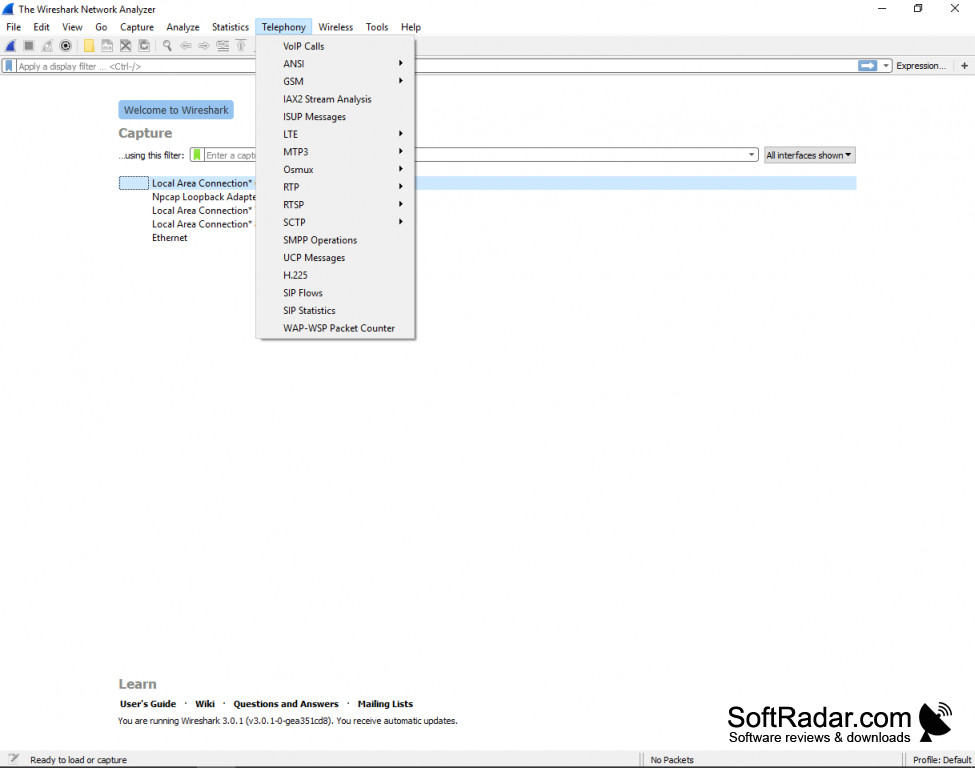
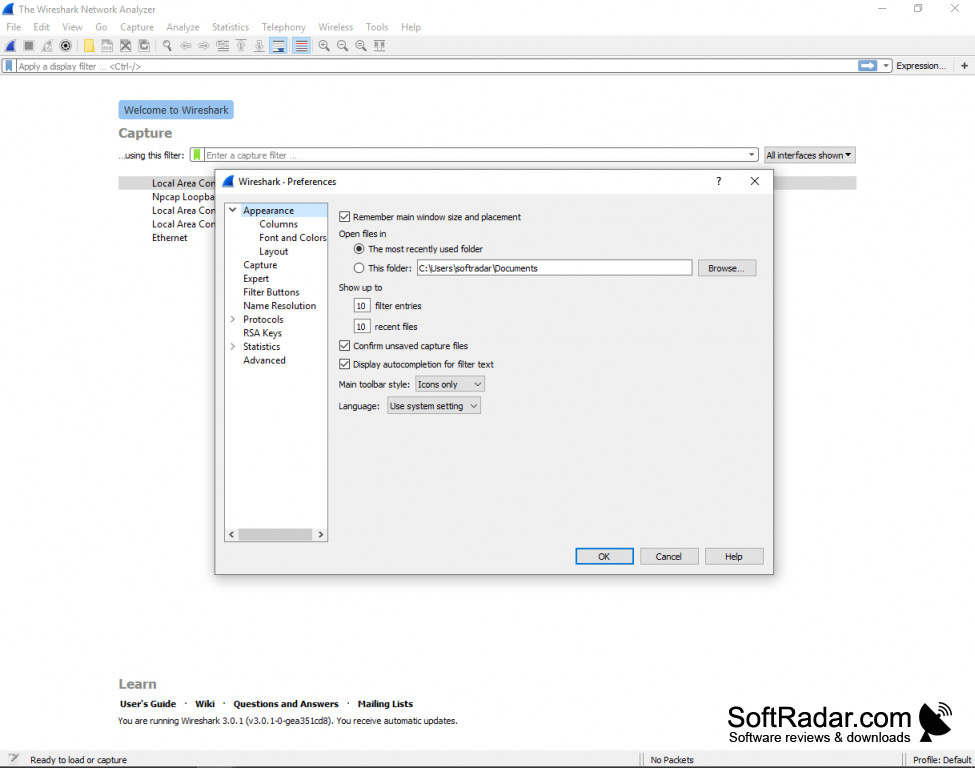
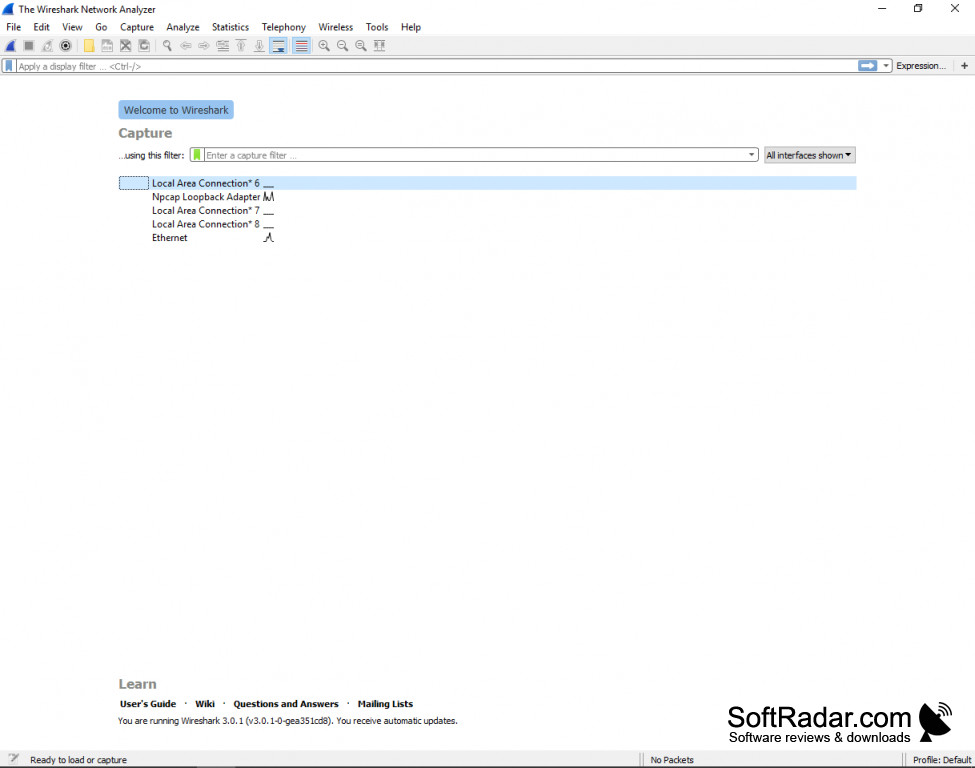
Wireshark is a free, open-source network protocol analyzer that is used for network troubleshooting, analysis, software and protocol development, and education.
Some of the main features of this program include the following:
- There are two ways that data can be captured with this program. The first is "from the wire", which means that the data comes from a live network connection. The second is from a file of already-captured packets.
One key benefit of using this program is that it is completely free to use.
- There are multiple types of networks that data can be read from. These include Ethernet, IEEE 802.11, PPP, and loopback.
- Captured network data can be browsed in the graphical interface or with TShark, the terminal (command-line) version of the program.
- Using command-line switches, capture files can be programmatically edited or converted with the editcap program.
- Using a display filter, the data can be refined so that only the relevant packets are shown.
- Dissectors for new protocols can be created and added as plug-ins.
- VoIP calls in the captured traffic can be detected and, if the encoded data uses a compatible encoding, even played back.
- Raw USB traffic can be captured as well.
- Wireless connections can be filtered as long as they traverse the monitored Ethernet.
- Capture options such as capture filters, ring buffers and timers that stop a capture after a set time help control the output of the captured traffic.
- The Wireshark interface does not need to run with elevated privileges; on Windows, packet capture is handled by the Npcap driver, which limits the damage a bug in a protocol dissector could do.
- Coloring rules highlight packets according to their fields, which helps identify the different types of traffic at a glance.
- The program can also be used to read packets captured with network simulation tools.
Wireshark runs on Microsoft Windows, Linux, macOS, BSD, Solaris and some other Unix-like operating systems. There is also a terminal-based version called TShark. These programs are free software released under the terms of the GNU General Public License version 2. Current Windows builds need 64-bit Windows 10 or 11, and development is supported by the non-profit Wireshark Foundation.
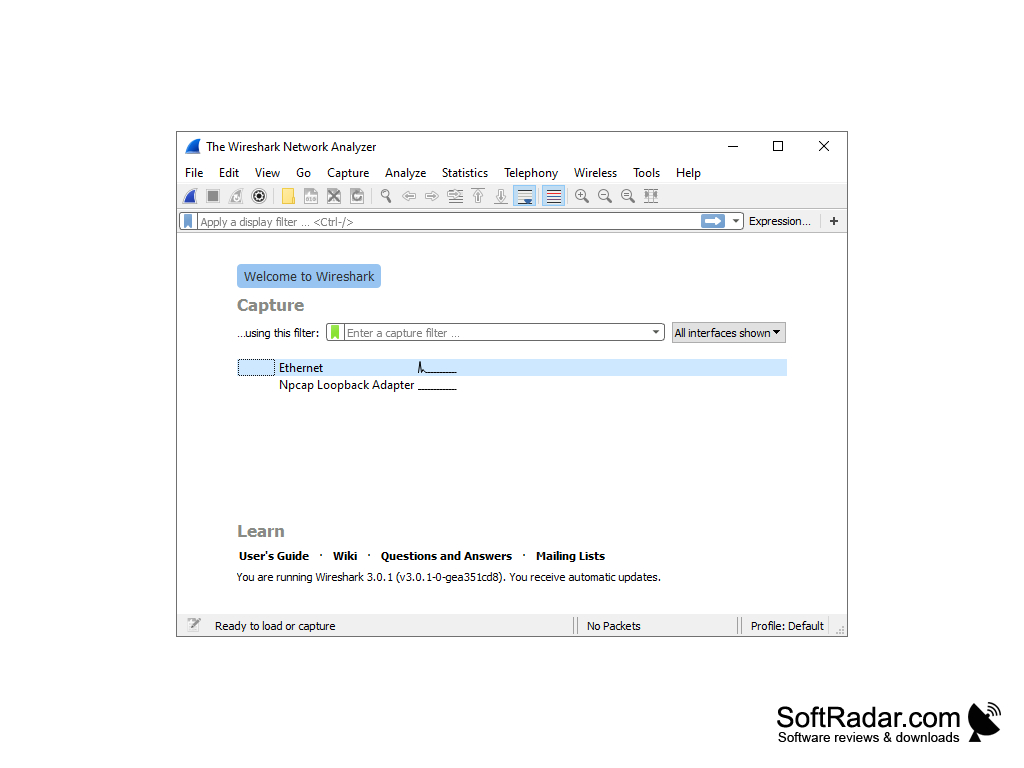
64-bit Intel or Arm processor
500 MB of available RAM
500 MB of available disk space
Npcap driver for live packet capture
PROS
Provides extensive information about network traffic.
Free, open-source, and widely supported.
CONS
Large capture files need a lot of memory.
Support comes mainly from the user community.


