
RealTerm
Terminal application for Windows serial communications
RealTerm is a multifunctional TCP terminal that can be used to capture and debug data, as well as to save a log file for further analysis. The program allows network administrators to work with both binary and other data streams. But support for BBS and Dial Up modems in RealTerm is not provided. Take this into account when selecting the terminal.
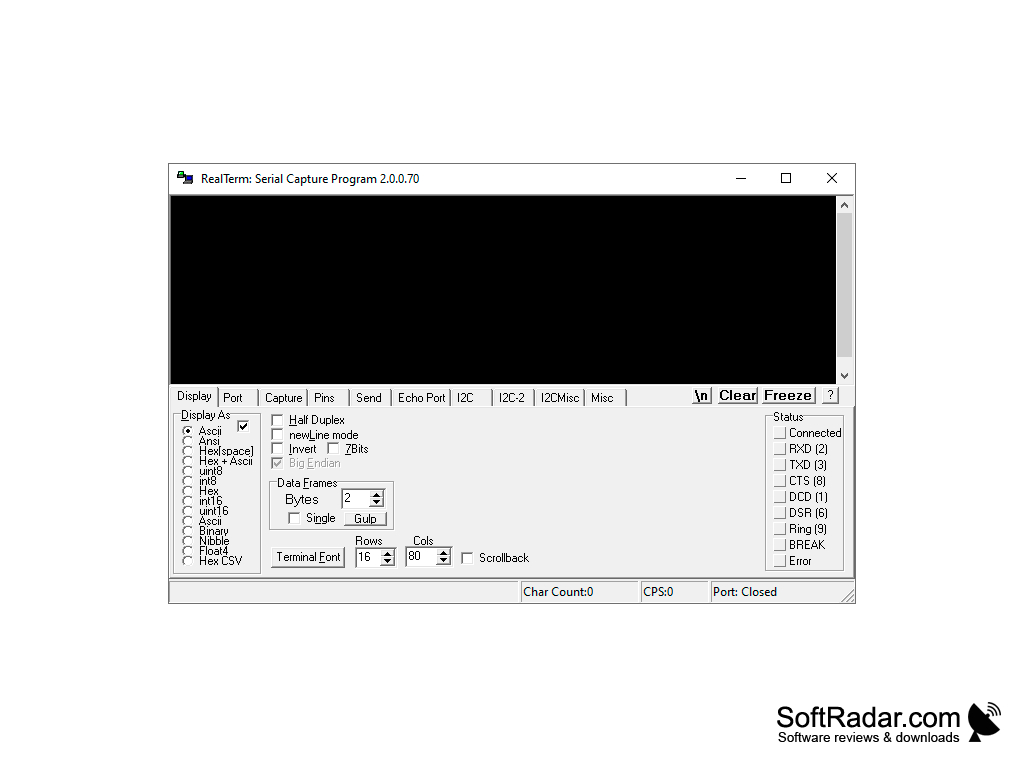
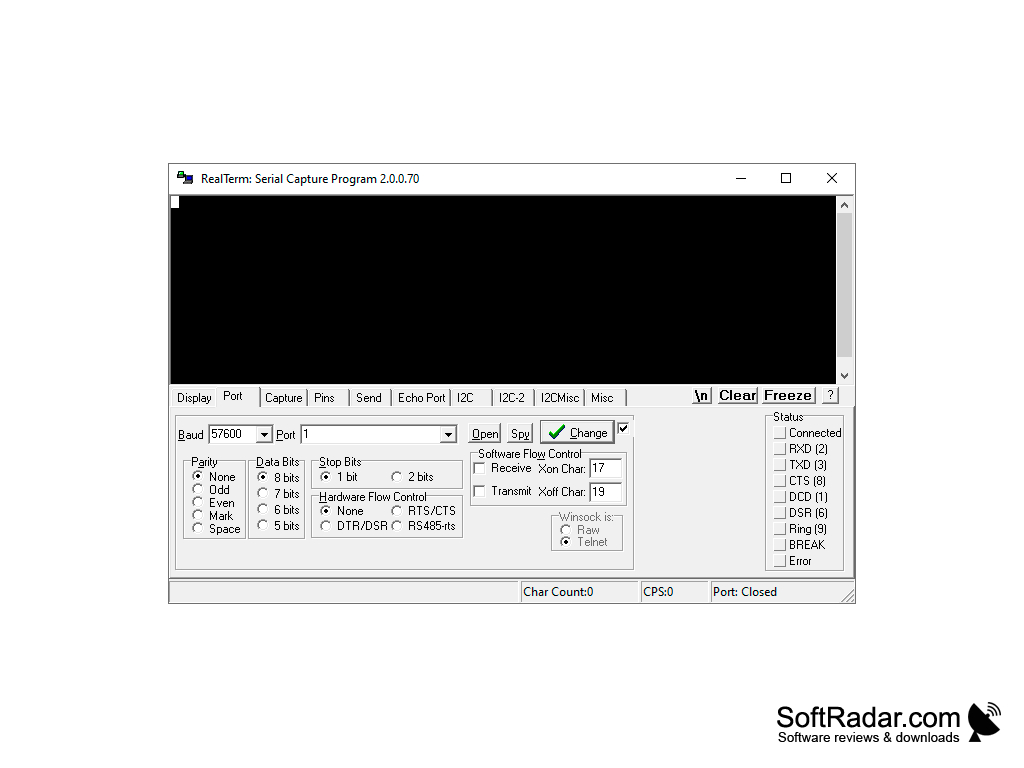
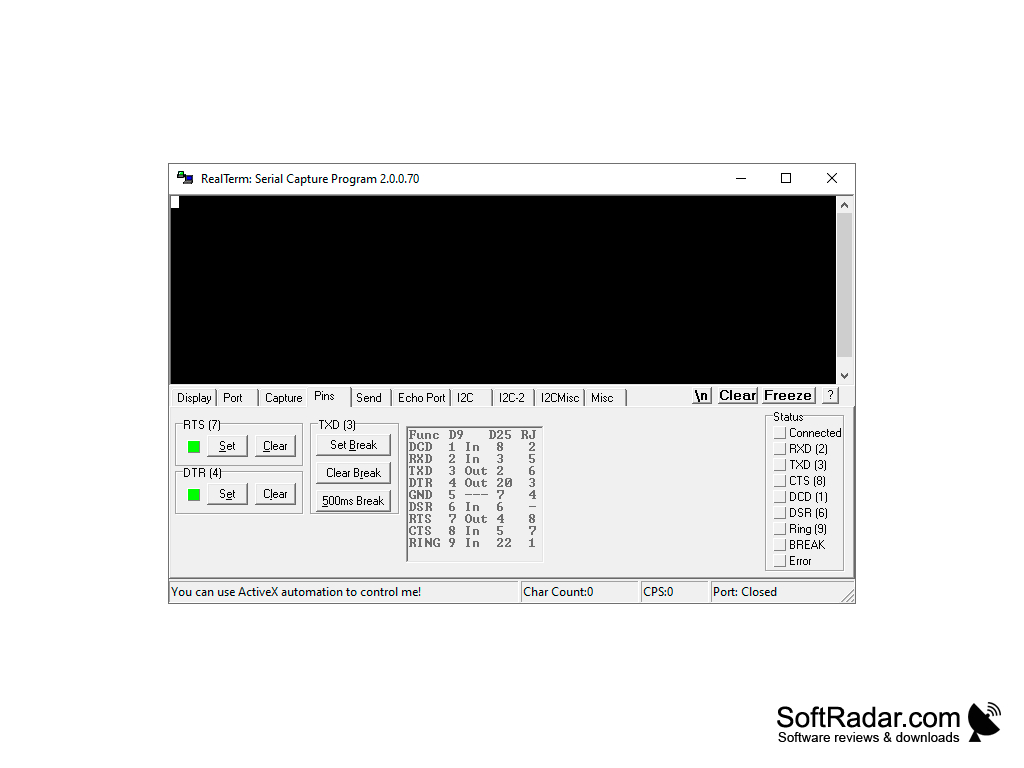
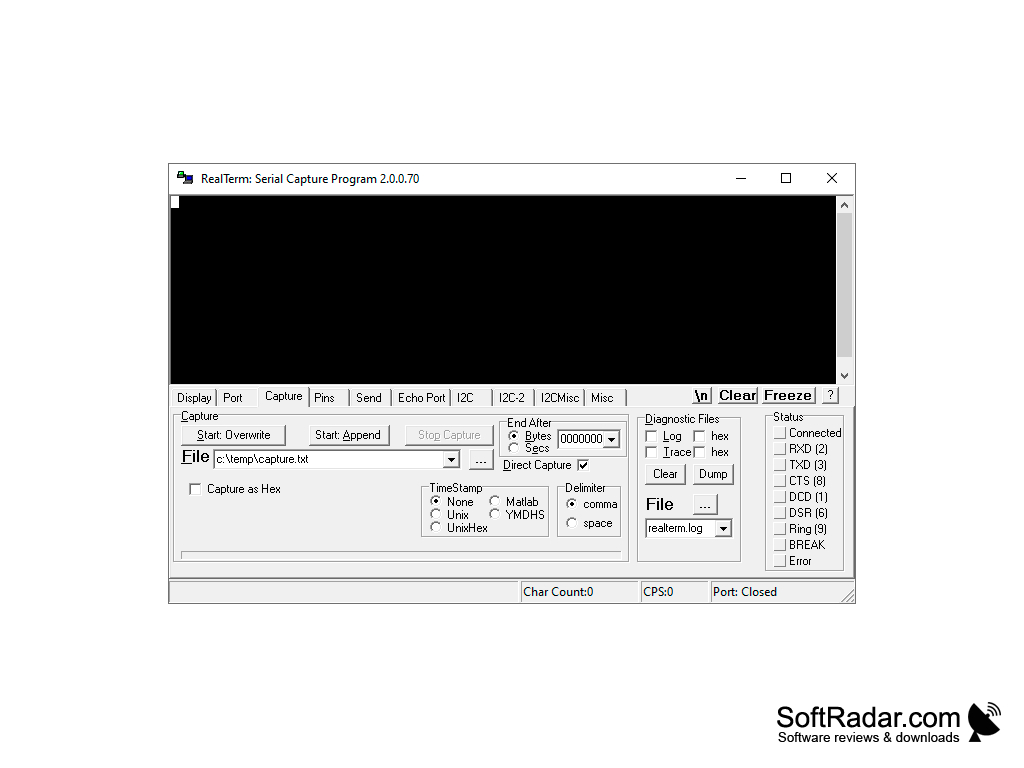
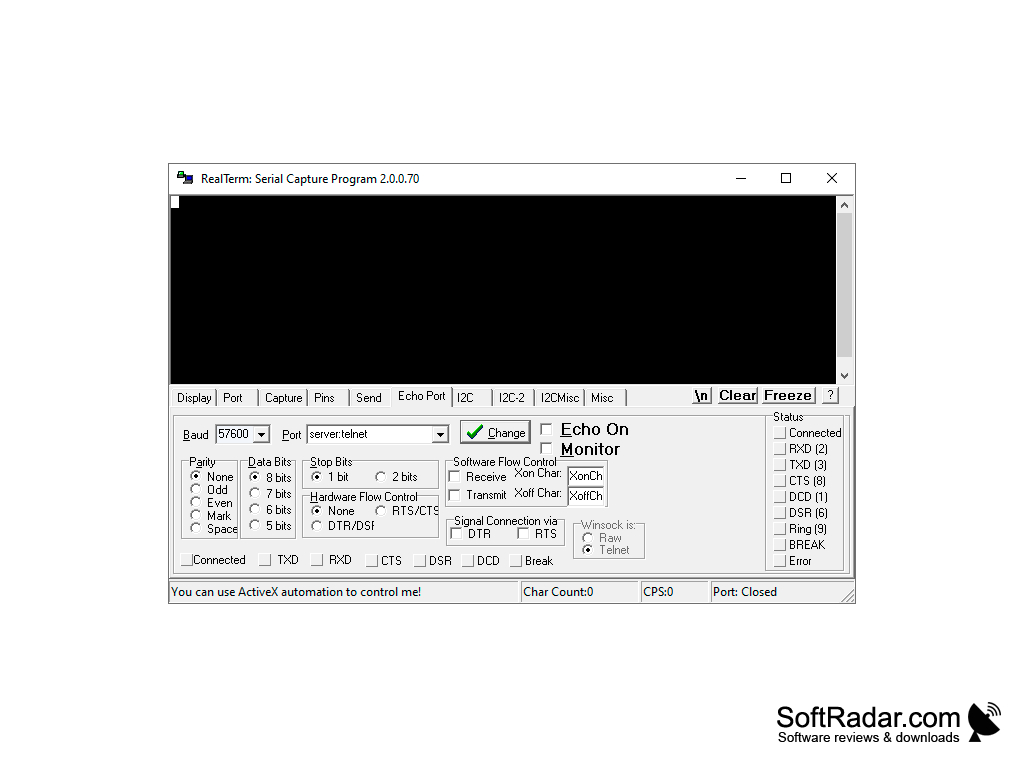
The graphical shell of the program is intuitive: the upper part of the main window occupies directly the terminal window, and the lower part is selected for various parameters of data displaying. There's a lot of them here. RealTerm allows you to switch between binary code, ASCII, ANSI, HEX, UNIT16, FLOATt4, INT8, as well as to use combinations of encodings (e.g., ASCII+Hex). The lower panel also contains tabs with ports, software/hardware/protocol flow control parameters, as well as a tab with the digital connection manager.
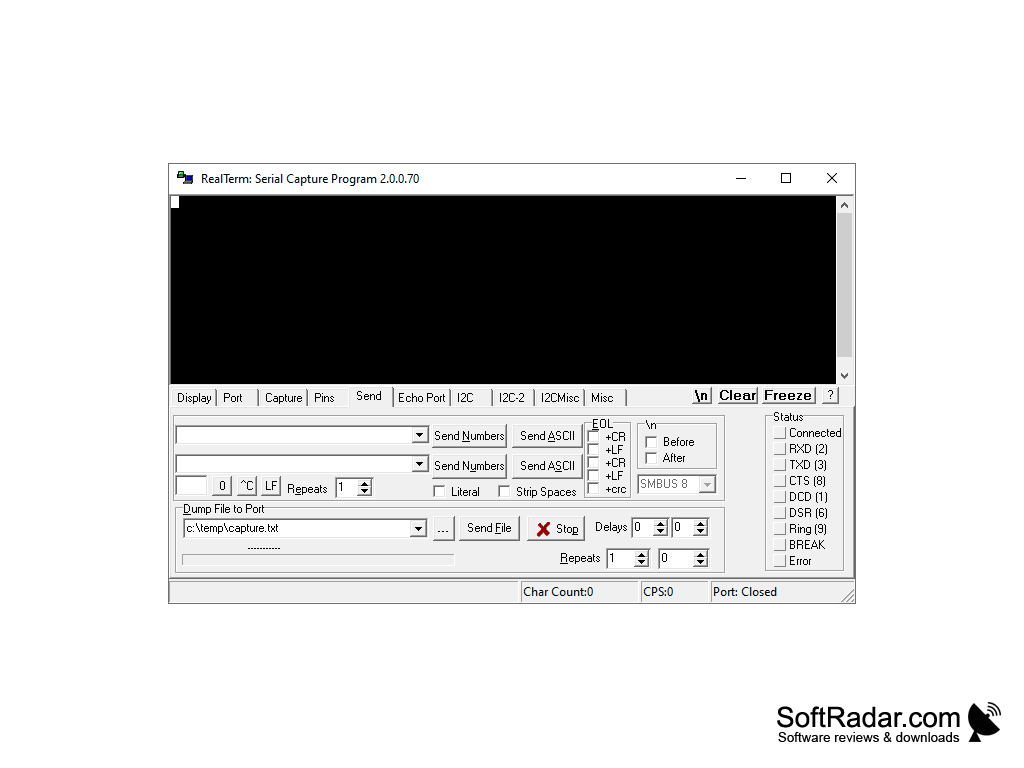
When saving the TXT file with the report, the terminal offers the function of adding a time stamp before each data line. By the way, you can specify the path of saving this very file yourself. Among other "conveniences" of RealTerm it is necessary to note support of hotkeys. Incredibly useful feature that will help in processing complex data streams.
RealTerm provides network administrators with a multifunctional TCP terminal for capturing, debugging, and logging data for comprehensive analysis.
Despite the general intuitiveness and relative ease of use, we cannot recommend this program to beginners. RealTerm is focused exclusively on experienced network administrators.
- tools for capturing and debugging network data;
- saving the log file (TXT) for further analysis;
- support for ANSI, ASCII, INT8, HEX, NIBBLE, FLOAT4, UNIT8 and binary code;
- adding a time stamp before each report line;
- management of hardware, software and protocol flow control parameters;
- hotkey support;
- port management.
PROS
Offers robust logging, capturing, and debugging options.
Supports both ASCII and binary data.
CONS
Limited customer support and tutorials available.
Outdated design and features compared to other programs.


